Favorites
Design Vault Ep. 5 Park + Elton with David Gross
ABOUT THE ARCHITECT:
|
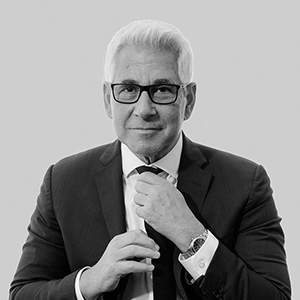
David E. Gross, AIA is the Co-Founder and Executive Partner of GF55 Architects, a national firm with offices in New York City and Miami. GF55 has a specific expertise in Multi Family, Retail, Educational, Hospitality, and Industrial Architecture. Since 1984, GF55 has designed and built over 12 million square feet of housing nationally. David’s projects have received two Urban Land Institute Models of Excellence Awards and was the recipient of the Andrew J. Thomas “Pioneer in Housing” Award in 2010 from the NYC AIA Chapter. David received an AIA Award of Merit for the renovation and addition of a historic and significant Mid Century Modern house in Rye NY. His work has also been featured in Architectural Digest and The New York Times. David has established the David E. Gross Fellowship at the University of Pennsylvania Weitzman School of Design for the study of Housing. David is a board member at the University of Pennsylvania Weitzman School of Design advisory board to the School of Architecture, the New York State Association for Affordable Housing (NYSAFAH); Citizens Housing and Planning Council (CHPC) as well as the NY Housing Conference. He has been a visiting design juror at Yale College, New Jersey Institute of Technology, and Pratt Institute. From 2004 to 2016 he taught an annual session on the relationship of the Architect to the Development Process at the NYU Graduate School of Real Estate MBA Program. The continued progress and intelligent development of Architecture through future generations was fundamental to David’s decision in establishing this fellowship. David graduated Cum Laude with Distinction from the University of Pennsylvania. He also earned his Master of Architecture from the University of Pennsylvania where he was a Thesis Prize Finalist and a Stewardson Memorial Competition Representative. |
|---|
ABOUT THE PROJECT:
Park and Elton, a development with 38 residential units consisting of two 5-story buildings, correspond to the Melrose Commons Urban Renewal Plan providing a range of affordable housing choices to support diversity. The sister buildings exemplify the goal of New York City’s affordable housing mission; providing quality housing through high design input and cost effective measures. The use of simple materials in a creative way resulted in these modest buildings. The subtle volume and height of Park and Elton maintain the human-scale of the public realm. The simple modern cornice and the differentiation of the window header detail with the application of the soldier brick pattern references the historical brick clad buildings found throughout the district.
Construction of the buildings included sustainable design elements and incorporated NYC Green Building Standards. Features include Energy Star appliances and lighting, high efficiency plumbing fixtures and high‐quality durable concrete plank and masonry bearing wall construction. Park and Elton are considered equivalent to LEED certified buildings.
Park + Elton
David E. Gross / GF55 Architects
See MoreTRANSCRIPT
00;00;00;00 - 00;00;05;11
Doug Patt (DP)
Let's go inside the vault. The design vault.
00;00;05;13 - 00;00;22;00
David Gross (DG)
Most of our buildings are taller and bigger. And this was a little bit of a throwback. A five-story building, not too many square feet, but it was a challenge for us and an opportunity to look at our housing work on a smaller scale and very proud of it.
00;00;22;02 - 00;02;59;25
DP
This is my guest, David Gross. I'll share more about him shortly. In this episode from the Design Vault, we’ll highlight David's project Park and Elton.
Park and Elton is a development with 38 residential units in the Bronx, consisting of two distinct five story buildings. These buildings correspond to the Melrose Commons Urban Renewal Plan. The plan provides a range of affordable housing choices for the Bronx.
The use of simple building materials, including brick in various patterns, colors and facade wall depths, makes these modest buildings appear quite unique. The simple modern masonry cornice and the differentiation of the window header detail with soldier course patterns reference the historical brick clad buildings found throughout the district. The subtle volume and height of Park and Elton also maintain a satisfying human scale.
Construction of the buildings included sustainable design elements and incorporated New York City Green building standards. Park and Elton are considered equivalent to LEED certified buildings.
Hi, I'm Doug Pat and this is Design Vault. Today we're talking to David E. Gross, AIA. David earned his Master of Architecture from the University of Pennsylvania and graduated cum laude with distinction.
David is the co-founder and executive partner of GF55 Architects, a national firm with offices in New York City and Miami. GF55, has expertise in multifamily, retail, educational, hospitality and industrial architecture. Since 1984, GF55 has designed and built over 12 million square feet of housing nationally. David's projects have received two Urban Land Institute Models of Excellence awards and was the recipient of the Andrew J. Thomas Pioneer and Housing Award in 2010 from the New York City AIA chapter.
David received an award of merit for the renovation and addition of a historic and significant mid-century modern house in Rye, New York. His work has also been featured in Architectural Digest and The New York Times. Today, we're going to talk to David about GF55’s Park and Elton Project.
Welcome, David. So, before we get started, tell us a little bit about GF55 Architects. I understand your firm is in both New York City and Miami. What's the size of the firm and do the offices take the same kind of work?
00;03;00;04 - 00;03;17;11
DG
We're very much a New York firm with a satellite office in Miami and the Miami offices in support of the New York workload. The needs of staffing vary, and sometimes we have the ability to staff the projects through the Miami workforce as opposed to the New York workforce.
00;03;17;13 - 00;03;24;03
DP
So, tell us a little bit about GF55 architects, who you're the co-founding partner. How did you guys get your start?
00;03;24;09 - 00;03;52;06
DG
My partner, Len, he's the “F” and I - Len Fusca - we met in grad school, and we were partners right away in both architectural terms and friendship terms. Down the road, 15 years later, we met Shy, also, who's our third partner and the three of us are close professionally and friendship wise. We're all friends. We have about 50 people right now and we have a varied practice. But really a specialty in housing.
00;03;52;08 - 00;03;54;18
DP
How long have you had the Miami location then?
00;03;54;25 - 00;03;57;23
DG
I would say since 2012.
00;03;57;27 - 00;03;58;27
DP
Has that been helpful?
00;03;59;01 - 00;03;59;27
DG
Very helpful.
00;04;00;03 - 00;04;04;25
DP
Do you have people that you work with locally and then you also work with them in Miami?
00;04;04;29 - 00;04;41;01
DG
Yes. The Miami office specializes in retail. We do a large amount of retail buildout work across the country, but our main office, I would say, is New York. In New York, we do a lot of projects that are versions of Park and Elton, but much larger. We also do charter schools and medical facilities, and we're working on a large storage facility near the JFK Airport, which came to us right before COVID and then the entire process of COVID with Amazon, it was all of a sudden that's a building type that was very much in demand.
00;04;41;06 - 00;04;46;21
DP
Ironically, it's a good segue way to what is your role in the office. Right. Everybody's doing something different. What are you doing now?
00;04;46;23 - 00;05;53;26
DG
I like being an architect. You know, sometimes I find that I maybe I'm focusing on the buildings too much. I would say that my role is focusing on the long-term growth of the company and the direction of the company.
We have an outside consultant on how to manage the office because at 50 people, all of a sudden, it's way too big for any of the three partners to direct themselves. And we value the expertise that we give, and we are mature enough now to value the expertise that outside consultants give us. So, we try to run the office very professionally. And I would say that a lot of our energy about running the office is motivating the workforce and we motivate the workforce through a carrot rather than a stick.
It's not the old school where you better be here or else. We have to market – intra-office marketing is almost as important as outside marketing. We have to make sure that everyone's gratified and satisfied because anybody under 40 demands that of us. It's challenging and it's interesting and it's – I like it. It's heartwarming.
00;05;54;02 - 00;06;01;06
DP
It's a neat paradigm, though. I mean, thinking deeply about your employees and their well-being and wanting to keep them, I think that's wonderful.
00;06;01;10 - 00;06;04;13
DG
We should sign you up for the volleyball team.
00;06;04;16 - 00;06;05;21
DP
I need about another foot!
00;06;05;24 - 00;06;10;00
DG
It's not just volleyball. It's après-volleyball that they like. You know, like apres-ski.
00;06;10;07 - 00;06;20;00
DP
That's great. All right, so let's dig in here and talk about Park and Elton. So, Park is at 3120 Park Avenue in the Bronx. Elton is East 159th Street in the Bronx, correct?
00;06;20;03 - 00;06;20;17
DG
Yes.
00;06;20;24 - 00;06;30;14
DP
So, you're a board member of the New York State Association for Affordable Housing, the Citizens Housing and Planning Council, as well as the New York Housing Conference, correct?
00;06;30;20 - 00;06;30;14
DG
Yes.
00;06;31;09 - 00;06;41;23
DP
You're intimately familiar with affordable housing. This project, did you know it was coming up? What was the process by which you interviewed or took the job or how did that work out for you?
00;06;41;26 - 00;07;31;26
DG
It was actually part two of a project. That part one was maybe ten years before that. And unfortunately, the original developer passed away. One of his employees took over the job and it's a unique project for us because most of our buildings are taller and bigger. And this was a little bit of a throwback, a five-story building, not too many square feet, but it was a challenge for us and an opportunity to look at our housing work on a smaller scale and very proud of it.
As you mentioned, I'm a member of housing organizations. I grew up, my father and grandfather were builder developers and while their work wasn't affordable with a capital A, it was affordable with a small A because they built stuff that was a modest price points. And I really have a lot of familiarity with that building type.
00;07;32;02 - 00;07;34;13
DP
Well, it sounds like something that can be pretty gratifying.
00;07;34;18 - 00;08;02;16
DG
Yeah, I would say that's my main professional focus. And Parker and Elton were challenging because even though they're small in scale, they're important. One of them is on the corner and it forms a strong impact on that street. And it's a part of the South Bronx, that is, the buildings are modest. These buildings are very much a breath of fresh air to the neighborhoods. They're small, but they punch above their weight class visually.
00;08;02;18 - 00;08;08;10
DP
So, did the architecture in the neighborhood affect the architecture that you ultimately made?
00;08;08;13 - 00;09;44;13
DG
I would say the architecture in the neighborhood affected it in scale, but not in aesthetics. I think that our point was to be not oppositional, but in contrast to the older buildings and, you know, one of our mottos is creative responses with humble materials. If you look at the classic modern architects, the housing was really an issue in the 1920s and it was never about luxury materials. Despite the Barcelona Pavilion and all the history of obviously building these amazing villas in a modernist style for very wealthy people. But the focus, on paper at least, was housing for people.
And what's so great about Park and Elton is because they're a small size, we really had to focus on the details. I would say that I had a great team in the office to work with. The original designer, Dimitri Papageorgiou and I worked on the basic idea. We had a third person on the team, Emily Koustae, who was sort of sitting next to Dimitri offering her opinion, said it so smartly that we listened. And then the woman who ran the job during construction, Ingrid Aguilar, she was also very important because during the construction we started to see some opportunities with the way the brick was laid that we tested it, she looked at it, she photographed it, she brought it back to the office, we changed it. There is a detail of white brick that goes up the building as if it's like bubbles floating into the air. They become fewer as they go vertical.
00;09;44;13 - 00;09;45;18
DP
It's denser below.
00;09;45;19 - 00;09;48;19
DG
Yeah, and that was all done during the construction.
00;09;48;24 - 00;09;52;17
DP
So, let's start with the client's programmatic requirements. What did they want?
00;09;48;24 - 00;10;52;28
DG
HPD is the housing preservation development arm of the New York City government. And they have strict guidelines about what size units and what mix you can build. And they have different programs that the developer wants to qualify for to get tax credits.
So, we had to satisfy the specific program for affordability that the city and the developer had worked out. So, we satisfy that the one bedrooms are 650 square feet, studios are 475, etc., etc. There's a million requirements on how big the windows can be and what kind of air conditioning and what the energy rating is. Even though they're affordable, they're built in a very, very quality manner.
So that was the first requirement. Then there's a zoning requirement for a maximum building height and a maximum lot coverage. And there's a lot of metrics and matrices that you have to satisfy in order to finally get to the way it looks.
00;10;53;05 - 00;10;56;02
DP
So, there weren't any breaks given to the fact that this is affordable house.
00;10;56;04 - 00;11;03;22
DG
No, no special breaks. It's built into the code that you get a certain benefit from building affordable units.
00;11;03;24 - 00;11;07;20
DP
So, tell us about the two sites. How were they the same? How were they different?
00;11;07;23 - 00;12;10;19
DG
The Park is on the corner, and it has a corner window that wraps the facade, and you see it from a distance. And then Elton is an infill building on a street that is at a diagonal to the building itself. And we knew that in order to come out of this alive, both mentally and architecturally and constructability wise, we had to make the buildings the same.
So, we made them the same. The choice to use brick was an easy one because brick is so flexible, because brick is a unit that's made so that you can change it as you lay the brick which is laid by a person. So, there's a way to get richness and detail in the facade through the brick. It's super durable and the way we did it where we have the window panels are shiny black brick as opposed to the, I think, two color blend on the rest of the building gives it the texture as if it were a different material.
00;12;10;22 - 00;12;25;10
DP
When I was reading about the project, you said that the building plans are super simple and yet, you know, you stand back, and you look at these things and there's – you got something going on. So, tell us a little bit about the building plans. How did you make them a little less like a box?
00;12;25;12 - 00;14;10;09
DG
There's a little tower on the end, and on each end to give the building a little more shape, you know, lack of a better term. But that's a right out of the zoning code that allows you to do that. New York is actually very conservative because quality housing, which is the current zoning for housing encourage you to make boxes so that when you go down the street, whether it's Park Avenue or 135th Street in the Bronx, all the buildings are the same height. They're looking to create that urban scale that's consistent. And along the avenues, it's taller and along the side streets it's lower. But it's consistent. And you can see from these photographs that our building is within a few feet of the adjacent buildings. So that's how we ended up with the massing.
In terms of the windows, it's very budget constrained. So, it's not just simple materials and creative ways. The whole process, you have to find the design and there's a discipline to using the materials to change the scale. For example, if we had just drawn the elevation with the windows, it would seem like a barracks. It would just be a box and it would seem very closed. But by doing visual tricks, like adding the side panels and a different color that matches the window frame, it expands the visual impact of the window opening and it makes the scale of the implied grid larger. So, it seems airier, but in fact it's not airier. It’s a visual trick. Architects are doing that all over the world to try to bring their buildings into scale.
00;14;10;13 - 00;14;17;05
DP
And you change the direction of the brick, right? The way the brick is laid, and the facade undulates somewhat, right?
00;14;17;09 - 00;15;22;22
DG
I mean, if you zoom in on the photographs that we're looking at, the horizontal bands, they're vertical and they're a stack bond. They line up as a grid. And the regular brick in between the horizontal bands is a running bond that stagger each joint the half a dimension of the brick. So, you get a different way the sunlight hits the brick. It adds visual nuance and detail, which I think there's a criticism of buildings when they're too stark, unless they're completely stark. And then the starkness is a design feature.
But I think you need to find the details to make the building visually interesting. I think you owe that, as the architect, to the world. It’s beauty, commodity and delight since Vitruvius said it, and he probably wishes he had copyrighted that phrase because that would be a great brand in 1642. But commodity is the function, and the structure is firmness, and delight is it has to look good. I mean, that's fundamental to being an architect. It has to look good.
00;15;22;29 - 00;15;27;10
DP
What about the color? How did you guys choose the brown? The variations of brown.
00;15;27;12 - 00;16;14;15
DG
The brick has sort of a brown, gray feel, and we wanted it to seem contemporary and not traditional in any way. I think that that brick that we used, because it's such a small quantity and it's a small relatively a small building, it's a more expensive brick than the cheapest. The developer, the builder, is often looking for the least expensive.
But in this case, the difference in the cost between a better brick and a simple brick was minimal. So, we went with a more fashionable, more stylish brick that you see in other buildings around town on a taller and more higher end buildings. In fact, we use this brick in other buildings, we like this building. There's sort of a little laboratory for us to explore other ideas.
00;16;14;18 - 00;16;18;15
DP
How was it working with the mason in the field? Did you guys do mockups?
00;16;18;17 - 00;16;46;21
DG
We did mockups. I think that Ingrid, she got the guys to do what she wanted. You know, so much of the world is about how do you get the other person to hear you and how do you get the other person to do what you want? And certainly, the architect has no literal power. They have the power of persuasion. And I think we worked closely with the developer and the contractors to persuade them to help us achieve our visual goals.
00;16;46;23 - 00;17;03;03
DP
Yeah, clearly. We're talking a little bit about design challenges here and we're talking about how you manipulated the bricks in various ways to create a facade that looks more appealing. Did brick solve any design challenges for you guys?
00;17;03;05 - 00;18;18;19
DG
I mean, brick has been a success since, you know, the Egyptians. Brick has been a success since the Neanderthals almost. But brick gives you a tremendously good thermal rating in New York. Any building that is built with public money or public support has to achieve a very high green rating. It's basically a LEED rating. 20 years ago, 15 years ago, everything was LEED. It had to be rated.
Well, the New York City green enterprise standards are fundamentally a LEED goal. So, we had to achieve that. We have to do an energy certification at the end and brick is just a tremendously flexible material for that. If you use a metal panel, which is much more expensive or a terracotta panel, it isn't necessarily any more energy efficient than brick.
So, brick helps with that because it's a small unit, it's flexible. So, if you run into a funky dimension in the space between your building and the property line in the adjacent building, it's easy to manipulate. And you can work with it on the site and the guy who's laying it can work with it for you.
00;18;08;22 - 00;18;24;20
DP
I don't know a whole lot about building in New York City. Talk a little bit about how long was the planning process for the building. How long did the review, the City Review take? How long was the design process? Construction process start to finish?
00;18;24;22 - 00;19;14;29
DG
That's a good question. It takes about 9 to 10 months to design a building from start to finish. In the middle of that process, you file the drawings about five months in with the city of New York. It takes four months plus to get the drawings approved. As they are reviewing the plans and asking for more information, you're working on the plans and filling in the information. So, the filing process and the production process, the design process are running in tandem. They're running concurrently.
Then there's another 2 to 3 months for the project to have the site prepared, demolition to take place, SOE which is a Support of Excavation process, you have to support the site as it's being excavated. And then I would say a building like this takes about 18 months to build.
00;19;15;06 - 00;19;16;10
DP
Park or Elton?
00;19;16;17 - 00;19;40;10
DG
They were both built simultaneously. They weren't built one and then the other built at the same time. So, when they did the foundation on one, they were doing the foundation on the other. The concrete sub was at both sides at the same time. The brick was done at the same time. These are simple load bearing buildings where it's a block backup to a brick facade and concrete floors and load bearing concrete walls.
00;19;40;15 - 00;19;41;14
DP
No steel?
00;19;41;15 - 00;19;44;14
DG
A miscellaneous steel over the windows. Miscellaneous steel at the corners.
00;19;44;20 - 00;19;45;24
DP
Just steel lintels and-
00;19;45;27 - 00;19;59;28
DG
Yeah, not too much steel. The spans are that long. And if you look at the building without the details, the masonry is about 35% of the width of the windows. So that's a very short span.
00;20;00;03 - 00;20;01;24
DP
What about ARB?
00;20;01;26 - 00;20;50;22
DG
There is no ARB in New York City. You can build a 100-storey building and – city planning, if you need any kind of variance, or you have a zoning issue, city planning acts as the architectural arbiter of the project. But if it's a simple project like this, an as-of-right project, you would be smart to show it to a community board because the community boards, you know, that's the smallest governmental association in the city and it's really the local people who are on a community board. Obviously, it's the people that really care. And you want the community board to be a part of your process. So, the developer will meet with the community board quietly, keep it friendly. And a project like this, I don't think there was any opposition whatsoever.
00;20;50;22 - 00;20;55;23
DP
And you do that - you wrap up schematic design, then you meet with people that are local.
00;20;56;00 - 00;21;20;03
DG
Exactly. To gain support because the last thing you want is opposition. I've worked in other cities and the great thing about New York is there are hurdles in front of you, many hurdles, but they're above ground. It's not like a game, you know, a video game where the hurdles come at you as you're running. You see them in front of you. The rules are transparent, and you can work the system.
00;21;20;06 - 00;21;26;14
DP
And when you guys present, do you present three dimensional images that you put together, Revit or-
00;21;26;14 - 00;21;47;22
DG
Revit. We do all of our work on three-dimensional building information modeling. Now, we don't use any CAD. Our staff is really talented and expert at BIM, and that means that when they're drawing, the very first line is a wall, not a line. And this three dimensionals are right there. And we have some very talented renderers.
00;21;47;25 - 00;21;53;12
DP
I’m sure. So, did you guys learn anything through the process of designing and getting these buildings built?
00;21;53;14 - 00;22;21;04
DG
The architecture is a very slow-paced world. If there's a crisis, you're not doing it right. There really shouldn't be any crises. Maybe when you're young and you forgot the most fundamental thing, there’s a crisis. But at this point, I would say that these buildings were inspirational for me because the four of us, the team, we were engaged all the way through, and we kept looking at it. It was a small project, and it was exciting in that way.
00;22;21;07 - 00;22;24;20
DP
I'll wrap it up with an easier question – maybe a harder question.
00;22;24;24 - 00;22;25;29
DG
Throw them at me. Come on.
00;22;26;05 - 00;22;29;05
DP
You clearly have a lot of experience being an architect-
00;22;29;29 - 00;22;32;13
DG
I didn't start out with gray hair. I've earned-
00;22;32;20 - 00;22;35;11
DP
I had hair.
00;22;32;20 - 00;22;37;12
DG
Exactly. Sure, you have hair.
00;22;37;15 - 00;22;45;25
DP
So, if you had to look back and give your younger self advice that you didn't know back then. What would it be, about being an architect.
00;22;45;27 - 00;23;24;22
DG
That's a great question. It reminds me of something I was thinking about on the way over here in preparation for today's chat. I think in any profession - medical, legal - your user group, your client is turned off to jargon. You can't speak with technical terms or only terms that another architect would recognize. So, I try very hard to be plainspoken and put things in terms of the benefit of the client and I think that that is something that I'm good at and people respond to that because the goal is to have a dialog with your client. And I think that's the best way.
00;23;24;29 - 00;23;44;05
DP
You know, interestingly, growing up, you must have seen how important that was with your father and his business. Having a good relationship, being a good communicator, being positive, never telling somebody no. Yeah, we can look at that. Let's give it a shot. So, it would seem to me that you learned an awful lot from your folks.
00;23;44;13 - 00;23;44;27
DG
I did.
00;23;45;04 - 00;23;49;24
DP
Well, David, it's been great to have you here. Thank you very much for your time. Where can people go to learn more about GF55?
00;23;49;26 - 00;24;00;02
DG
www.gf55.com or check out our Instagram page or our Twitter feed for all the stuff about us.
00;24;00;03 - 00;24;03;12
DP
All right, pretty straightforward. Well, thank you very much for your time. It's great to meet you.
00;24;03;19 - 00;24;05;11
DG
You too. I'm sure I'll see you soon.
00;24;05;12 - 00;24;09;01
DP
Right on.
You May Also Be Interested In
We Can Help With Your Next Project
Discover the latest + greatest in design trends, industry news & pro tips from pros.
For all of your project needs, you’ll find everything you need at a Supply Center.
Let Us Know How We Can Help!
Design Vault Ep. 29 29 Huron with Vicente Quiroga
ABOUT THE ARCHITECT:

|
Vicente is a project manager with over 10 years of experience and a diverse portfolio encompassing various building typologies, the restoration of historic structures, complex interior layouts, and both public and private work. He is currently managing the construction administration of 1 Huron—a 266,000-square-foot multifamily building with ground-floor retail and a generous package of high-end amenities located along the East River within Brooklyn’s Greenpoint neighborhood. Based on his involvement in the design of the project, Vicente has an intimate understanding of New York City's building codes and requirements related to waterfront development and building within flood zones. |
|---|
ABOUT THE PROJECT:
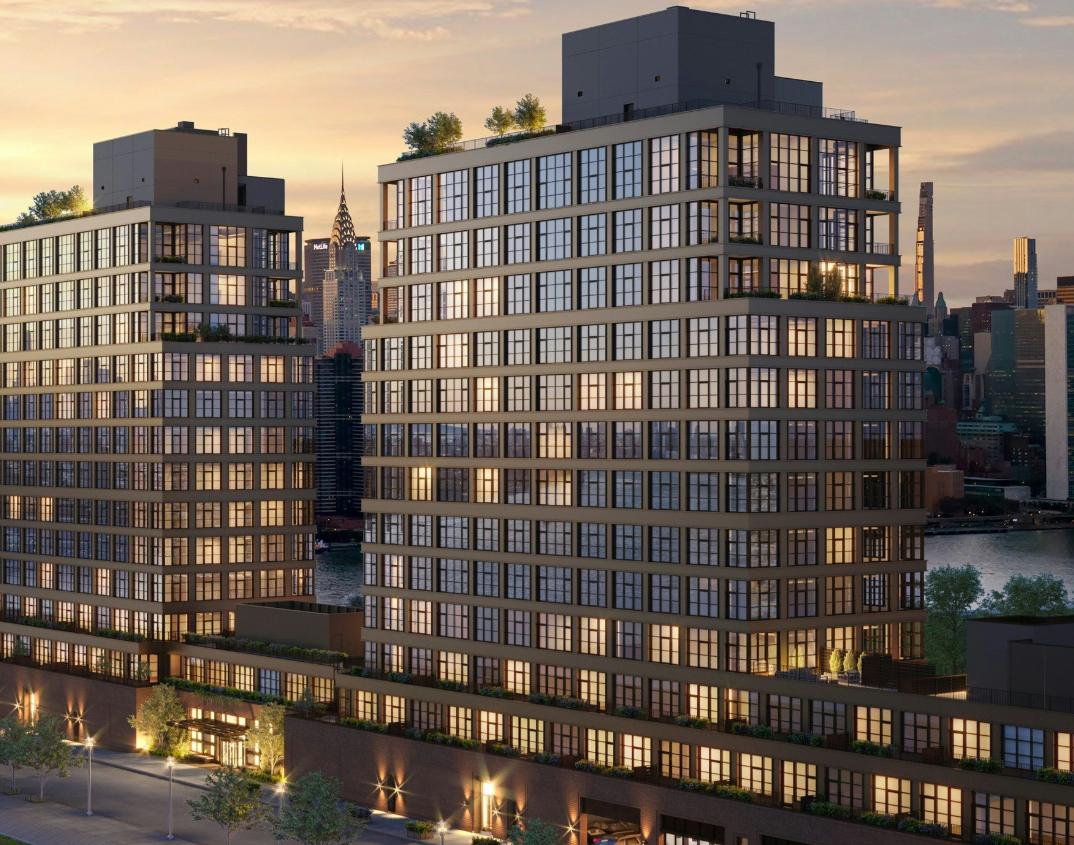
The building is defined by 2 13 story towers connected by a shared lobby whose step forms narrow on the higher floors. The two tower massing maximizes unobstructed views across the East River, taking advantage of its exceptional waterfront location. Due to the building's location in a flood zone, Morris Adjmi coordinated closely with consultants to provide active flood protection solutions such as deployable flood barriers, temporary stairs, flood vents and flood resistant glazing at storefronts. Located within the building's podium, many of the Huron's amenity spaces fall within the design flood elevation, including the indoor pool. Flood resistant glazing within these spaces maintains transparency. The building's glass and steel towers reflect Greenpoint's industrial heritage, while the rough brick podium is inspired by the materials and scale of surrounding warehouses. The heavily gridded facade is comprised of a window wall system featuring I-beam profiles on the pillars.
TRANSCRIPT
00;00;00;02 - 00;00;05;10
Doug Pat (DP)
Let's go inside the vault. The design vault.
00;00;05;12 - 00;00;31;14
Vincente Quiroga (VQ)
We actually decided early on that we would adopt the one story podium and also set back sooner than we actually needed to. It increases the lighting there allows for breezes that blow through. It also allows for multiple outdoor terracing to happen. So those units that aren't particularly high and don't have the same views can step out onto your terrace and see the water.
And so really maximizes the value and effectiveness and the quality of those spaces.
00;00;31;16 - 00;01;05;23
DP
This is my guest, Vicente Quiroga. I'll share more about him shortly. In this episode from the Design Vault we highlight, Vicente’s project 29 Huron in Greenpoint, Brooklyn. The Huron is a mixed use multifamily 13 story 266,000 square foot building with ground floor retail and high end amenities. In order to account for the narrow site geometry and flood zone, multiple massing schemes were studied with an objective to maximize height and floor area distribution and prioritize views.
The building is defined by 2 13 story towers connected by a shared lobby whose step forms narrow on the higher floors. The two tower massing maximizes unobstructed views across the East River, taking advantage of its exceptional waterfront location. Due to the building's location in a flood zone, Morris Adjmi coordinated closely with consultants to provide active flood protection solutions such as deployable flood barriers, temporary stairs, flood vents and flood resistant glazing at storefronts. Located within the building's podium, many of the Huron's amenity spaces fall within the design flood elevation, including the indoor pool. Flood resistant glazing within these spaces maintains transparency. The building's glass and steel towers reflect Greenpoint's industrial heritage, while the rough brick podium is inspired by the materials and scale of surrounding warehouses. The heavily gridded facade is comprised of a window wall system featuring I-beam profiles on the pillars.
Hi, I'm Doug Pat and this is Design Vault. Vicente is a registered architect and project manager at Morris Adjmi Architects in New York City. He holds a Bachelor of Arts in Architecture from New York University and a master of architecture from the City College of New York. He has a diverse portfolio encompassing various building types, such as historic renovations, interiors, hotels, art exhibition spaces, educational facilities and high end residential buildings in the Northeast, the United Kingdom and Spain.
Vicente also has a broad and unique understanding of New York City's building codes and requirements related to waterfront development and building within flood zones. He's currently managing the Construction Administration of 1 Huron on a 266,000 square foot multifamily building along the East River in Brooklyn's Greenpoint neighborhood. Prior to joining Maurice and me, Vicente worked on public restoration projects for the New York City School Construction Authority and the New York City Department of Design and Construction.
So welcome, Vincente. It's nice to have you with us today. Now, for those of you listening who have not heard our interview with Michelle Wagner from Morris Adjmi during the first season. Vicente, could you tell us a little bit about the firm? So where are you guys located? What's the size of the firm? How long has it been around and what kind of work do you do?
00;03;38;11 - 00;04;12;25
VQ
We're based in New York City, near the financial district and Wall Street. We also have a New Orleans office as well, because Morris is originally from there. So we have a broad practice, decades of experience, really working first in New York, and particularly in landmark districts and contexts as well as broadening that to sort of a national practice and also very holistic practice involving urban design, placemaking architecture, interiors, furniture and art services.
The New York office is approximately 70 people, and I think we have about 10 to 20 people in the office as well.
00;04;12;27 - 00;04;18;07
DP
So how long have you been with Morris Adjmi? How long have you been a registered architect and what do you do there?
00;04;18;10 - 00;04;58;00
VQ
So I've worked for about six years there and I've been a registered architect for 12 to 13 years in practice. Prior to that, over 15 years of experience since graduate school. So my role is project manager and flex project architect position, just really responsible for anything and everything to do with the project from client management, coordination, staffing, everything, being accountable for the project throughout the life of it.
And this one in particular has been special because, you know, in a large practice you often inherit projects or people come and go. This project for me has been involved since day zero through completion, so it's very special to me.
00;04;58;07 - 00;04;59;16
DP
And how long has it been?
00;04;59;19 - 00;05;10;24
VQ
Started in 2018, so, you know, approximately five or six years. Some of that was due to the pandemic. There is some slow down pausing during that time where it would have sort of completed a little bit faster.
00;05;10;27 - 00;05;18;03
DP
So most architects at Morris Adjmi are with one project the entire way through and are working on other jobs at the same time.
00;05;18;09 - 00;05;31;02
VQ
Everyone's multitasking. I myself have about six projects actively in different stages of a construction administration or schematic and design development as well. We like to flex our brain.
00;05;31;05 - 00;05;33;02
DP
And how do you like being a project manager?
00;05;33;09 - 00;06;04;25
VQ
It's good. It's a very challenging role because you're juggling practical logistics as schedule and staffing and the finances, but you're also deeply involved with building the client relationship and trust and working with the team to get to the milestones of the project and deliver what you're trying to do, but also take a higher view and really emphasize what are we trying to do here?
What is the objective from a practical standpoint to meet their needs of the project, But also what is the design move? What's the inspiration? What are we trying to do and maintain that throughout the life of the project, which isn't easy?
00;06;04;27 - 00;06;08;14
DP
No, it's not. And how big is the team for the Huron Project?
00;06;08;21 - 00;06;41;06
VQ
It's ebbed and flowed. At some points you have ten people during extensive documentation process. During CA, I think we have about five people. It's particularly because it has extensive interiors. We've staffed sort of an architecture team as well as an interiors team, and then they also have taken on the furnishings and art for the project. So we have over 30,000 square feet of interior amenity with pools and meeting rooms and kids rooms, as well as some outdoor activities where we also collaborated with the landscape architects. So there's a lot of things going on.
00;06;41;09 - 00;06;43;06
DP
And how did your office get the job?
00;06;43;08 - 00;06;59;03
VQ
Well, we were selected from a RFP process with the client. They had tried to develop it into a different solutions in the past and weren't very happy with those studies. So they approached us in a feasibility concept phase to sort of see what they could do as of. Right.
00;06;59;06 - 00;07;00;27
DP
And did you guys know the clients?
00;07;01;00 - 00;07;27;12
VQ
We knew them. It's really our first project with them. We've heard of them before. The client is interesting in that they have a range of experiences of multifamily and hospitality projects in their portfolio and they're also client. That's up for a challenge. You know, the site dimensionally was challenged, the site conditions in terms of remediation of the industrial sites and also its waterfront access, those are all challenges to the design that they were up for.
00;07;27;14 - 00;07;33;25
DP
So tell us a little bit about the history of the location of the site. What was going on there before you guys got there?
00;07;33;28 - 00;08;39;17
VQ
The history of the site, you know, it's a long, narrow site. Our building massing is 100 feet in the north south direction. It's over 500 feet in the east west direction. So it's very distended and lengthened and narrowed. The original site was a one story warehouse, which was kind of the context of the neighborhood. I lived in that neighborhood many years ago, and that was the context.
The context is changing primarily because in a sort of Bloomberg era, there was a zoning plan, but then the 2008 crisis stalled those plans, and it took a while for that increased zoning and development to come to fruition. And so we were part of that increased zoning for the site. In terms of the massing, we wanted to take a sense of the character that was there and honor that.
Not all the projects that we see built really take that into account. And we were thinking, what is the context now and what was the context in the past? So we really thought about selecting a one story podium and selecting Brick as the foundation for that, and also being practical about the openings and where they're located.
00;08;39;20 - 00;08;45;24
DP
Right. So that's a good segue to my next question. So what was the scope and the programmatic requirements for the project?
00;08;45;27 - 00;09;00;14
VQ
For a residential project to build as of right and the emphasis for the target population would be families. So large units, lots of two bedroom and three bedroom units, a lot of outdoor access and the views because of its waterfront proximity.
00;09;00;17 - 00;09;25;13
DP
Yeah, the site is unbelievable. And you guys really take advantage of just about everything out there. It's a great project. So let's talk about the design. So first let's talk about the building stylistically. So to me it looks a lot like a very contemporary warehouse space, right? So there's lots of glass. It almost appears lantern like in the photos that I saw at dusk. It's beautiful.
00;09;25;16 - 00;09;53;28
VQ
The choice of materials was very specific. The neighborhood has a unique grid orientation to the world, and so it captures the light in the sunrise and sunset, in particular. The brick we chose to be a rough, molded brick with a dark mortar and the metal panel has a mica flake to it that captures the light and changes throughout the day.
So sometimes it looks orange and copper. Sometimes it actually looks bronze toned and it has a chocolate sienna undertones to it.
00;09;53;28 - 00;10;05;23
DP
I noticed that in the photographs that the metal definitely takes on a bunch of different colors. So let's back up a little bit. Let's talk about the project restrictions, zoning, any historical requirements for you guys?
00;10;05;26 - 00;10;56;16
VQ
So the site isn't within a landmark district, but as our office really emphasizes context in our practice. So even when there's not those kind of historical restrictions, we like to start there and say, what does it want to be? And so we actually decided early on that we would adopt the one story podium and also set back sooner than we actually needed to.
First, to take a cue from that one story warehouse context, but also how that kind of massing relates to the street and the experience of the street. It increases the light and air and allows for breezes to blow through. It also allows for multiple outdoor terracing to happen. So those units that aren't particularly high and don't have the same views can step out onto your terrace and see the water.
And so really maximizes the value and effectiveness and the quality of those spaces.
00;10;56;19 - 00;11;05;22
DP
So let's talk a little bit about the building and plans. I'm assuming it's along because the lots a long rectangle, the building matches that although it steps back.
00;11;05;24 - 00;11;47;08
VQ
It steps back immediately after the first story. The first story is about 17 feet in height. And so there are some very high ceiling experiences there, ranging from 12 to 14 foot ceilings within the amenities alone. And that also gave us the room to deal with some of the flood constraints as well. Being that the site is adjacent to the East River the predicted flood zones right now are anywhere from 5 to 6 feet above grade. So that was a challenge and a constraint early on where we had to coordinate. We certainly decided we weren't going to excavate because of the high water table. So some of the functions that you would put in the cellar, we put a grade, but we often had to elevate the critical services six feet above where you normally would place them.
00;11;47;10 - 00;11;54;05
DP
So I'm curious, when you're digging that close to the water, do you get a lot of water, a lot of groundwater coming in when you're creating your foundations?
00;11;54;05 - 00;12;22;21
VQ
Yes, you do. Yes. Early on there was a lot of pile driving very deep anywhere from I would say 30 or 40 feet down. And those piles were linked up with large caps, pile caps and then mat foundations at the towers. The slab itself, because of, you know, you have to think more like a boat or a bathtub.
The slab itself was anywhere from 24 inches to 18 inches thick at various points throughout it. And it has to resist uplift.
00;12;22;23 - 00;12;28;07
DP
That's really interesting. So when you're driving piles and there's a lot of bedrock, how do you do that?
00;12;28;10 - 00;12;47;14
VQ
The nature of the historic waterfront is often landfill, so a lot of it is just trash or sediment over 200 years people just dump things in the river and it created a new shoreline, which was often the case, as you see in lower Manhattan as well. So we knew that we were going to have to go deep to hit rock.
00;12;47;20 - 00;12;50;29
DP
So you're driving the piles then 25 or 30 feet.
00;12;50;29 - 00;12;51;18
VQ
Exactly.
00;12;51;18 - 00;12;52;09
DP
I got it.
00;12;52;09 - 00;13;48;10
VQ
Yeah. And another challenge relating to the waterfront edge is we had to deal with actually coordinate with a marine architect because the edge condition was failing and we needed to remediate it. So we coordinated a new driving a new sheet edge along the shore to create that. The site actually is interesting in that it has a natural cove condition that other areas along the waterfront don't.
And so we recreated that in the remediation. But we also worked with the landscape architect to create this. We're obligated by zoning that create a setback for public access on the site. So they really leaned into that curved cove condition that's set back and stepped it down to the water gradually from grade and incorporated eco concrete blocks that have various pockets that allow kind of tide pool action to happen.
And so we thought about breaking down the shoreline a little bit and not just a hard edge.
00;13;48;12 - 00;13;57;21
DP
It sounds really interesting. I mean, when somebody owns a piece of property like that and it's really sitting on debris, in many cases, it's kind of unusual.
00;13;57;24 - 00;14;34;06
VQ
I mean, we tried to find opportunities to maximize the value of the site. With the two tower strategy. We put lots of valuable floor area up high and took advantage of the views. We made double the amount of corner units that you could have by having a two towers. We also separated them over 100 feet apart so that the West Tower really gets out there in front of other buildings that it's alongside.
The East Tower is set back for the east to kind of get around other buildings that could obscure it. And we were actually surprised at how good the views are as it was being built. We knew it was going to be good, but it actually turned out to be better than we anticipated.
00;14;34;09 - 00;14;41;08
DP
It's really beautiful about the design as the corners are opened up then to become porches, right? Terraces, is that correct?
00;14;41;10 - 00;15;04;06
VQ
That's right. This is part of that is a response to some zoning constraints is at a certain height you also had to step back in multiple directions. And one of the things that we like to do is incorporate our balconies into the building facade and not just look like appendages. So we really took advantage of that setback rule and created these covered protected balconies.
Also, it's quite windy, so that coverage helps screen it a little bit.
00;15;04;08 - 00;15;08;14
DP
So an open terrace meets the setback requirements then?
00;15;08;21 - 00;15;09;04
VQ
Yes.
00;15;09;07 - 00;15;13;25
DP
Wow, that's really interesting. So did you guys max out the building height then?
00;15;14;01 - 00;15;36;14
VQ
Yes, we had a R six zoning. We were adjacent to R eight. So there's some taller buildings in the surrounding area. But we did try to sort of maximize it. Part of also with the flood zoning, when you have extreme water table situation, you are allowed to increase up to a certain height. So we were able to utilize the various zoning restrictions to our benefit.
00;15;36;17 - 00;15;39;19
DP
So how long did the building review take with the city?
00;15;39;26 - 00;15;57;14
VQ
Well, certainly just even the public park portion we started in 2008. It probably took a year and a half to two years alone. At the same time, we were overlapping with our design and documentation, so it probably took another two years to really finish all the documentation.
00;15;57;17 - 00;16;09;00
DP
So let's talk a little bit more about the parameters for the building materials and the use of masonry, which from what I can tell from the photos is at the base and then the circulation tower, is that correct?
00;16;09;02 - 00;17;40;06
VQ
The circulation towers are actually stucco with a color to match the metal panel facade. They were really thought of as almost like a concrete massing for the podium. We selected a Glen-Gery Brick that was a molded modular brick. It has orange undertones and some brown tones as well along its finish, and it's a bit city, and we specifically selected it for its character.
It has texture, it catches the light in an interesting way. It's a very practical brick. And so we tried to think about just in the same way that we thought about the rest of the massing and even some of the interior design elements is to marry a practical industrial esthetic that was indigenous to the neighborhood, but also elevated and make it a bit of a luxurious esthetic as well as a hybrid.
So we selected the brick, we selected a dark mortar and did simple moves with the design in terms of let the program and the adjacencies define where those openings wanted to be, because again, 500 feet, we weren't over doing the modulation of that. We really wanted it to say this is where the windows want to be based off of the function of the plan.
And when we knew where those openings would be, we also decided upon simple detailing, corbelling of 1 to 2 inches stack stretcher, bond patterns, soldier brick patterns, which would have been indicative of the kind of twenties, thirties or earlier warehouse context. You know, again, just trying to tie it back to what would have been if it had been built 100 years ago.
00;17;40;08 - 00;17;50;25
DP
Well, I noticed there's a really pretty detail where you're setting the masonry back from the facade to create a reveal for the headers and for some of these openings.
00;17;50;28 - 00;18;03;17
VQ
Yes. And it creates a lot of interplay of light and shadow along the facade. And that was always thought about, you know, how do you deal with such a long facade that would have a lot of opacity to it, but create interest in that opacity.
00;18;03;19 - 00;18;05;17
DP
So did you guys draw the building in BIM?
00;18;05;17 - 00;18;06;17
VQ
Yes.
00;18;06;24 - 00;18;07;29
DP
You guys work in Revit?
00;18;08;04 - 00;18;10;12
VQ
Yeah, we're predominantly a Revit office.
00;18;10;14 - 00;18;19;08
DP
So the studies that you did initially, did you guys draw the whole building in 3D and then show the clients and so they got to see the model? Or did you guys build a physical model too?
00;18;19;10 - 00;18;43;16
VQ
We always start with the Revit process because it has its advantages, sort of quick moves and early viewing studies as well as planning. We did some early models, for the sales we did a full scale model of the whole building as well as the interiors. There's actually a drawer that pulls out of the base of the model and you can see all of the amenities articulated, which is incredible.
00;18;43;18 - 00;18;51;25
DP
Again, I'm curious how large of a set does a project like this create? How many pages just for architecturals?
00;18;51;27 - 00;19;11;26
VQ
That was always a challenge for the documentation was the East West Towers had their own articulations. Between the architectural division and the supporting engineering divisions, we had four volumes of documents just on drawings alone, and I want to say the architectural volume was easily 100 sheets or more unto itself.
00;19;11;28 - 00;19;24;27
DP
Another detail I really like is the exterior facade. So you made the piers and to some extent the floor slabs as they’re exposed on the exterior. It's not really a slab, it looks like steel. It's a really pretty detail.
00;19;24;29 - 00;19;50;24
VQ
Yeah, it's a simple C channel profile that's in ACM, Aluminum Composite Metal panel, and it's an open range screen. We really worked with our facade consultants and structural to simplify the detail as much as possible and maximize the windows. You know, again, this project, by its site positioning and daylighting it wants big windows. So we wanted to coordinate that with slab covers and the column covers.
00;19;50;26 - 00;20;01;15
DP
So could you give me more of an idea of how that open rain screen works? I mean, when I'm looking at the exterior photographs does not look like a rain screen at all. I mean, it looks like an enclosed system.
00;20;01;17 - 00;20;35;18
VQ
The profile clips the slab edge and tacked on to a fin that is part of the window wall extrusion. And that sort of stabilizes the top and bottom relationship and sets the datum for every floor and at every joints we leave it open behind that paneled system is a mineral wall assembly and waterproofing behind that and at the open joints, we coordinated with the shops to return the finish and bend, partly to stiffen the profile, but also finish it off and create a sense of closure.
00;20;35;20 - 00;20;40;20
DP
And what would be the advantage of doing a rain screen versus doing a closed system there?
00;20;40;22 - 00;20;56;05
VQ
It was more practical from an installation and sequencing standpoint and also just maintenance, you know, tall buildings, having to deal with caulking and repairing it later. It's a challenge and you have to think about that for clients’ maintenance. You know, it's a real concern.
00;20;56;07 - 00;21;32;06
DP
Yeah. I'm just getting myself familiar with rain screens. I'm behind residential work and we did a rain screen for my most recent home in New York State and was a real education. It's such an interesting system and I would say I think I tested on it for some CE units that I took maybe a couple of years ago and I thought, Wow, this is a really interesting idea where the facade is actually wide open in some ways and water's allowed just kind of move through it, dry back out again.
You're eliminating a lot of challenges long term by using rain screens.
00;21;32;08 - 00;22;01;14
VQ
I actually have an extensive experience from my school construction authority days of working on rain screens that we often would take existing schools that are 100 year old buildings that were solid wall assemblies, and we found water infiltration. We would take back the finish to the back up and create narrow cavity drainage plains with brick or precast or GFRC elements.
It's definitely in my wheelhouse to work in that context.
00;22;01;17 - 00;22;19;29
DP
It makes perfect sense to allow a wall to dry out rather than capture water behind the facades. All right. But it took us hundreds of years to figure this out. Very interesting. So you guys drew the building in BIM. You have the 3D model. How long have you guys been working in Revit?
00;22;20;01 - 00;22;22;00
VQ
15 to 20 years at least.
00;22;22;03 - 00;22;34;21
DP
Again, I'm kind of curious as an offshoot to this discussion. When you hire people, do you hire people who do not know how to use Revit? Maybe they've used Micro Station or they use ArchiCAD or AutoCAD and then you train them.
00;22;34;28 - 00;23;20;13
VQ
It's ever more common for them to have experiences these days. I actually didn't know Revit when I started, and that was a learning experience for me. You know, it has its pros and cons, you know, if you're an old school CAD person, but I value its ability to, you know, you move a wall, it moves everywhere. You don't have to constantly track that element.
And also when we're doing design options for large complicated projects, thinking about, well, what if the window appears or this dimension or that dimension, we can iterate and quickly deploy changes, you know, especially this day and age where you're dealing with value engineering, they come back with bids, you say, it's got to come out of somewhere. It's an important tool to be able to pivot and retool the design, adapt the design to accommodate these requirements.
00;23;20;15 - 00;24;10;27
DP
It's a really good point for those of you who don't know what BIM is, it's building information modeling, so you're giving lots of information up front to building parts like walls and plan, for example. And initially, at least in my experience, it takes a lot longer to draw something in the beginning, but you've got all that information in there.
So Vicente is explaining that what happens is when you need to make a change, the change is really quick because you're just changing one thing out of a series of pieces of information that you've already kind of filled in. So BIM has really changed the business over the last 15, 20 years. So do you guys learn anything interesting through the design and construction process? Maybe something you'd never dealt with before in terms of details or dealing with the client or the?
00;24;10;27 - 00;25;39;01
VQ
GC Well, certainly that flood design is evolving. We came up with some strategies that even the rules have changed since we started this project. So it's constantly evolving target and some of the forecasted flood elevations have changed across time. So that's something that's an ever evolving discipline of knowledge and thinking about active systems versus passive systems. You know, this building relies on a mixture of passive and active systems, some that the building is set up or either elevated spaces or the wall assemblies set up to resist water, the force of water in other elements, it's relying on staff.
We're trained to deploy solutions that are either barriers or stairs to reduce that access throughout the building. And that's a big challenge with any project that's in a flood zone is egress, space planning services and also mitigating cost. The developer and the clients and the residents ultimately will want to experience these views. But those views are difficult if we're anticipating flooding.
Nobody wants to have windows that are six feet off the ground. We were selective in where we put our efforts and said these areas are going to have the views. We're going to coordinate flood resistant glazing there. The same thought process at the commercial retail and lobby. You know, the places that it mattered. We wanted to maximize the glass. In other areas, we dialed it back down to really use opaque assemblies to articulate the design.
00;25;39;04 - 00;25;42;16
DP
So I mentioned deployable flood barriers. What is that?
00;25;42;18 - 00;26;21;26
VQ
I think of them like Lincoln Logs. Well, there's a range of options out there, but they are often aluminum extrusions that gasket together and stack along channels and they'll go to whatever height that is necessary. They often have back bracing or steel or aluminum sections. Those elements either are built into the facade already or tie back into anchor points that really transfer the loads to the structure.
It's a very complicated interaction and coordination of the design that you want these facade protection elements, the superstructure and waterproofing, you know, it all has to work and it takes a lot of effort.
00;26;21;28 - 00;26;25;28
DP
So what happens to that barrier when there is a flood? Do they break away?
00;26;26;00 - 00;26;27;17
VQ
They resist. They act as a wall.
00;26;27;17 - 00;26;28;21
DP
Resist. Okay. Yeah.
00;26;28;22 - 00;26;39;05
VQ
Normally they're stored in a closet until they're needed. The idea is if you have notice of an impending storm or hurricane, then you would deploy them in advance of the storm.
00;26;39;05 - 00;27;06;01
DP
Thus deployable. Yeah. Interesting. So Vicente, you're a relatively young architect. I say that because at one time I was a young architect and I used to tell my students that you were considered young at 40 or 50. I'm now 55, so please don't be offended by my comment. But based on what you know so far, do you have any words of advice for your younger self or even young architects like yourself just getting started, Not just getting started, but getting started.
00;27;06;08 - 00;27;41;19
VQ
I think curiosity and a willingness to learn a variety of things. Architecture is an interesting creative discipline because there's a lot of rigor and science and technology and law backed up into that knowledge. But it's also trying to solve a problem. You have to really embrace the learning curve of that and learning things that you may not have mastery of, but your organizing, those various constraints and knowledge is into a solution.
And I think that's, if you're enthusiastic and go with it and embrace it, I think you get a lot out of it.
00;27;41;22 - 00;27;57;05
DP
Yeah, I totally agree. I like to tell people architecture is a field where you have to know a lot about a lot. It's as simple as that. So, Vicente, it's been great to speak with you today. Thanks for your time. Where can people go to learn more about Morris Adjmi Architects and yourself?
00;27;57;11 - 00;28;05;26
VQ
You can go to MA.com, our website. You can also check out The Huron Instagram. You can also visit the site. It's a beautiful building.
00;28;06;02 - 00;28;08;18
DP
Yeah, it's a great project. Well, thank you very much, Vicente.
00;28;08;22 - 00;28;12;23
VQ
Thank you.
You May Also Be Interested In
We Can Help With Your Next Project
Discover the latest + greatest in design trends, industry news & pro tips from pros.
For all of your project needs, you’ll find everything you need at a Supply Center.
Let Us Know How We Can Help!
Design Vault Ep. 21 Brick of Chicago with Will Quam
ABOUT THE ARCHITECT:
|
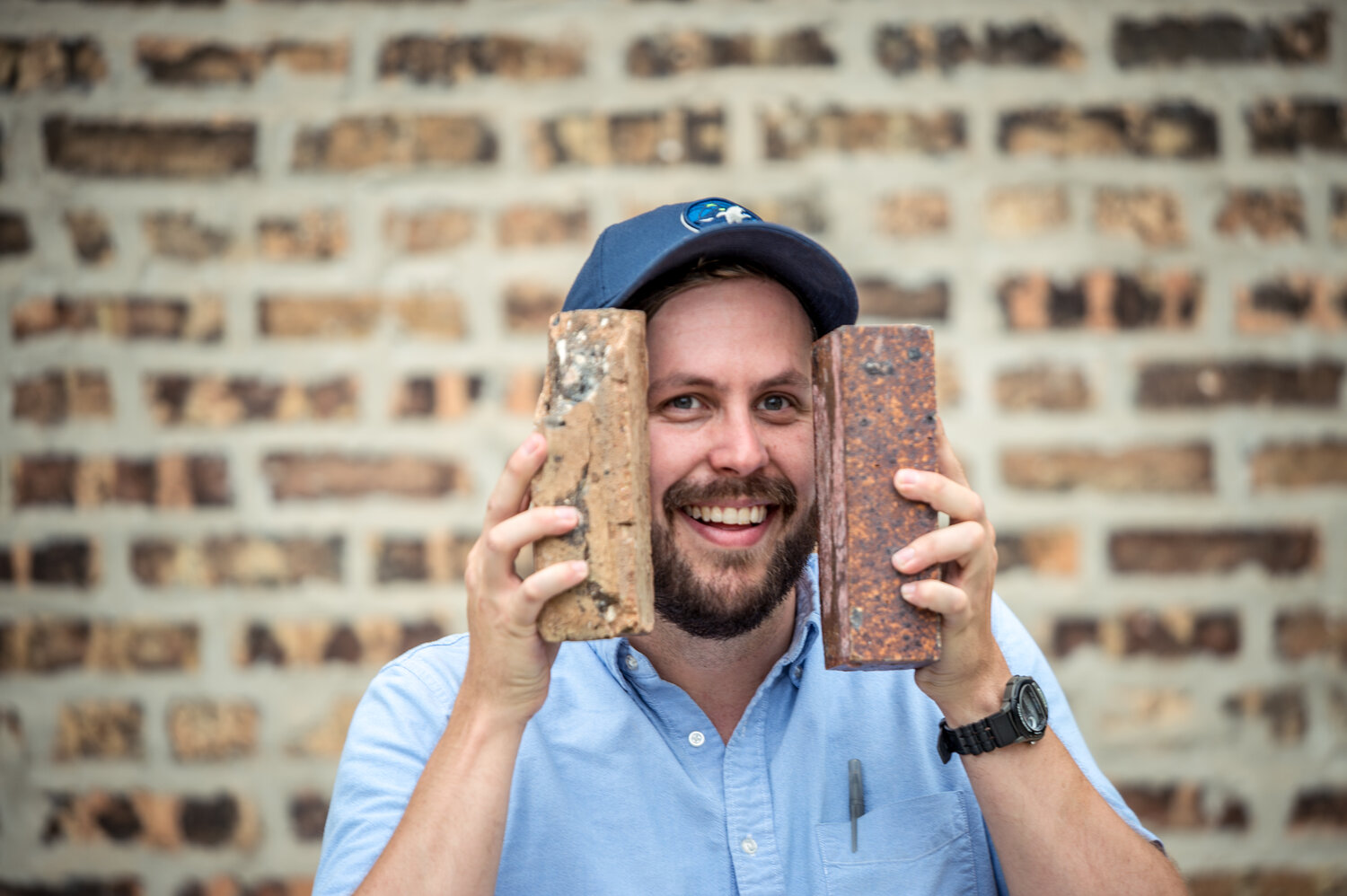
My name is Will. I live in Chicago, I’m an architecture photographer, architecture writer, and researcher. And I love bricks.
|
|---|
TRANSCRIPT
00;00;00;02 - 00;00;05;12
Doug Pat (DP)
Let's go inside the vault. The design vault.
00;00;05;14 - 00;00;30;24
Will Quam (WQ)
The Fulton Market area, I think, is the place where some of the best brick architecture in Chicago is currently happening, because it's a place where you have a lot of these historical buildings and you have a lot of people coming in there building offices, residences, restaurants, and they want to make it feel like it's part of that history.
And so they're using brick. And then you have a lot of architects who are really pushing the limits on what they're able to decoratively do with the brick.
00;00;30;26 - 00;01;42;04
DP
This is my guest, Will Quam. I'll share more about him shortly in this bonus episode from the Design Vault. We talked to Will, an architecture photographer, writer, researcher and man who was fascinated with brick.
Hi. I'm Doug Patt and this is Design Vault. Will Quam lives in Chicago. He's currently writing a book for the University of Chicago Press on the history of brick architecture in the city.
He documents brick as a way to pay more attention to the world around him and encourages others to do the same. He believes it's been like learning a whole new language and a means to discovering great texts hidden in the buildings that surround him in his own words. Everything built is designed and has impact, good or bad. It's easy to walk by something like a brick building and pay it no mind.
But the world is so much more interesting when you ask the question, What is that and why is it the way it is? Above all, he believes nothing is boring and everything can be interesting and exciting, even bricks. So welcome Will, it's nice to have you with us today.
00;01;42;07 - 00;01;43;29
WQ
Thank you so much, Doug. It's great to be here.
00;01;44;02 - 00;01;50;09
DP
So tell us a little bit about where you're from and how you became so interested in brick and brick architecture.
00;01;50;16 - 00;03;52;24
WQ
I became interested in bricks through a very circuitous route. I am from Saint Paul, Minnesota, originally, which is a good brick town, a smaller brick town. I studied theater, I directed, I did set design. I acted, and I moved to Chicago originally to be a theater teacher, and that's what I did for about nine years. I taught middle school theater.
I taught afterschool programs, in school residencies. I wrote and directed plays with middle schoolers. The great thing about that work, besides just, you know, it was so fulfilling working with kids is my work brought me all over the city in the suburbs of Chicago, and Chicago is massive. The south side of Chicago alone is the size of Philadelphia.
And so coming from a place like Saint Paul, it was an introduction to a much larger built world. And so through my work, I was, you know, on the north side in the morning, the south side in the afternoon, the west side, in the evening, the suburbs the next day. And going around Chicago, you start to see that there are these very repetitive building types, the bungalow, the two flat, the courtyards style, the apartment hotel, and they're all made of brick pretty much exclusively.
You get some stone, you get the very occasional wood, but brick is the defining material. And I started to notice that it was the brick and specifically the face, the bricks on the front of these buildings that made them all unique. And they weren't just these red rectangles that I'd always thought of a brick as being. There's texture, there's color, there's pattern, there's usage.
And so I started taking pictures on my phone. And then one day in the basement of a theater where I was running a middle school theater camp, I started Instagram and posted them and people started asking me questions. And so I said, Well, I better research this, dove down the rabbit hole and then seven years later, here I am.
It's become my full time job, taking pictures for architects and suppliers and engineers. And then I lead these brick tours to such a natural spinoff of my earlier work. Taking that excitement and giving it away. I think that's the biggest thing about my work is I'm not trying to gate keep anything. I don't have a background in this.
I'm just a very passionate learner. And then on, my goal is just to give everything away in the most interesting and exciting way possible.
00;03;52;26 - 00;03;55;08
DP
Do you ever think to yourself, I should have been an architect?
00;03;55;14 - 00;04;36;20
WQ
I'm very lucky in that my great grandfather was an architecture journalist and instilled a lot of that in my dad. My great grandfather's the great John Entenza, who did the case study houses. I never met him, but my dad knew him well. So we grew up going on a lot of architecture tours, a lot of historic home tours.
And really the importance of the built world was instilled to me as a young man, but it was always something I thought, you know, I would just enjoy. And maybe that is I'm very lucky that I grew up playing trombone and singing in choirs, and I went to space camp and I was encouraged to have all these very multifaceted interests by parents who had these very multifaceted interests as well.
And so I was very lucky to be able to feel like I could explore things.
00;04;36;25 - 00;04;58;26
DP
It sounds really cool. I mean, it's almost like you're walking down the street and you see a building and it's made of brick, and it occurs to you, you get this thought like, Hey, that's kind of cool. I wonder why that looks like that. And then the next day gets a little more important. The next day gets a little bit more fascinating, and all of a sudden you've got this interest in something that sits so far outside of your wheelhouse. In a way, it's amazing.
00;04;59;02 - 00;05;37;16
WQ
Exactly. You know, it starts with somebody asking, What's that pattern? And me, I guess I'll look on Wikipedia and then I'm emailing a brick dealer, and then I'm finding books on the history of brick architecture to the point where now last week I spent a whole day at the University of Illinois Library reading through old copies of the brick and clay record from the 1970s.
And what makes it so great in Chicago, too, is you truly can walk down any street and you'll find great brick architecture, any residential street anywhere in this entire city. And the city is so big and changing so much so constantly that you can go down the same street again ten years later and you can have so many new things to discover.
00;05;37;19 - 00;05;41;03
DP
Yeah. As an aside, have you been to the Monadnock Building?
00;05;41;10 - 00;05;42;19
WQ
Love the Monadnock Building.
00;05;42;26 - 00;05;59;14
DP
Right? When I was in architecture school and I learned about that building and the fact that the base is six feet thick of brick masonry as the load bearing structure. The first thing I did when I got to Chicago was go to that building. I'm I just couldn't believe it. Right. It's amazing.
00;05;59;17 - 00;06;40;15
WQ
It's an unbelievable it's one I found has such lasting power as well as I interview architects. So many times, I'll ask them, what's your favorite brick building in the city? And I'd say 50% say the Monadnock Building. It's so honest with its material and so inventive at the same time. You know, one of the things as I've looked at it and photographed it, I've noticed is there's no hard lines on the building.
It's all using this molded brick made by the Chicago Anderson Brick Company. You get the sort of the plinth that rises up and then curves into the building and that it's not a sharp edge from a brick to another brick that's turning; there's a rounded brick to bridge that gap at every point. So the lines are kept incredibly smooth throughout the whole thing through this really intentional use.
00;06;40;17 - 00;06;41;27
DP
Yeah. Now, how about the cornice?
00;06;42;03 - 00;07;31;18
WQ
Oh, tremendous. Every piece of that was intentionally planned that way. There's nothing was done on accident, and that's still true today. You know, one of the things I try to push back on a lot is, you know, in my work, I'm a lot of times focusing and studying and photographing historic buildings and they're amazing. But people sort of feel that permission to say, oh, well, we just don't make them like we used to.
And there's only crap being made today and it's just not true. There's a lot of really amazing buildings being built today. The way we make them is different. The style we make them is different, but that's because so much has changed in the materials we use, making things efficient, making labor safe. And there's a lot of really great design out there that if we just say we don't make them like we used to, we neglect the work that architects and designers are still doing today with the same intentionality they were doing in the 1890 and the man was built.
00;07;31;25 - 00;08;38;20
DP
Well, it's a great segway. So we're going to talk about a few pieces of architecture today, two Chicago pieces and one New York City and then maybe some other buildings. So let's dig in here and learn a little bit more about brick architecture. First, let's talk about the Chicago Park District HQ Building by John Ronan Architects in Chicago.
The Chicago Park District headquarters is a 78,000 square foot building comprised of headquarters office space for the Chicago Park District Staff and Field House on a 17 acre park. The headquarters building is a two story circle in plan, with two courtyards. The building has a unique facade with individually curved metal panels, curtain wall glazing and a light brown brick facade with brick patterning.
An interesting fact that Will points out about the building, and in regard to the brick masonry set, the bricks used are all Chicago common bricks which were made locally. So Will, let's start out with that. Tell us a little bit more about the bricks of this building.
00;08;38;23 - 00;12;56;07
WQ
Yeah, they're made of Chicago common bricks which are the bricks made locally in Chicago and most cities in the 1800s and for part of the 1900s were producing their own brick, both common brick and face brick, face brick being the nicer, more intentionally made brick used on the fronts of buildings and common brick, the cheaper stuff to go in the guts.
What made Chicago unique is that we only made common brick. Our clay, which we had in massive abundance thanks to this glacial lake that you cover all of this dry land in Chicago, Lake Michigan used to extend far over what's now dry land. The still waters of that lake allowed all this clay to settle, but all this other stuff settled in that clay as well.
The perfect mix for making bricks. But it made bricks that were, frankly to those architects of that era, very ugly. They weren't predictable in any way. The levels of mineral in them were really varied, but one batch might come out yellow, one brown, one pink, one red, all these chunks of limestone in them. But the clay was right there and it was super cheap to make.
And so we made a ton of that and threw it in our buildings. But then we would import other bricks, nicer bricks from Saint Louis or Milwaukee or Pennsylvania or Texas to put on the fronts of buildings. But Chicago kept making these common bricks, and we made a massive amount of them. In 1871, the year of the Great Fire of Chicago, Chicago produced about a hundred million of them a year.
And part of what makes the timing of the fire so good, a little ironically, is that the year of the Fire, 1871, the Chicago brick industry had really finished mechanizing pretty much by that year. And so when the city burned down, the city was in, the brick makers of Chicago were in a unique position to help rebuild the city out of brick.
So that fire code, a new fire code could be met in a way that other cities like Boston, Boston's burned down several times because they kept having to rebuild out of wood. Chicago had this local brick making machinery to make it possible to rebuild with brick. So the year the fire reproduced about 100 million of them a year.
Ten years later, Chicago was producing 200 million of these a year. And by 1916, Chicago was producing just shy of 1 billion common bricks a year. And that's the year Chicago actually surpassed the Hudson Valley of upstate New York, which provided all the common brick for New York City. By 1916, Chicago's producing more common bricks than the entire common brick area of New York City.
About 11% of all the brick made in the United States in 1916, face brick or common brick was Chicago, common brick and more by about 100 million than all the brick made in Missouri, Wisconsin, Iowa and Indiana combined that year. So we made a ton of brick in these surface plants all over the city, and we kept it all local for the most part.
And so you go around Chicago into alleys and sides of buildings, and this is the brick that you see, this messy looking brick. And it was always covered up because it was considered too unpredictable, too ugly. But what happened was, starting in the 1960s, as we're entering this era of bright glazed bricks or these sort of sleek, smooth, sort of noisy and modern bricks, you get a generation of architects who start to be really drawn to the antique accidental look of these bricks, the variation on them.
This is the time as urban renewal was sort of ravaging Chicago, when all these buildings are being torn down all over the place and people start to save these common bricks and put them in new buildings because they can add the sense of antique ness and age to buildings in a way that a modern market and this new market of reclaimed brick is born.
And then by the 1982, when the last Chicago common brick manufacturer shuts down, there's suddenly this massive market for these reclaimed bricks. First for an antique look to a building in the seventies and eighties as people are really drawn to these earth tones, browns and rough sort of creamy whites of brick. But then today, especially, and in the case especially of this new Chicago Park district headquarters, these bricks, they've embodied carbon in them and so they get you a lot of lead points and they're much more eco friendly material to use.
And so you start to see a lot more use of this reclaimed material because of the way it ties in to a greater focus on ecological buildings. And it's perfect for this building. It's a gorgeous building sitting on this massive park and having this really earthy brick that's full of color variation, full of all these stones, full of all this stuff.
It makes it feel like it really is growing out of the park and a part of the park rather than a lot of park buildings that feel like they’re just placed down into the park.
00;12;56;09 - 00;13;07;03
DP
So I'm curious, just to back up, why did Chicago stop producing common brick? Was it because brick masonry was no longer load bearing? We were using steel and iron.
00;13;07;10 - 00;15;23;04
WQ
Yes. So Chicago and the country stopped using common brick, mostly after the Second World War when cavity wall construction became prominent. Concrete block is just a lot larger and a lot cheaper. In 1952, in Chicago, a 77 square foot wall of Chicago commons would cost about $120 to lay parts and labor. The same size wall out of concrete block was about $45.
And so this cost savings were huge. As labor then became more and more expensive and concrete became more and more affordable, people started moving away from the common brick. Then what happened is in 1970, Congress passes the Clean Air Act, forms the EPA and brick plants all over the country are putting tons of sulfur dioxide and ozone and smog into the air.
And for a lot of those companies, it was not too difficult to get into compliance. You know, you have a big beehive kill or tunnel kill, and you could put a scrubber on your vents and start to clean up your operation. These common brick manufacturers, by that point, there were just two left in the Chicago area. They were using what are called Pskov kilns, which basically you take a bunch of unfired bricks, make them into this massive pile with channels running through it.
You cover it in fired bricks and set it on fire from the inside. It's a super cheap way to make bricks that don't need to look nice but are effective. But the comparison I like to make is a traditional kiln works like an oven. You take your turkey, you put it in the oven, you close the door, you turn it on.
A Pskov kiln that the Chicago commons were made in. You take that same turkey, you put it on your countertop, you stick a gas jet in the butt you cover it in deli meat and light it on fire. It's a lot more messy. It does the same job, but it's a lot more messy and it's a lot harder to clean up.
And so the Chicago common plants looked at the economics. They were losing market share. They looked at the clay. They had left the Illinois brick company in Blue Island decided, we've only got about three years clay left or just shut down. And then they looked at the environmental impact. One of these companies in Muncie, Indiana, on days that they were burning there were certain intersections you just couldn't drive because they were so smog filled. To the credit of the American beer company who was in that last company, they spent tens and tens of thousands of dollars trying to find ways to come into compliance and to make it a cleaner operation and continue this business.
But it ultimately just wasn't economically viable.
00;15;23;10 - 00;15;34;11
DP
So back to the Chicago Park District headquarters building, did you ever read anything about why John Ronan Architects ultimately used common brick for the exterior of New York?
00;15;34;14 - 00;16;42;04
WQ
Yeah. A friend of mine supplied those reclaimed bricks for him. A big part of it was that environmental impact using that embodied carbon, using a local material, not needing to create any new emissions through the creation of material, and also the fact that it's a reclaimed material taken from demolished buildings nearby. It's taking that local material and using it for a local purpose, making it something more true to that place.
Then a different kind of imported brick. And John Ronan is an architect who really loves brick and has used brick in really creative ways. In Chicago, he did a high school at South Shore International Academy where he was very specific about these different colors or slightly different tones of brick, sort of a creamy white and a little bit more of a beige and figuring out exactly where he wanted these bands to go on the building.
He had a house on the north side that uses these super long format bricks in a really interesting way to enliven up this very geometric or rectilinear facade. So someone who's super intentional about brick and so the Park District headquarters is another example of him using brick in that really intentional way.
00;16;42;07 - 00;17;36;17
DP
Yeah, the building's really unique and it sounds like a very thoughtful office. So next, let's talk about McDonald's HQ in Chicago. The architect of record was Gensler. When I sat down to do a little bit of research online, I really couldn't find a whole lot of pictures which describe this building. There are many exterior pics that are kind of further away shots.
The interior photos that I did find on a variety of websites, really quite stunning with wood clad interior, gracious curves and a very contemporary feel. The exterior is also quite interesting. The building almost seems inverted with a steel and glass base and square glass curtain wall openings framed in brick above. So these brick frames are really actually quite beautiful.
And you sent me a couple of photos of these. Let's talk about those.
00;17;36;20 - 00;19;44;07
WQ
Yeah. So it's a big steel and glass building, but it does have these large brick frames that surround two stories of windows each. It's all precast thin brick made by a company in Germany. And to get to the importance of what that brick is on the building and why it's there, I think it's important to talk about the neighborhood it's in.
It's in an area called Fulton Market, part of the West Loop of Chicago, which a lot of people have probably heard of as sort of Chicago's new restaurant and tech hub. It was an area of meatpacking and warehouses and manufacturing for many, many years. In the last 15 years, it's become this massive area for some of the best restaurants in the city.
Google has a building there now, and so it's full of all these big brick buildings, these big old brick warehouses or storage buildings with large windows. And so I think it's so wonderful that this new steel and glass building made the intentional choice to embrace that brick material. But the other thing I love about it is that we talked about with Chicago common brick brick is no longer really being used as a structural material in the United States.
And so buildings like this that take that nature, that brick is no longer a structural material. They take it and use it instead as a purely decorative material. And I think they do such a wonderful job on this building because it's the thin brick that runs around these windows, sort of blue ish and golden and orange colors with a rolled edge and a little bit of sort of a knock or sort of bumps and stuff on the face of it.
It describes this herringbone and zigzag pattern through these spandrels and these mullions that run along the building in a way that serves no structural purpose at all. But it is beautiful to look at and tie in through the use of that brick. It ties it into the neighborhood. I think that's just such a wonderful thing to do at a time when a lot of new construction and here I've said earlier, there is a lot of great new construction, but there is a lot of construction that's using brick and really uninspired ways it's just slap at a bunch of structures up on a wall or between windows. And so to see a building like this, a really prominent building in a really prominent location, in a historic location, I love that they're using brick in such an interesting way.
00;19;44;09 - 00;20;03;15
DP
Yeah, I'd love to see the studies in the architect's office for all of these or for the variety of brick patterns where you get soldier coursing. You've got stacked herringbone, as you stated, you almost have something that looks close to a Greek key as well. It's really quite beautiful and the color is stunning in the sun.
00;20;03;22 - 00;20;29;01
WQ
It really is. I captured it in those photos I sent you. It faces the north side of the street. And so you get this beautiful raking light on it in the summer evenings and in the shadow, it's still got this sort of lovely warm orange to it. So it really is very present and there's so much going on.
It's the sort of thing where you look at it and you trace it along and you to start to, like you said, start to find all those little details, different details scattered throughout the brickwork.
00;20;29;08 - 00;20;54;03
DP
You know, it's really nice too. It's almost as though they're expressing the structural system on the exterior with these super tall piers which frame these windows. One starts to think, okay, well, maybe the structural steel system is hidden within that. I don't know whether or not that's actually the case, but it does remind one of an industrial building in Chicago 80 or 90 years ago, right?
00;20;54;09 - 00;21;49;09
WQ
Yeah. And those are the buildings that surround it there. And another little twist. I like that they idea is that those brick frames are not surrounding every single window or they don't run on every single story that you do get these big frames that surround two or three stories I can't quite remember. And so it still gives it this very light feeling, this very open feeling, while having that strong brick tie into the neighborhood.
And the Fulton Market area, I think is the place where some of the best brick architecture in Chicago is currently happening because it's a place where you have a lot of these historical buildings and you have a lot of people coming in there building offices, residences, restaurants, and they want to make it feel like it's part of that history.
And so they're using brick and then you have a lot of architects who are really pushing the limits on what they're able to decoratively do with the brick. And the McDonald's was a pretty fairly early example of that. But there are many more that have come in since they're in the area.
00;21;49;11 - 00;21;58;24
DP
That's an interesting point. So early McDonald's structures across the United States, do you know if they utilize brick pretty heavily?
00;21;58;26 - 00;23;58;26
WQ
You know, I've researched this. I have emailed with a fast food historian to find some answers. So, yeah, the early McDonald's drive ins were clad in ceramic tile, whites, bright whites, bright red, and then they made a very intentional choice. In 1975 or so, they did a big redesign sort of as the baby boomers who were driving there are now buying homes.
And what they did was they started putting these dark brown bricks. They redesigned their restaurants using this very dark, earthy brick and adding that classic McDonald's double mansard roof. And this is the era when like Wendy's ads for solariums, the restaurants become these very earthy buildings. The first one of those was in Matheson, Illinois, in the south suburbs.
And that was the time too where McDonald's actually built their first corporate headquarters in Oakbrook, Illinois, designed by Dirk Lohan. Mies van der Rohe's grandson, like those restaurants, is a building very much, it's covered in this wonderful sort of earthy iron, spotted brick and surrounded by a manmade lake and all these trees and very much engaging with nature at a time when they're trying to push away from that kind of bright colors, machine age, looking stuff into a more earthy thing.
And then you get into the 1990s and McDonald's does another major rebrand, adding these sort of pastel colors or a lot of painted white brick that I think a lot of people my generation are familiar with as well. And then now a lot of those McDonald's, they've torn them down. They've rebuilt them using smooth grays and blacks and whites.
And so McDonald's, you can really follow you know, one of my big passions is following how people have used brick throughout every decade of history that you can look at a building and based on the color, the texture, the use of the brick to tell when it was built and McDonald's in specific is a great way to do that.
You can look at the restaurants and see how they've changed the restaurants, and that gives you sort of a bellwether of how ideas about what purpose bricks should serve has changed. That's a very long answer to say, yes, McDonald's has used a lot of brick in their restaurants throughout the country.
00;23;58;29 - 00;24;08;04
DP
The building is really interesting because it's also kind of flipped, right? I mean, so the base should be masonry and the upper portion should all be glass and windows.
00;24;08;07 - 00;24;41;18
WQ
I hadn't really noticed that until you brought that up. It is pretty unusual in that way. It's about a two story big steel and glass expressed base story within the brick rising up above, and I don't know why that choice was made, but it is pretty striking and it creates maybe a much open feeling based story. And the base story, they have a restaurant where you can order, you know, all the traditional McDonald's things, but you can also they have a rotating list of items that you can get at McDonald's around the country. So you can get sometimes like a curry burger or something like that that they'd have in McDonald's, India, or I guess it wouldn’t be a burger, a curry chicken sandwich.
00;24;41;25 - 00;24;43;02
DP
The McRib, maybe.
00;24;43;02 - 00;24;46;12
WQ
Yeah, the McRib. All year long. Who knows? We can dream.
00;24;46;15 - 00;25;57;18
DP
Oh, you know, can dream. Oh, that's great. The final building that I'd love to talk about is the Grand Mulberry in New York City by Morris Adjmi Architects. I got to meet Morris Adjmi in the city. We talked a little bit about the Grand Mulberry that evening. The building is absolute stunning. It's incredibly creative. This is paraphrased from their website.
So traditionally, Italianate tenement buildings featured a tripartite white facade that consisted of a base, middle and top with different details and brickwork. The Grand Mulberry facade consists of banding at the building's base, pediment windows at the middle and arched windows and a cornice at the top with coin details defining the base. While the facade pattern is traditional, the application of the hand molded domed bricks is modern, the molded bricks representing an offset window pattern to the real ones.
The red orange color pays further homage to the red brick buildings found in the neighborhoods. So this building is really unique, not only because of its aesthetics, but because they used some custom brick.
00;25;57;20 - 00;28;13;22
WQ
Yeah, it's one of my favorite new brick buildings in the United States and one that I had on my radar for a long time. And I took a trip to New York this summer specifically to go photograph several buildings, and it was one of the first ones I hit because it's just such a striking building and I think a perfect use of brick as a modern material in a couple of ways.
One is that color, that beautiful reddish orange color, and talking about, you know, the history of what kind of bricks are people using in areas and those Italianate tenement buildings, that was an era where they were using this very smooth pressed red brick, and that was sort of the predominant material. So first, that color pays homage and two, like I mentioned before, embracing the brick as a decorative material in an age when it doesn't need to be structural anymore, it could have very easily just been a red brick punched opening building, but then using those specifically hand molded bricks to create that design on the building is such a simple, yet unbelievably inventive way to create design across the facade.
It reminds me a lot of one of my favorite buildings here in Chicago. There's a church, many Chicagoans, they know it. It's Saint Stanislaus Kostka. It's right next to the expressway. It's a big brick church right next to the expressway that you've probably driven by. It's built in 1881 for what came to be the largest Polish Catholic congregation in the country, maybe even the largest Catholic congregation in the country at the time.
It's a huge church made entirely of Chicago common brick. So using the cheapest brick they had available. But what the architect, Brooklyn based architect named [Patrick] Keeley, did, the front of the building, the main central window is very small and it's got wood tracery. But he took that common brick and by pushing it out and turning it created this much larger arc that surrounds it with smaller round sort of bull's eyes and these bands of densely and creates on the facade just through the movement of the brick, the illusion of a much grander central window, a much grander central design using that same material.
And I'm seeing the Grand Mulberry. That's what it immediately ties me back to, it's using that same material in just a slightly different way to create the appearance and the remembrance and the reminder of something different all through the use of the same material, but just in a slightly different way.
00;28;13;25 - 00;28;54;06
DP
Yeah, the building essentially has two facades, right? It has a facade that's made out of brick, and then it has a facade or a facade that's articulated in brick and then the real facade with glass and metal windows. It's a really creative piece of architecture. You know what I love? There are some really great shots of this building online from further away and up above, and the building matches all of the other architecture and yet is completely set apart.
It's like this little wonderfully articulated orange red cube which sets itself apart and yet kind of fits into everything around it. It's a really wonderful building.
00;28;54;09 - 00;30;25;04
WQ
It absolutely is. And the other thing I want to praise about it is the use of those hand molded bricks. They could have done any other sort of thing. They could have, you know, done a projecting header or something to create that design. But again, in this era when brick can be sort of freed as a purely design detail and it is a ceramic material that is made of earth sculpted by people and fired in fire.
We see more and more these days projects taking advantage of specifically that hand process. There's a couple projects here in Chicago, a couple of homes like in Lincoln Park that are using these sculpted hand sculpted bricks that brick companies have these artisans who will take that same material and apply this more sculptural treatment to it in all sorts of different ways, and bring the handmade process back into the fold.
You know, you don't have to get rid of your extruded modulus, but we now have the ability to use brick more decoratively. And let's bring a little bit of the handmade process back into it. And I think that's what is so great about this tool. Also, one of the thing is it could have been so easy for them to have those two facades line up the real and the false.
And it's just so spectacular to me that there is that offset, that offset to them also that the building has you know, it's this tripart, the tenements, but they're sort of the two pushed together and then there's it's almost as if another one kind of got built in later with a thick party wall. Again, it's not a perfect repetition of the same form over and over again.
It looks more realistic to how the city would have organically been built.
00;30;25;07 - 00;30;28;00
DP
Well, you talk just like an architect.
00;30;28;02 - 00;30;32;26
WQ
Listen, I'll take it. I'll take it. This is what you get if you don't have hobbies for many, many years.
00;30;32;29 - 00;30;40;02
DP
That's great. So I know you give tours. Do you do any teaching? Because you'd be an amazing teacher if you're not already.
00;30;40;08 - 00;33;10;13
WQ
I appreciate that. Yeah. So I don't do any teaching. I have taught photo classes and I have given a lot of talks with groups on the history of brick architecture, both for you know, architecture classes but also for things like various interest groups. But then I give these tours. I started about five years ago. A friend of mine who runs a great tour company here in Chicago called Chicago for Chicagoans basically slipped in my DMs and was like, You've got to do tours, you got to do it.
And I was like, okay, I guess I will. It's been perfect. I love doing it. It takes advantage of the teaching background I have. And like I said, I'm a guy who I like to see things and I like to tell people about them. I never want to and similar, you know, I do all this research for these two words using all these databases and newspaper archives and things.
And whenever anybody asks me how I do my research, I just can't wait to tell them I don't want to keep anything. I want you to be able to do all this research and dive into your own things as well. And the great thing about the tours is, you know, when I first started them four years ago, they were very solely brick focused.
You know, I'm teaching you about rowlock, soldier, shiner and all these things, but now as they've grown to eight different neighborhoods around the city and hopefully ten by next year, I treat brick as the beginning. If I can get you excited about a brick, I can get you to look closer at anything. You're going to look way too close to the brick, but you're also going to see the other ways in which the built environment or even the invisible environments change our city.
And Chicago's this amazing city because it has so much history and so many generations of history with 77 official neighborhoods. All of those are Brooklyn sub neighborhoods, and all of those have had several different generations of people and stories there. So every single place you go, you can find all this depth to dive into. If I can give one of my favorite examples that ties to brick when I tell people about Chicago common brick, you know, I talk about these clay pits that were all over the city.
There's a big one on the north side here. There's three small clay pits, these three small companies, and by 1900 they had formed into one large company, mining one big pit. By 1915, they moved out to Blue Island in the south suburbs. The city bought that pit from the city, filled it with garbage to get it back to ground level, paved it over.
And in 1929, they built Lane Tech High School on top of it, which is one of the largest high schools in the country and one of the most prestigious high schools in Chicago. It's this huge, beautiful gothic revival, high school built on this former clay pit that you wouldn't even know was there. And that's a wonderful example of all these things that are just hidden all over Chicago.
And you really don't have to look too hard to find them.
00;33;10;16 - 00;33;44;17
DP
Well, it's been a real pleasure to have you here today. You know, as much more than any architect or architectural historian about the subject of brick. And you're incredibly intelligent and articulate and what blows me away is that you do talk just like an architect. So it's been a real pleasure to have you here before you go, you're a guy with many varied interests.
Do you have any advice for someone who's passionate about so many things or maybe just about one thing and doesn't really know where to start?
00;33;44;23 - 00;34;22;16
WQ
I mean, I would say it can be hard. It can be difficult to start, but just the thing to do is start small and start somewhere. I'm someone who very much once I find something I want to know about, I can get way in my own way of like, Well, this can be too hard to learn everything, so it's not worth it.
You start somewhere. You know, for me, it was Wikipedia. It truly was just Wikipedia. And I started getting answers to questions. And then I start getting more questions. And that let me keep asking more questions and keep getting more answers and keep getting more questions and more answers. So I think it's just choose to start in a way that is simple and accessible to you and to dive down as deep as you can.
00;34;22;22 - 00;34;37;24
DP
Yeah, I think what's challenging for most people is they overthink it and wonder where everything's going. And it would seem to me that your experience has been so organic that it's worked out for you in many ways that you never really anticipated it.
00;34;37;26 - 00;35;09;21
WQ
Exactly. And something that is also really important to me is saying when I don't know the answer to something, you know, if someone asked me a question I don't know, just saying I don't know, because I think so often the instinct is to if you are want to be an expert in something, to try to pull things together, to create an answer to something you don't necessarily know.
But I think from my teaching days and working with kids and young people, it's so valuable not to do that, to be able to admit when you don't know the answer. And that often will lead people to their own curiosity and finding those answers for themselves. And then you can go off and do your research, too.
00;35;09;28 - 00;35;17;11
DP
Will, it's been great to have you here. Thanks for your time. Could you tell us about your websites and how people can find you?
00;35;17;17 - 00;35;53;22
WQ
Yeah. So my website is BrickofChicago.com. And that's where I have information about, you know, you can learn about brick bonds, you can learn about the history of Chicago common brick and my tours and I make a calendar as well and my website WillQuam.com, and that's for my architecture photography work.
I take pictures for architects and engineers and landscape architects and all sorts of people and organizations are around Chicago, so you can see my work there. And then I'm on Instagram, @bricksofchicago, posting different bricks from around Chicago, and then my travels every single day.
00;35;53;27 - 00;35;54;17
DP
Thanks, Will.
00;35;54;24 - 00;35;59;14
WQ
Thank you so much. It's been a delight.
You May Also Be Interested In
We Can Help With Your Next Project
Discover the latest + greatest in design trends, industry news & pro tips from pros.
For all of your project needs, you’ll find everything you need at a Supply Center.
Let Us Know How We Can Help!
Design Vault Ep. 27 389 Weirfield with Tom Loftus
ABOUT THE ARCHITECT:
|
Tom’s first exposure to working in the architectural field came from working in wood-frame construction. His passion for the industry grew, and he soon realized that as an architect he would be afforded more creative license to design structures that would have a lasting impact on the community. Tom brings over 14 years of project management experience to the team at Aufgang. Prior to joining the firm, he spent several years at various other firms in the city and Westchester County, where he gained experience leading the development of projects ranging from single family residential units to multi-family mid-rise structures and interiors. As Studio Director at Aufgang, Tom is a leader in all aspects of project development – from designing the beginning concept, to overseeing the project through the construction process to completion. He has extensive knowledge and experience in project management, schematic design, project design development, construction drawings, design quality, and project construction. He is also a leader in building and maintaining client relationships, managing team’s workloads, and client and consultant coordination. Tom is a firm believer in the powerful role that technology plays in design, and avidly follows the latest technology trends as inspiration for efficient and innovative designs. |
|---|
ABOUT THE PROJECT:
389 Weirfield Street is a 12-story, 50,100 GSF rental project consisting of 66 residential units with 66 parking spaces, with 46 market rate and 20 affordable rate units, and including a common roof deck, library, half court, exterior seating, huddle rooms, café, and amenity room. This building was constructed along with 378 Weirfield St., located across the street. The amenities of both buildings are available to both buildings’ residents.
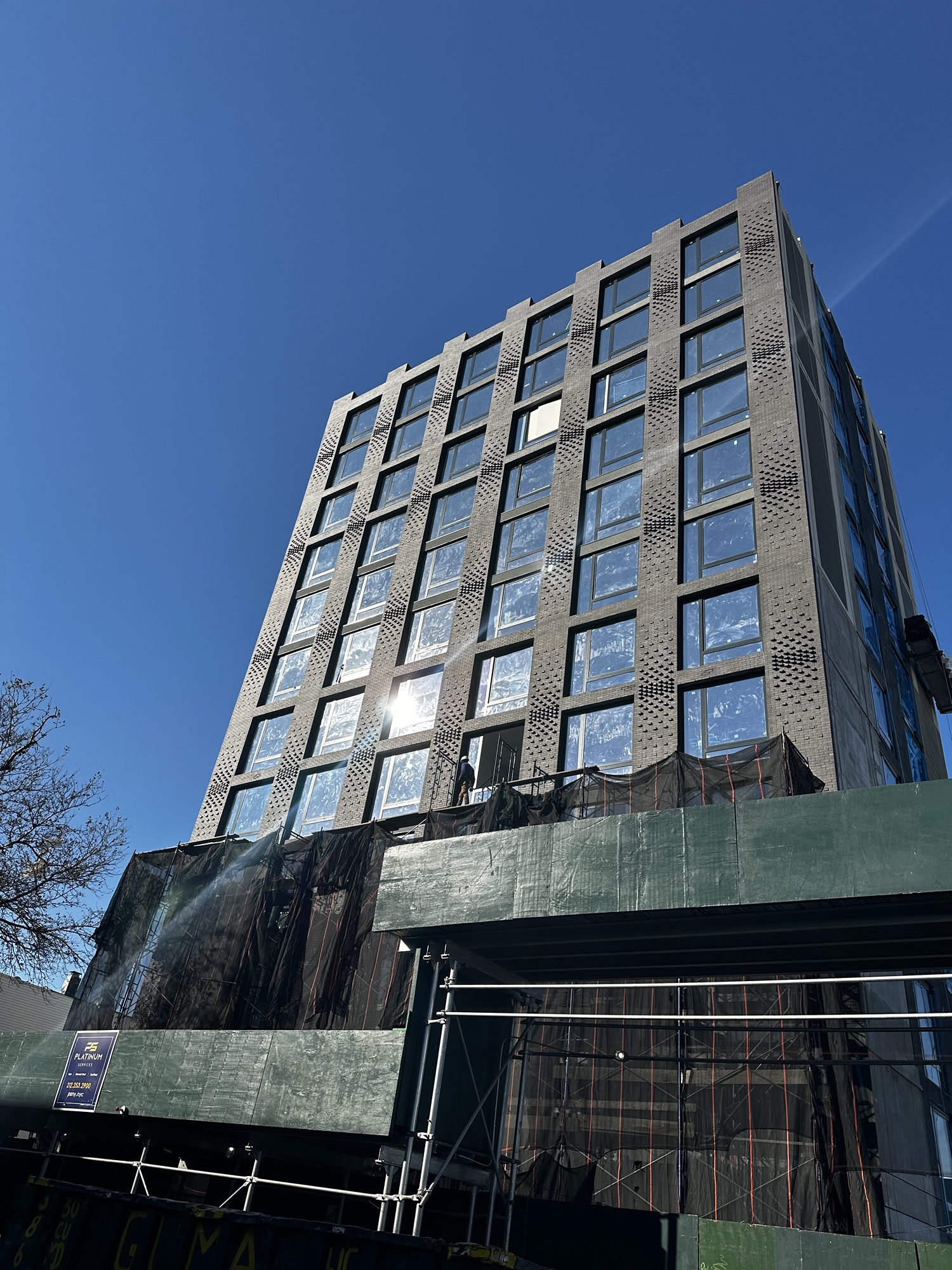
TRANSCRIPT
00;00;00;02 - 00;00;05;13
Doug Pat (DP)
Let's go inside the vault. The design vault.
00;00;05;16 - 00;00;27;11
Tom Loftus (TL)
So we really had to be mindful of availability of product and the budget. So this is what started driving us to start playing with different bonding patterns. If we stack the brick one way versus another way, if we do a running bond versus a stack bond versus a Flemish bond, how can we play around with our stacking patterns and try to make something unique?
00;00;27;13 - 00;02;46;23
DP
This is my guest, Tom Loftus. I'll share more about him shortly. In this episode from the Design Vault, we highlight Tom's 389 Weirfield Project in Brooklyn, New York. 389 Weirfield in Brooklyn is a 12 story 50,000 square foot rental project consisting of 66 residential units, a common roof deck, library and cafe. The building was constructed along with a second at 378 Weirfield just across the street.
The building features a very unique singular masonry facade we'll discuss today. The sole decorative facade is done in undulating rail like bricks, which is in a creative vertical design. The bricks are dark and called Ebonite Smooth. They protrude in patterns at equally spaced cadence as the facade climbs. The windows are set apart from the vertical masonry bands with frames of varying height, which capture the windows between the horizontal spans. The singular brick facade was a unique way of setting apart a building that might otherwise be much like any other.
Hi, I'm Doug Pat and this is Design Vault. Tom Loftus has a bachelor degree in architecture from New York Institute of Technology. He also has a certificate in business management from Cornell University and is a licensed architect in New York.
Tom's first exposure to working in the architectural field came from a job in wood frame construction. After a number of years working in Westchester County, he brings over 20 years of project management experience to outgoing architects. As studio director, he has extensive knowledge and experience in project management, schematic design, design, development, construction drawings, design quality and project construction.
He's also a leader in building and maintaining client relationships, managing teams’ workloads, plus client and consultant coordination. So welcome, Tom. It's nice to have you with us today. So tell us a little bit about Aufgang Architects in Suffern New York. So where are you guys located in Suffern? What's the size of the firm? How long has it been around and what kind of work do you guys do?
00;02;47;01 - 00;03;37;20
TL
Great, first and foremost. Thanks a lot, Doug, for having me on the podcast today. I'm really excited to be here. So we're located here in downtown Suffern, right down the street from the train station pretty close to central Manhattan. So our firm is about 50 people right now. We primarily do residential work. I'd say about 90% of our work is in the residential field.
We do everything from low rise to high rise buildings, primarily in the five boroughs. But we also have projects in the tri state area and a few scattered around the country as well. A lot of those projects are mixed use with commercial on the first, second or few floors and then residential apartments above. The residential work that we do ranges in everything from luxury condos all the way to homeless shelters and really a range of everything in between.
00;03;37;22 - 00;03;39;28
DP
So how long has Aufgang Architects been around?
00;03;40;05 - 00;04;19;22
TL
Outgoing has been around. I think we're going about 50 years now. Ari is the third owner of the company, and when I started, I worked together with Ari and our former principal, Hugo, and they partnered for a while and he had also taken over the firm from someone else. So probably in the early seventies, if I have my history of the firm correct.
We started in Rockland County doing small scale residential rehab work and grew in time and in size with our clients and our work type from one partner to the next, and really have kept our foot in our roots in residential and then grown laterally in the industry.
00;04;19;25 - 00;04;27;22
DP
Tom, tell us a little bit about yourself. How long have you been practicing architecture and your role as studio director?
00;04;27;25 - 00;05;16;29
TL
Sure. It feels like forever. Honestly, every once in a while I wonder, am I still really doing this? But I've been in the architecture field now just a little over 20 years, and I started working in Westchester County. Small scale wood frame, residential. It was a natural stepping stone for me. After I got out of high school, I thought I want to be a framer.
And after getting really tired of carrying three quarter inch plywood up a ladder, I said, Nope, time to go back to school and study architecture. And from there I worked at a variety of firms in Manhattan, in Westchester County, doing a variety of different work. And when I found this firm, the scale work that we were doing, the residential work, it tied into something I loved with my single family housing experience.
It kind of stuck and I ended up staying here for quite a while.
00;05;17;01 - 00;05;23;25
DP
It's a long time practicing as an architect. I kind of say the same thing about or to myself about how long it's been.
00;05;23;27 - 00;06;23;12
TL
Sure, I've really grown in the company here. It's been a fantastic partnership with Ari. When I started, I came in really as an assistant project manager. A lot of my experience was not relative to the scale of the projects we were doing, although in other firms I was working in a bit of a leadership role running point on smaller scale projects, so it took a little time to learn the ropes, if you will, in the different construction types.
And I've moved up into the role of studio director now, so I work very closely with our senior management and the rest of our senior staff looking at our workload, our resource management, project proposals, client relationships and really stay involved with the team from the very start of the project until close out to handle the day to day operations of the office as a whole.
Ari, myself and our controller meet frequently to talk about some of the more boring business side of things and then the more fun happens working with the architects on the day to day and the projects.
00;06;23;15 - 00;06;33;19
DP
So let's dig in here and talk about this very interesting facade of yours. How did your office get the project, or is this a project that the office created?
00;06;33;21 - 00;07;57;02
TL
Yeah, this was actually an interesting project that came at a time when everything started shutting down right at the start of the COVID pandemic. And we had a really good recommendation from a long time client that we had worked with, and we had met a new client remotely who was involved on the construction side of things, and we hit it off.
We started talking and it was the first time ever that I met someone virtually and had meetings like this on screens, and we were trying to build a new professional working relationship. So it was very unique in the way that the project started. And again, we do a lot of our work really based on recommendations. We really pride ourselves in building good relationships with our client base, and that's really how the project got started.
They had this unique property in Bushwick and if you know the area in Brooklyn at all, it's a lot of small scale row housing, if you will, maybe 3 to 4 storeys and there really aren't too many open lots. And in this particular project it was unique. There was a large portion of the lot that had an easement that couldn't be built on it, and it provided a good amount of air rights which allowed us to follow the zoning path to do a much taller building than you usually would see in this neighborhood.
Most of the buildings were very close together, and that's really how it started and how the project grew and how we ended up with a 12 storey building in the middle of Bushwick.
00;07;57;05 - 00;08;04;19
DP
So did you guys know right away that you were going to be able to make a tall building there, or did it take a little bit of examination first?
00;08;04;21 - 00;08;48;13
TL
It took a little bit of examination. Usually what we do as architects is we really try to help guide our clients to bring their projects to fruition. This is the property I have. What can you build? How much can you build? There are two different zoning parts you can follow, primarily three different zoning parts in New York City that will help you establish the bulk, the height, the size of the building.
So we'll study that first and foremost with our clients and present them the different options. And based on the geometry of this lot, when we saw the potential to get a little height on this building, be separated from the other surrounding residential buildings, it gave them a nice opportunity to have a building with some great potential for views in an otherwise low height area.
00;08;48;15 - 00;08;53;12
DP
So what was the scope and the programmatic requirements for the project once you got rolling?
00;08;53;14 - 00;09;32;03
TL
Typically and specifically to this project, our scope was everything from working with the development team to help them flush out the parameters of their funding program. So when you work with different agencies in New York City and in the state and you're following certain guidelines to provide certain square footages and distribution of units, we work right at the very beginning with them to help them find the right mix and size of units, right with the development team.
From there, we work through design and construction administration all the way until the close of the project. So we really gave soup to nuts services here. Full scope on the building.
00;09;32;05 - 00;09;48;24
DP
So let's talk a little bit about the building design stylistically. So you guys designed quite a unique facade, while the other three facades, from what I can tell from the photos, are relatively subdued. Tell us about the main idea behind this.
00;09;48;26 - 00;11;17;22
TL
First and foremost, we love Brick. Brick as an architect, for us, it's really a timeless material and it's a durable material and it fits in really well to so many different urban fabrics in so many different places. In my opinion, what made 389 unique was the timing that this project was happening. It was happening at a time where the future was uncertain.
We didn't know what was going to come of this pandemic. We had to be incredibly mindful of the budget. Many times we like to create building facades that are two different materials having a nice dialog or different color bricks. So we really had to be mindful of availability of product and the economics, the budget, and really try to come up with something that would be unique but be something that the client could achieve.
So this is what started driving us to start playing with different bonding patterns if we stacked the brick one way versus another way, if we do a running bond versus a stack bond versus a Flemish bond, how can we play around with our stack in patterns and try to make something unique? So that was really what started pushing us in this direction of going with a single color brick and then really focusing on how to find a challenge enough for the mason that they don't hate us and say these are architects of the worst.
Have something be achievable for them. But that also will give a nice unique context to the neighborhood.
00;11;17;25 - 00;11;24;28
DP
Were there any aesthetic reviews of the building before you guys got rolling with the city?
00;11;24;28 - 00;11;49;21
TL
With the city for this particular project, there were no agencies on the city or state side that had any reason to opine on the design. We were not going for any variances. We didn't really have to go to the community board, although we did not need their aesthetic approvals. It is something that we're always mindful of working within the urban fabric and how it's going to lend itself to the context of the neighborhood is always an important consideration of ours.
00;11;49;23 - 00;12;01;09
DP
So let's back up just a little bit. So the building plan, are we talking rectangle, square, relatively straightforward. Then of course, there's parking on the site. You had said that there was a portion of the site that you could not build on.
00;12;01;11 - 00;13;07;01
TL
That's correct. So for this particular massing to make this building work, the footprint was rather small. It actually made a very efficient floor plate with a very tight core of stairs, elevator and corridor, and then apartments around all sides of that. So it really became a very compact, high efficiency floor plate with very little loss factor. And it was something that we were able to just work all the way up the building.
So there were quite a bit of revisions back and forth, variations that we had worked on to find the right mix and balance of that to fit within the envelope. The same thing then translated to the facade a bit earlier we were talking about what did the design iterations look like there, through the whole process of finding the right solution and the facade design that we felt was the right match for this building.
We did digital 3D models, plenty of sketches and even on site mockups working together with the Masons saying, We know you can do this, we believe in you, please don't kill us. And did plenty of mock ups there to really work it out.
00;13;07;03 - 00;13;11;25
DP
Was it a challenge finding a good mason, or did you guys have somebody lined up right off the bat?
00;13;11;27 - 00;14;04;09
TL
I think that's really one of the keys. You have to have really good subs. So whatever the type of work you're doing in this case, the Masons, you need to have a good working relationship with them. And often it's the architect working directly with the general contractor. But in these cases we invited the Masons into the architecture meetings, we invited them into the AOC meetings towards the end and said, Look, let's work through some of these details.
Let's talk through it. How is this going to work? It wasn't incredibly complex or challenging, but we wanted to make sure that the person who was directing their team to install the Brick really felt confident that they could achieve what we were looking for. We never wanted to come out on site and say, This is all wrong. That's not what we want to do.
And I really think engaging with those professionals early on is important to try to get the end result that you're looking for.
00;14;04;12 - 00;14;16;20
DP
Yeah, we try to bring in a contractor at schematic design. Once we wrap up schematic design, we have them price the project. This is in high and residential work that I do. So single family homes.
00;14;16;22 - 00;14;33;09
TL
Right? And in this case we didn't have a mason lined up. We didn't have a recommendation. The developer slash contractor, they were one and the same here. They had already had an existing relationship with this Mason and we started just working with them early on in the process.
00;14;33;11 - 00;14;54;17
DP
So could you do your best to describe the evolution of the design of that facade and then try to describe the facade? I'm going to encourage our listeners to go to the Glen-Gery site and take a look at some of these photographs because it's really striking. I've never seen anything like it. It's a great idea. The clients must have been thrilled when you presented the drawings.
00;14;54;19 - 00;17;33;18
TL
Thank you very much for that. We've seen a lot of example of brick facade that has quite a bit of movement in it, and these brick facades more often than not, are panelized prefab, and that's a way that you can achieve quite a bit of movement with brick using this idea of this undulation and this movement in the brick as an inspiration.
That's what triggered us to start thinking about how a brick pattern, the stacking pattern, really might help us achieve what we wanted to do here. So if our listeners are familiar with Brick parents, which I hope they are, we're in a brick podcast, we utilized a Flemish bond pattern and a running bond pattern. So the Flemish bond pattern has a standard brick with the long face.
The following brick is then rotated 90 degrees with the short face and the pattern is repeated. Taking this idea of combining a Flemish bond pattern with a running bond pattern, we now have these bricks that are half size, if you will, square proportion to create the movement and the undulation throughout the facade. We detailed a Flemish bond pattern with a large number of running bond, then a increasing increment of Flemish bond and a decreasing increment to running bond.
So we took the pattern and as you got closer to the center of the pattern we created, you had a higher frequency of Flemish bond. And as you moved away towards the end of the pattern that moved vertically up the building, it was stretched out with more running bond. So that's a lot of back and forth with different bond patterns.
Ultimately, by having that Flemish bond brick, we then protruded it out from the facade in the center of the pattern where the Flemish bond patterns are stacked very closely together. The bricks protruded the largest amount. And then as that pattern was separated and pulled apart from top to bottom, the brick became closer and closer to the facade.
So we basically created a formula that the mason can follow. For every increment, the brick would step out a half inch further, and this is what gave the facade that undulation, as you move up the bricks, steps out and back in by using this bonding pattern. It also created a really dynamic shadow which was something that we really loved.
When the sun hits the building the right way, you get a really fantastic shadow where you have that brick and it just really, in my opinion, created a beautiful cadence that worked through that pattern.
00;17;33;21 - 00;17;41;27
DP
So it really does remind one of Braille. So how far what's the furthest protrusion for one brick?
00;17;42;00 - 00;18;01;07
TL
I do like that description of Braille. You instantly have an image in your mind of these protruding points that they create the pattern. The furthest protrusion is about two and a half inches at the center of the pattern. And then as it works its way down in half inch increments, it goes back down to zero and the pattern becomes flush.
00;18;01;10 - 00;18;20;02
DP
So you guys said that you worked on this in 2D and in 3D. I would imagine if you did some sun studies, you got a better sense for how much shade and shadow was going to be produced by these protruding bricks? Did you do the project in BIM? Is it Revit? Because I saw 2D drawings of this?
00;18;20;04 - 00;18;42;25
TL
Yes. It isn't Revit. It is a BIM project. While we were in the design phase, we actually used a few different softwares SketchUp and Enscape and Revit along with AutoCAD, and we really did a series of 2D sketches, 2D drawings and 3D studies, partial facade studies. Just to get a sense of how this all might look.
00;18;42;28 - 00;18;49;26
DP
And how many iterations ultimately did you go through? I mean, big iterations, like is it two or three or ten or?
00;18;49;28 - 00;19;42;12
TL
Once we just came to the conclusion that we need to stick with a singular color brick here in the front, I'd say we probably had about ten different versions. It's a slim, tall building with very large windows, really trying to maintain a nice modulation of those windows in that spacing, but also then maintain a standardized brick dimension. So for a long time we were playing around with the inches of the bricks so that we were at a half size brick or full size brick.
Should we use a stack bond and emphasize the verticality of the building? How often should we introduce a horizontal element so that it's not looking like a stack of pancakes, for lack of a better expression? So really, we had a good amount of iterations here until we got to the point where we really like the running bond, Flemish bonds.
00;19;42;14 - 00;19;58;19
DP
I like the way you describe that. From what I remember looking at these photos, the windows are framed out differently. So you have a series of windows which have an individual frame, and then at one point in the building, that frame actually wraps a few stories of windows, right? So you break up the facade that way, too.
00;19;58;19 - 00;20;26;03
TL
Exactly. Playing with the verticality of the building, we did group a series of windows, two windows stacked vertically, three windows stacked vertically and created a frame around those windows. And this helped take that 12 story building and just give it a little bit of scale as it moved up the building. So these groups have two vertical windows that are now framed together.
Then also had the movement of the undulating brick happening between them.
00;20;26;05 - 00;20;28;28
DP
You guys really thought through it. It's a real beautiful facade.
00;20;29;04 - 00;20;29;29
TL
Thank you.
00;20;30;01 - 00;20;34;06
DP
So how big was the team that worked on the project? Just a few people?
00;20;34;08 - 00;21;17;08
TL
Every project is staffed with a dedicated associate director who are all registered architects, a project manager, and then the support staff. When we were in the design phase, we had the project manager working together with one of our designers. So we really had a team of to playing around with this and then bouncing the idea back off of the associate on the project.
Then once we really ramped it up into production, we would stack two or three people on the project. As you get closer to submission deadlines and trying to get into the Department of Buildings to get permits done, we would build the team up. Usually there was always at least two people on the project that were always there from day one.
They haven't left the project and they stayed on from beginning to end.
00;21;17;10 - 00;21;26;09
DP
So how long did it take to build the building? I would imagine it was pretty cool watching that facade go up. First couple stories. You must have been thinking, Wow, man, this is going to be something.
00;21;26;12 - 00;21;51;29
TL
You know, the construction team, they did a fantastic job. They had a really good crew out there. And around 24 months, the building went up and then all the fine details coming out of the pandemic. It was interesting. There were certain trades that just took longer because of materiality, distribution chain, supply chain, availability of product, which threw little curveballs here and there.
But all in all, the sequence and timing was fairly smooth.
00;21;52;01 - 00;22;01;13
DP
So it seems like I learned something new every project. Was there anything that you guys learned while you were out in the field or doing these drawings or dealing with the client?
00;22;01;16 - 00;22;48;06
TL
There certainly was. You know, I had spoken about the Mason earlier on, and that was certainly a good lesson. Building a good relationship with your Mason early in the project is really important and I joke about it. Sometimes they look at the architect's details and think, Are these guys crazy? We're not going to build this. There's going to be a better way to do it.
And I think that was really the big lesson we took here, establishing that good relationship and also giving the tradesmen the respect that they deserve. They're installing the work. They know some of the nuances of how this gets installed and taking that into consideration, finding that common ground so that you don't bring your ego into the conversation and giving them that professional respect and you're going to get it back.
That was definitely a good lesson here.
00;22;48;08 - 00;23;16;16
DP
That seems like a lesson I've learned over and over again throughout my career. When you're young, you go out there and you think you know everything and you've got an answer for everything, or you're going to fake your way through it, or however you choose to deal with it. But as you get older, you realize that these people that you're working with, many of them have an awful lot of experience, and it would be a good idea to sit and listen to them and actually ask them questions rather than tell them what to do.
00;23;16;18 - 00;23;38;10
TL
That's right. And I always find that working with our up and coming project managers and our younger staff, it's always those lessons that you try to instill in them. It helps them understand how to build those relationships because this industry is built on relationships and if we can do that, we're going to navigate successfully through any project.
00;23;38;13 - 00;23;58;03
DP
Well, you guys have been around a long time, 50 years. Goodness gracious. That's incredible. Congratulations, Tom. You've been an architect for over two decades. Based on what you know today about being an architect, do you have any words of advice for your younger self or maybe some young architects working their way up the ranks?
00;23;58;05 - 00;24;13;16
TL
Yes, don't worry. It's going to work out, if you love it, stick with it. It's a long road. And just when you think maybe you should change your major, you might still be out of college 20 years and asking yourself, Should I change my major? If you love it, stick with it. It's rewarding.
00;24;13;19 - 00;24;28;05
DP
That's really funny. I feel like I've changed my major all the time.
My goodness. So, Tom, it's been great to have you here. Thanks for your time. Where can people go to learn more about Wolfgang Architects and yourself?
00;24;28;07 - 00;24;38;19
TL
They can go right to our web site at Aufgang.com and they can find all the information about us there. They can follow us on LinkedIn and Twitter and all the different platforms.
00;24;38;21 - 00;24;45;21
DP
Well, thank you very much, Tom. It's been great. And I encourage people to go to the site and take a look at this very interesting building. Thank you.
00;24;45;29 - 00;24;50;18
TL
Doug. I really appreciate it. It was great chatting with you here today. I had a great time.
00;24;50;21 - 00;25;18;12
DP
Awesome. Thank you.
You May Also Be Interested In
We Can Help With Your Next Project
Discover the latest + greatest in design trends, industry news & pro tips from pros.
For all of your project needs, you’ll find everything you need at a Supply Center.
Let Us Know How We Can Help!
Design Vault Ep. 13 Smart Design Studio with William Smart
ABOUT THE ARCHITECT:
|
William Smart is the Founder and Creative Director of Smart Design Studio, established in 1998. His approach to design is holistic, combining both architectural and interior design with passionate attention to detail. Over the past 23 years, Smart Design Studio has delivered a wide range of projects ranging from large-scale master planning, cultural buildings, offices, workplaces to private houses and product design. Although varied in scale, the projects are united by an ethos of “Architecture from the Inside Out”. |
|---|
Smart Design Studio
Smart Design
View ProjectTRANSCRIPT
00;00;00;02 - 00;00;05;17
Doug Pat (DP)
Let's go inside the vault. The design vault.
00;00;05;19 - 00;00;30;25
William Smart (WS)
The approval authority wants us to respect how it looks from the outside and how it integrates with the streetscape, with the materials of the area, which is predominantly brick with sawtooth roofs. And they also want you to kind of reinforce and retain the great character of the precinct. So to keep these big, large, open plan offices with sawtooth roofs, I feel as a designer, we nailed it. We really got the design exactly right.
00;00;30;27 - 00;03;09;28
DP
This is my guest, William Smart. I'll share more about him shortly. In this episode from the Design Vault will highlight William’s new Smart Design Studio building. The new Smart Design Studio is an innovative, sustainable and sculptural building with both new and renovated facades that sit within an inner city conservation area of brick warehouses. The design relates to the industrial buildings from the precinct.
While it makes a departure with a modern facade of tiles, galvanized sheeting, steel frame windows and dynamic forms of curling and curving brick. Structurally, a large portion of the building feels industrial with precast concrete slabs, structural brick roof vaults and steel. Environmentally, the naturally lit and ventilated studio collects its own water and generates its own power, creating a carbon neutral building.
In addition, large full length clear story windows enable natural light to enter the single industrial scale workspace. The Sawtooth roof trusses and a portion of the facades were retained with the exception of the offices on the western street frontage. That's where a narrow, highly designed apartment runs atop the length of the building. The apartment features four self-supporting offset brick, catenary vaults that allow light into the apartment.
Hi, I'm Doug Pat and this is Design Vault. William Smart is a fellow of the Australian Institute of Architects. He's also the founder and creative director of Smart Design Studio, established in 1998. The Office is a multi-disciplined design studio offering professional services and architecture, interior architecture and design. Over the past 23 years, Smart Design Studio has delivered a wide range of projects from large scale master planning, cultural buildings, offices, workplaces to private houses and product design.
Smart Design Studio’s buildings have received critical acclaim since its inception , SDS has received over 50 international and national awards for architecture, urban design and interior design. William was also the recipient of Indie Award’s Luminary Award. Williams taught and lectured across Australia, published written work and is an active participant in the design community. So welcome, William. Nice to have you with us today.
Before we get started, tell us a little bit about Smart Design Studio. So you're coming to us from about 16,000 kilometers away. So tell us where you're located. What's the size of your firm and the type of work that you do.
00;03;09;28 - 00;04;33;03
WS
Doug It's a real pleasure to be here. Our studio is located in Sydney, which is on the east coast of Australia, and it's a temperate climate, so subtropical. So like today's the middle of winter, the maximum temperature will be 18 degrees Celsius in summer it gets quite warm, reasonably humid, but not quite tropical. It's quite a nice environment.
I'll talk about that in more detail because we've tried to do a very sustainable project for our offices, but we've been running for about 25 years now and with 50 people and we think that's just the perfect size for us because we can do some large projects that run over many years and we can do some small detail projects that allow us to be more innovative or to get a level of detail to explore and develop.
And we love integrating architecture and interiors and view it as one and through our own way of working, we've developed a methodology which we call design from the inside out or architecture from the inside out. And so we try to think of our buildings from the interior perspective. First, what is the space we're making? How do the occupants use the building?
And then we work through from that perspective toward the outside of the building and try to build an armature around it that's responsible, sustainable, complements the character of the community that we live in as well and tries to synthesize all those things together. But the approach is definitely to build it from the internal spaces.
00;04;33;06 - 00;04;34;20
DP
So form follows function.
00;04;34;20 - 00;05;25;19
WS
Absolutely form follows function. But we also think you can be really powerful with form and you can develop emotive responses to form. So just in that idea of internal spaces, we think that in a really great building, and the best of ours achieve this, you take someone to a moment when they go, Whoa, this is amazing, this is beautiful.
And sometimes that's more than the functionality. It can be just an internal space where there's a staircase or a vista or place you go to that's a surprising experience. And I'm often in my mind imagining how an occupant or a user of the building will circulate through it, how they will walk into a room, what the transition of light is from outside, inside and from one room to another.
And how they go to this place and think, Wow, I wasn't expecting this at all.
00;05;25;21 - 00;05;27;03
DP
That's a beautiful description.
00;05;27;10 - 00;05;27;22
WS
Thank you.
00;05;27;29 - 00;05;33;06
DP
Absolutely. So I was on your website, pretty extensive. What type of projects do you guys take?
00;05;33;12 - 00;06;56;17
WS
Well, we've been running for 25 years now, and that means we've really grown the company into a place where we can be careful about the projects we take. So we are looking for projects where we can design the architecture and the interiors as one. And that's borne out of our philosophy of how we work. And we're also looking for projects where we can achieve a lot of detail, and that doesn't necessarily mean we need to use expensive materials.
We actually quite like inexpensive materials, things like the everyday brick is something we're in love with and how we use that is probably where the innovation starts. But we like to do architecture and interiors has one a lot of detail and work on projects from start to end so we can really achieve the details and in that we prefer to have a range of projects.
So at least half of our work are residential projects and they can vary from large apartment buildings where there's more complex of buildings down to small houses and everything in between. And then we also do a few commercial projects, cultural projects such as art galleries, or recently we finished Science Gallery in Melbourne, which is about the fusion of art and science in this new space.
And we use architecture to bring the two together and then we also tend to end up working on a few product design projects as well. So door handles, grip rails, other things going down into there. Very fine detail is something that we love doing concurrently.
00;06;56;24 - 00;07;04;18
DP
That's really cool. I have a lot of questions. We'll get to them in just a minute. So tell us a little bit about yourself. So how did you start Smart Design Studio?
00;07;04;24 - 00;08;50;03
WS
I started my own design studio in ‘98, so 25 years ago. And after graduating, I worked in France for a year and a half and learned about traditional ways of building. Following that, I worked for just over three years at Foster and Partners in London, which is a very big commercial practice and has built a number of buildings in the US.
And then I came back to Australia in ‘96 for the Olympics and I wanted to work on an Olympic project and I wanted to try living in Sydney because I grew up in the country, in Western Australia, in the outback, and I moved to Sydney to work on the railway station at the Olympic site. So I've gone from working on large projects and as that last project was nearing to an end, I felt this need to set up my own studio and do my own projects.
And I chose that name without having any projects in mind or in place. I thought I had something to say and I didn't know what it was, but I just felt I had a voice and I needed to create a platform to develop my own voice. And I wasn't getting that in working for other practices because I was channeling the voice of that practice.
So that's why I set it up and it's taken really sort of 15 years to find out what that voice is. I had things I liked I was interested in. There weren't always the budgets on the first few projects to achieve those things, but over time we've developed these interests in materials who work with the details, who work with the forms, the collaborations with other architects or engineers or other consultants and contractors, and have kind of come up with some buildings that are remarkable that people think and ask us, How did you do that? How was that made? How could you do all that? It seems unbelievable, which is great. I think that's what I wanted to do when I started this practice 25 years ago.
00;08;50;09 - 00;09;02;00
DP
It's great. I have some of the same questions for you today about your building. So clearly when you got started, your office was relatively small. You've grown to 50 people. What's your role in the office now?
00;09;02;02 - 00;10;17;06
WS
How I see my role is to kind of help guide a large team of people towards the great outcome. So we need to achieve. So my favorite thing is preparing drawings or writing specifications. I like that more than the other stuff that comes with running a company of this size and often there's a lot of meetings. But this morning I just was in an early morning meeting with some contractors about trying to nut out some key details that we couldn't let go of on a new commercial building we're doing.
And then the project architect that's running that's doing an amazing job, but at this moment needs me to come in and say to the contractors, this is the way it's going to be. We've got to document and develop in that way. So that's kind of how I end up steering things. And I work four days a week from Sydney and then one or two days a week out of town and on that day I try to sit down on the drawing board and not our new projects or complex projects, but I love that drawing time.
So I'm kind of like a person in the team that's almost like a coach that tries to help everybody get to the right place and at times I'll step in and lend a hand and at times I'll be working in the background, checking things and reviewing things and trying to help develop the direction of projects. But it's sort of like this really strong helping role that I've developed over time.
00;10;17;09 - 00;10;23;05
DP
I'm sure this varies, but how many projects do you typically have in the office running at the same time?
00;10;23;05 - 00;11;21;10
WS
I would say there's probably about 20 active projects at the moment and from that we would have three or four that are going through planning approval processes. And in Australia that's very slow. It takes probably a year for us to get planning consent on a project and they don't take a lot of work, but they take sporadic pieces of work.
So accounts who might come back and say change this time or work on that for a short while. So maybe five or six projects in those stages. We've always got a couple in preparing for planning. We've normally got a few in the documentation stage and then we’ve normally got half a dozen or even more at the moment that are under construction.
And some of those are very large projects that go over three or four years and then some of them are smaller ones. It might be a year or a year and a half, but it just naturally works out that somehow it's all fairly evenly spread between all the different stages, and it means that we can resource it well and improve on our systems and ways of documenting from the work we're building on site all the time.
00;11;21;13 - 00;11;41;15
DP
Well, it certainly sounds interesting for you because you get to bounce around on a lot of different projects at different stages in the process, so it sounds like a lot of fun. So let's dig in here and talk about our building. Tell us about the new Smart Design Studio. So how long have you guys been in your current location and before that, what was your original location?
00;11;41;18 - 00;14;32;23
WS
Before this, we were in an area in Sydney called Surry Hills, which is kind of a beautiful, quite central, historic part of town. And we moved to this new industrial area that's being transformed at the moment, halfway between the center of Sydney and the airport. And that means we're actually only four kilometers from the city center because our main airports very close to town.
What attracted us to this particular area was that we could get a very large piece of land at a relatively inexpensive price and build a studio where the whole of the team could work on one floor. And linked into that is a desire to not grow anymore. We've sort of arrived at 50, for us that’s the perfect size. We can do some large projects, some small ones, and control all of the stage as well.
So we do want to grow anymore. But we did recognize that from our last project and our last office that we needed to all be in one room and work from that space. So we bought an old warehouse building in a conservation area. And for us that means that it's not a heritage listed item, so you can make changes to it.
And quite extensive changes, but you've got to work within the character of the area and the approval authority wants us to respect how it looks from the outside and how it integrates with the streetscape, with the materials of the area, which is predominantly brick with sorted roofs. And I also want you to kind of reinforce and retain the great character of the precinct and to do that internally.
So to keep these big, large, open plan offices with sorted roofs. And that just worked perfectly for how we wanted to use that particular space. So we have an office of about 800 square meters just over. So it's almost 20 square meters per person. It's like a lot of room because we've had our own office before. We've understood what it is that we need and how we work and what the best range would be.
And I feel as a designer, we nailed it. We really got the design exactly right. So it's one big room which is about 20 by 20 meters. And then on the outside of that, we have four separate rooms, one for model making. One is a kind of breakout space, what we call the canteen. One is a materials library, and then the last one is the front of house and meeting room area.
And so the activities that need to be segregated from the main working space are on the outside of that, but within the same volume and then the central space is flooded with natural light and has a beautiful acoustic to it. So you can hear the sound of people talking, but you actually can't hear what they're saying. So it doesn't take your attention away from what you're doing.
It's a really great space to work in. And one of the interesting things is we make a lot of models, we do a lot of hand drawings. All the walls are pinned up with work, and then there's maybe more than 100 models in various states of completion or degradation, over time through the studio space. So you feel like you've walked into this creative space where work is being developed and being designed on the run.
00;14;33;00 - 00;14;51;25
DP
So I've always found that it's really hard to be my own client. And I'm kind of wondering, so you first lay out the programmatic requirements and as you start designing, did that evolve? Did the program change a little bit for you? What was a client like? Just kidding. And did you know right away what you wanted?
00;14;51;28 - 00;16;06;23
WS
I've done a few projects for myself now and I'm designing a couple more and I love working for myself. I don't find it hard being my own client. The only sticking point every time is budget. Actually, I always run over budget dramatically and have to find a way of making that work. But I love designing for myself and the main studio spaces who are designing it.
And in fact the whole building almost felt like it designed itself. I didn't even feel like I was designing it. It just felt like it all fell into place quite easily for us. Those projects are rare, certainly the minority, but this one felt like as soon as we drew something, it felt right. And then you just made minor adjustments along the way and it kind of sold together quite beautifully.
And I feel like in just about every area, we got it really right because we put so much thought into what is it we need and how much space do we need for these kinds of materials? And you know, when we have all the models, what do you want the clients to see when they walk around the studio?
We even thought about that tour through the studio and how we would walk prospective clients and consultants through the space and tell the story of how we work and who we are. There's so many layers to the design and we had time to think about it properly and do a good job. So I feel like we've got it right.
00;16;06;23 - 00;16;11;29
DP
The final design included an apartment. Tell us a little bit about that.
00;16;12;01 - 00;17;59;16
WS
This conservation area in Sydney, what the city wants is for this to be a hub of activity and for that to not be where people live. They want businesses here, they want makers, they want microbreweries, they want art galleries, they want live music. So they're kind of trying to develop that in this particular area. So they have prohibited housing, including apartments in this area except for a caretaker's residence they allow.
So we were able to get an approval to build a caretaker's residence on this site. And that's why it's called the caretaker's residence, because it was permitted under the planning consent. And it's where I live with my partner and my dog and these catenary shaped and structural brick vaults. And there's two big ones and two small ones and the big ones are about seven meters wide and 4.2 meters high.
And the small ones are about five meters wide and 2.7 meters high. And in between these vaults, they're offset from each other, we have these large sheets of glass, and it allows light to flood into the space. I think what we were trying to do with the project on many levels is to be something that was very responsive to this precinct.
So it was a positive contribution to the heritage area that we work in. And also we wanted to just have a bit of fun with the project and do some things we didn't know how. I've been dreaming of doing beautiful vaulted brick structures like you might see in Barcelona. I've been dreaming of them for a long time and I couldn't find a client that wanted to do it because we generally get to a sticking point, which would be a conversation a bit like, Tell us about your experience in doing this.
So I haven't done it before, but I know how I can work it out and then a clients would just get to a point where that's how I want to be your guinea pig. I don't want to test this for you. So we were able to do that with ourselves and it's actually a beautiful space to be in.
00;17;59;18 - 00;18;18;17
DP
It looks really wonderful. I'm going to stop you right there because we're going to come back to the vaults. Let's talk about the building design and we'll start with the basics. So tell us a little bit about the site now. It didn't look like there were any unique topographic features. Seemed pretty straightforward and there was a building on the property already. Tell us a little bit about that.
00;18;18;19 - 00;19;35;27
WS
So there's an existing warehouse here and the front strip of that building, which was where the offices and meetings had been adjusted so many times over the past 60 years that it had lost all its integrity. And we demolished that front seven meters and rebuilt that. And then we kept the rest of the warehouse, which was about 80% of the footprint, and restored that.
And that's where that big room is in our studio. And the front strip, which is seven meters wide, has a beautiful brick vaulted facade that almost looks as though it's peeling open the brick kind of curves outwards and leans downwards. And we worked out a way to lay bricks facing downward direction and peels up again the other way.
And at the top of that three story structure, we have this apartment building which is got the four votes that we spoke of before. And so what we tried to do with the project was to use everyday ordinary materials like galvanized roof sheeting and galvanized steel windows and a very simple brick. But to take these materials and do something extraordinary with them.
So my kind of beautiful sculptural shapes or to make beautiful load bearing brick vaults. So that was one of the primary objectives and that talks to the history of the area and really relates back in a very sympathetic way to the context.
00;19;36;04 - 00;19;45;16
DP
So you'd said it was a conservation area. Were the zoning restrictions challenging for you guys? And then was the building ultimately reviewed by a review board?
00;19;45;22 - 00;21;11;18
WS
Totally. It was very well received and mostly it complies with the planning controls that the biggest challenge for us was getting this caretaker's residence approved. But one of the great initiatives of the project also was we wanted to make all our own power, collect our own water, and reuse that on onsite to be a carbon neutral building.
And the city responded very well to that. And because Sydney's quite a hot climate in summer, we need some way of controlling the climate and really stopping the sun from coming into the spaces. So we designed this sustainable building where we don't have any air conditioning in the studio or the apartment spaces and it's just naturally ventilated. And we have underfloor heating which has got hydraulic pipes that extend and wrap around through the floor and in summer they work in reverse and I call the floor and that chill the space.
And in Sydney, which has relatively high humidity, we have to manage that carefully so you don't get condensation on the floor surface. But we do all that through a building management system, which is like a computer that opens, it controls the windows, it also controls blinds, it controls the fans, it controls how much water goes through the floor and what temperature and so forth.
And tomorrow is thinking about today. And it's managing all that quite beautifully, actually. It all works extremely well. And it's a real milestone. There aren't many buildings in Sydney that are comfortable to be in without air conditioning in summer. It's just so hot here in the summer months and humid that it's a real challenge to make that work.
00;21;11;20 - 00;21;24;00
DP
Yeah, I don't understand that. So it's natural ventilation, meaning windows or open air is flowing through the building. You've got to control the humidity on the interior. How is that done?
00;21;24;03 - 00;23;32;14
WS
So how it works is the building sets up about five different climate times of the year. One of those is extremely hot and extremely cold. So they're two different times of the year. And then you have temperate and then warm and cool and then the perfect temperature. So this time of the year is a cool time of the year.
And what happens now is the windows will stay closed all day and then around midday they'll open for an hour and change the air and they'll close again. So they have little motors that open and control them. They're called actuators. And at nighttime, the building opens up all year round for either two or 5 hours, depending on whether it needs to cool down or heat up or how much air we need to change.
So big volume space, you can do this because there's so much air for the number of occupants that you don't need to have the windows open all day long. If you had a regular office building, you've got to rethink that because you run out of oxygen and people start to feel sleepy and tired. So what the building does is it kind of breathes in a way and lets the oxygen in at nighttime and fills up the space with the fresh air.
And in the daytime, if it's moderate like springtime, the windows just stay open all day long and they don't open a lot. They only open about an inch. So you're not getting air running through at high velocity. You're just getting a trickle of breeze running through the space. And what often happens is the high level windows are normally open a lot to let the hot air out.
So we have an overheating problem more than a problem of being too cold and we've got to warm up the space. But today it would be all the windows would be closed. Now, as I mentioned before, we're trying to hold on to the heat. And then what we're going to try and do is just block some of the heat load to stop, particularly the eastern and western sun from coming into the space and overcooking the space.
The building design has less glass on the east and the west than you would normally see in most office buildings. And then our design thinking is about what you do with the light when it comes into the space. How do you reflect and bounce it and make a beautiful private atmosphere to be in without having a huge amount of glass that would lose a lot of heat in winter and gain a lot of heat in summer?
00;23;32;17 - 00;23;37;25
DP
Very interesting, very different than what we're used to here in the US for the most part.
00;23;37;28 - 00;24;32;03
WS
Yeah. So glass is sort of interesting, isn't it? Because you think of it as the way of bringing light into the space and it absolutely does that. But in another way it's a poorly insulated material compared to others. So if you think of it as a very thin sheet of plastic or cling film or something like that, then even if it's not getting sun directly on it, it's going to let the heat out or the heat in whichever one you don't want.
It's just going to allow the temperature to move towards what's on the outside, even if you don't want it to. So a principle that we have is to reduce the amount of glass in buildings. We try not to do buildings that are mostly glass, you know, in an office building to get at least 30% of the facade is solid, but we're targeting more like 50% solid.
And you have to be very thoughtful about the occupants of the building and the desire of the tenants to have a lot of glass in the spaces and how you're going to be really responsible with that as well.
00;24;32;10 - 00;24;57;21
DP
So let's go back to the building plan for a second so our listeners can imagine this. So you've got, as far as I understand it would be like a large square. The front end is a long rectangle, the series of stories and then the leftover, much larger rectangle is the workspaces. And then along that long front facing rectangle atop that is the apartment, am I correct?
00;24;57;27 - 00;24;58;16
WS
That's exactly right/
00;24;58;16 - 00;25;12;29
DP
Okay. So let's talk a little bit about the style choice now. So when you're walking in the alley in the back, you see one facade and you're walking along the main road in the front, you see a very esthetically different facade. Tell us a little bit about those.
00;25;13;02 - 00;27;58;20
WS
Yeah. So the laneway at the back, which is called Balaclava Lane, is the original facade of the building. And it's interesting when you walk through this precinct because what you see is the laneways are almost exactly as they were built in the 1950s. So you see rusty old windows, old timber, rickety doors, original brickwork that's never been painted.
And they're beautiful, they're just gorgeous to look at. And people who find them think they're incredible. And this is a little bit of an undiscovered area right in the center of Sydney. It's kind of remarkable. And then on the front street faces of the building, all of the people have gone and renovated them, I guess, every ten years and modernized them.
And so there's no good buildings left behind. They've done them cheaply, badly. They've kind of destroyed the integrity of the streetscape. So we saw an opportunity with our building was to leave the back as it was because it's so beautiful. And our work there was to make it durable, waterproof, more environmentally responsible, but not stylistically too different. And then on the front streetscape, we had an opportunity there to be quite expressive.
So we tried to do a modern version of the building opposite ours, which is the only one in our street that hasn't been renovated. And it's a classic sort of modernist style where you have very long horizontal steel frame windows, a kind of beautiful ribbons of glass in between those in a bit of a tower at the end.
And we almost mimic that design. But we did that in a way that was more nuanced to keeping that hot sun out in particular and giving the views out from the internal rooms that we wanted to see. So in the main meeting rooms, we needed to have solid walls in the spaces so we could pin up our work and control the light.
And then we have high level windows to let light into the meeting rooms and low level windows to look out to a garden that's on the street below. So when we worked from that idea of what the internal spaces needed to be, and then we married that with what the environment needed to do and then thought about the context, it led to a new building from the outside, which looks like very long strip windows.
And the positioning of those relates to the internal functions of the space. And then we tried to be creative and inventive and to take that everyday material being a brick and just to kind of push it to do things no one had done with it before in our minds. I mean, you have some amazing architects in America, like Frank Gehry, who's done incredible things with brick as well.
But we sort of thought there's an opportunity here to represent this era of technology and to be a design that came from the 2020s, for example, rather than something from the 1950s.
00;27;58;22 - 00;28;05;25
DP
So tell us a little bit more about this peeling brick facade. How did you guys make these partial vaults?
00;28;05;27 - 00;30;54;05
WS
All of the work is in sections and cross section, not in plan. So when you look at the building as a floor plan, they're all rectangular rooms on the inside. But in section we have a part of the facade that peels outwards at the top and sort of leans outwards. And we worked out a way to lay the bricks on top of each other almost at 45 degrees.
And we're able to do that with creating a small jig to lay them on. And then we laid up to three courses at once and then we'd have to leave it for overnight and then lay another three courses the next day. So it dried and then on the bottom part, we lay them over a steel frame and on that steel frame we had a curved sheet of metal, so they were laid onto that curve sheet of metal and then tied back using brick ties to that other element that that projected outwards.
So that's sort of what was done in construction. How we came up with that was to work collaboratively with our bricklayers and our engineers and just sit down at the table. And we knew who we wanted to build the project before we'd finished all the documentation. And so we were able to sit down with them at a meeting table.
And I kind of said, here's the vision, this is what we want to do, and this is how I thought you might make it. But I don't really know how to lay a brick. Can you help us with this process? And the builders we chose I experts in heritage construction and they also know a lot about engineering. So they were able to sit down with their bricklayers and myself and our structure engineer and we workshopped it together.
And in a few hours we worked out how to do that. And then they went away and did on their own. And what I've learned over the last 25 years of doing my business is that sometimes you need to monitor something very closely and sometimes you actually just have to let it go. And these bricklayers were so good and so careful.
And they loved this job so much that they just wanted to be let go. And I hardly had to do any supervision work at all in the project. It was just developed by them. And one day I remember they turned up on site and they said, William, we think we have to change your brick causing dimension, which I'd set at 51.3 millimeters.
They said, we need to change it to 51.4 millimeters. So that's the height at which each brick goes from one to an x one. And it kind of came out with this big bit of paper that looked at all the maps and showed me how that would work and how many bricks it would be. And then I just thought, if we're talking about 0.1 of a millimeter, then you guys don't let me at all, you are there, you really embrace the project.
So it was 100% a really strong collaboration project where they would come along and say, We thought we'd like to change this part. And this is our suggestion. And most of the time it just made it better. That's the best part of collaboration, I think, is when you enjoy the process and other people make the project even better.
00;30;54;07 - 00;31;12;01
DP
Yeah, for sure. I think I've asked every single guest we've had so far if they had trouble finding a mason, almost every one of them, I think every one of them so far said they did not have a difficult time. I know we've had some challenges over the years finding really talented Masons. It's a dying breed.
00;31;12;03 - 00;32;08;01
WS
This project was a wonderful opportunity for some of those bricklayers to really show their skills and to be proud of what they did, and they're really proud of it. The two bricklayers we had here related that was Gareth, who is over 70 years old, lies drick six days a week, loves doing it, and his son in law, Harvey, Harvey, married Gareth daughter and they've been laying bricks together for like 30 years or something incredible.
And they just really love this project. And I realized that as architects we actually have an opportunity to create buildings where the tradesmen can really shine. And what I believe is that if you kind of create the vision and the project, the people will come to it. You'll find the people to make it. There'll be someone who just loves the challenge of doing something that's not square and upright and the standard thing. They want to kind of do some experimental parts of the project as well.
00;32;08;04 - 00;32;17;03
DP
You said that you were thinking, Well, there's a lot of brick out here. I'd love to use brick. Were there any restrictions because it was a conservation area.
00;32;17;05 - 00;33;57;08
WS
Not explicit. I mean, the cities, it's quite merit based in its assessment, I suppose, because what they're saying is we want you to make a positive contribution to this area. I think if you went in, proposed something like an aluminum clad building, they would reject the plans, but you probably could do concrete or concrete block or maybe stone as well.
But it seems so logical in this area that it'd be made from brick. I've had quite a lot of experience in working with brick site over the years. I've started to understand how to do mortar joints really well, how to make it kind of work gymnastics so it can do more expressive forms and it felt like the right material.
And then for us it came down to the point of choosing exactly the right brick. And we have two types of brick in our building. One is called a dry press brick, and that's made about 60 kilometers from Sydney, so very local. And they're beautiful. They're white, they're in the space that I mean, now they're chalky, they chip easily, they have incredible material quality to them.
And because they're on the inside, we can afford to use these more softer bricks and look after them. Well, and then on the outside of the building, we used a very durable brick called La Paloma, which is made in Spain, actually. And we wanted to use a black brick on the outside of the building for a bunch of different reasons.
But in Australia we don't have the really good clays that make good black bricks, so we had to use the Spanish brick and I made a special profile for us. So they were able to customize it and they're just incredibly strong and durable and look beautiful with the trees and the landscaping that's in this area and marry perfectly with the building opposite that I mentioned.
00;33;57;10 - 00;34;16;12
DP
So let's get back to these unique vaults in the apartment. How did you build these? There's a series of them. I saw some photos. They looked like they were built in one location or perhaps moved or were they built at the spot they ended up in and also really unique shape, right? They're elliptical.
00;34;16;15 - 00;36;58;22
WS
Yes. They're all built in situ. And how we built them was pretty close to what we imagined at the start. So we made a catenary shaped false work curve. So like a hollow boat sitting upside down, we made a timber plywood form and then we literally put the brakes top of that form so that the mortar didn't leak out in between.
We didn't use regular mortar. We use two terracotta tile glue and we glued the bricks together so that there's no mortar joints. And if you’re laying them up down, that's a good way to do it, because you don't have that problem of the mortar leaking out in an uncontrolled way towards the inside face. We made the timber false work that was all CNC cut was put together without using nails.
We worked out that you could make this CNC machine work very hard for you and accented cutting is incredible force work because you can make it a perfect shape and it's really fast. They were all cut overnight, delivered in one day, all assembled within one week. So a very fast process. We laid the bricks across the top and then we put a thin layer of reinforcing mesh over the top of that and we sprayed it with 60 nostics of concrete.
Now, in that process, with all the bricks glued together and you have this concrete on the outside, the brick itself, in this catenary shape doesn't need any support. It will hold itself up. It is the perfect structural shape. And that shape can also be described by or represented by taking a chain and hold it at the two ends that slumps to a catenary shape in tension.
When you invert that and put that up the other way, it stays true to its shape, but it's all in compression and brick has a great material for compression. It's strong when the forces are loaded on top of it. And the person that made that famous is the Sagrada Familia Building in Barcelona uses catenary vaults everywhere. And Antonio Gaudí is the master of how those elements come together.
We laid bricks on top. We spread it with a thin layer of concrete, but we call shock crete. In Australia, it's a similar way to how you build swimming pools. They trialed that off and they left it to drive for a month and then after that we took it away. So the concrete in that system provides provide stability because you could imagine if you make this brick vault, then it's a bit vulnerable when you have kind of a strong sideways force, like a very large wind or a branch or a tree falling on it, it could all fall sideways and topple over and then take it away.
And it stands up beautifully in this place is kind of fun to do all that. We worked collaboratively with one of the local universities who helped with the CNC cutting. They wanted a project where they could talk about real life building within education programs, and they linked that into the software and how you would shape and develop it and how even patterned the bricks internally. It was all done through parametric software as well.
00;36;58;28 - 00;37;01;27
DP
So I'm curious, do the walls have to be insulated?
00;37;01;29 - 00;37;22;02
WS
So in that construction, we have brick on the inside, then we have this thin layer of concrete on the outside of that, we have a 100 millimeters thick insulation that you might only see in a courtroom. So it's rigid insulation, it's got silver socking it, it's very strong. And then outside of that, we have plywood and standing same galvanized roof sheeting.
00;37;22;08 - 00;37;23;04
DP
So you had to curve the plywood?
00;37;23;06 - 00;38;39;22
WS
Yeah, we curved the plywood and they were laid in strips that ran the length of the catenary except for in parts of it where we wanted to see this very thin edge. We use seven millimeters thick plywood and laid them in two different directions and glued them together. Gluing sounds like a horrible word, isn't it? Sounds like you're cheating in a way.
But if you think of it as adhesives, there's a lot of technology that's developed with very strong and durable adhesives now, so they can work well together and as I mentioned earlier, this space we're in now has no air conditioning in the space. It's a beautiful climate. There's a lot of thermal mass. So there's brick walls, stone floors, brick ceilings, effectively relatively small amount of windows.
So maybe 10% of the wall area is window. But it's a bright space because we carefully think about how the light comes into the space. So it is very comfortable all year round. We'll go through that week of very hot weather in the middle of summer where the temperatures soared to over 40 degrees and the humidity is up over 80%.
We go through that week of the year with a maximum temperature in the space would peak at 26 degrees. It's really comfortable. It works very well. It's a good illustration of that concept that a well insulated environment that has a lot of exposed thermal mass will be very resilient in hot weather as long as you keep it well insulated.
00;38;39;24 - 00;38;46;03
DP
It sounds like it. So how long did the process take then from design to completion for the whole project?
00;38;46;06 - 00;40;35;20
WS
The whole project was three years. So it was a year and a half to design and document and get planning consent. So while it was chugging its way through the consent authority, which is a very slow process in Sydney in particular, we were documenting the project and then it took us a year and a half to build. It was a wonderful experience.
I thought to myself at the outset of the project, here’s three years of my life and I've got to keep working at the same time to keep my business running. I really want to enjoy this and make it a special experience that I won't ever forget. So in doing that, I came to site with my dog every Saturday morning from seven and left at about two in the afternoon and spent a lot of time with the builders working through things, thinking about things, making sure we're prepared for the next week, and then did two site meetings a week on Tuesday mornings and Thursday mornings came down for a few hours each time and I got know every single person that was on the building site really well. So to that level where you knew where they lived, you knew what their family was like and developed a really strong kind of bond in the process. And many of these people have gone on to work on other projects, but we all know each other now, so friendships form in that process and I look back on it as a really wonderful time in my life where I kind of immersed myself in construction and it gave back more than I had to give it.
It taught me so much about building, about design, about opportunities with projects, about just if you have a vision, put it out there and just let the people come to it and let them do their magic. That doesn't always work perfectly for everybody because some people just don't want to do the hard stuff. They want to do the easy stuff.
But I feel like if you put it out there in the right way, then you will attract the people who want to do the really good projects.
00;40;35;22 - 00;41;04;18
DP
Yeah, it's my favorite part of the job is the people part. Actually, I love to draw, but I love going out into the field and meeting people and listening to them and asking them questions and really feeling out early on how they would solve a problem before I tell them how it's going to be solved because I'm always going to learn something.
So I completely agree with you. You had said that you loved to draw. Who did the drawing for this building? Was it you and a series of other people or and did you do the drawings in 2D and 3D?
00;41;04;20 - 00;43;25;05
WS
I led the team. For me, it was a personal project and that was my opportunity to have very strong and close leadership on every aspect of it, from the architecture to the interior design. In that interior design sort of realm, we custom designed about 13 new products for the project, from chairs to stools to grab rails to door handles to lighting fixtures.
For us, the product design stuff takes a lot of time, but it's very rewarding and we couldn't develop new product for it. But we went down to custom designing a whole lot of special things. We did the architecture and the interiors, and I led the design team. At its peak it was about five or six people working on the project during the documentation phase where in construction we had a full time architect plus myself and I was working actually about 40 hours a week on the project to kind of do all this, meetings and make sure everything was done properly. So I was probably not just a project architect, but a little bit of a developer, manager and managing the consultant to the council and other people in that process as well. And we drew it all in 2D software called Micro Station, and that was one of the last projects we did with that software.
We now use Revit for most of our documentation and we also used a little bit of software called Rhino, and we did a little bit of scripting for laying out pick patterns with that software, able to very quickly change the shape of the catenary and check the light coming into the space and very quickly change all that brick patterning, which is quite unique, sort of the bricks aren't light in a normal brick bound configuration.
They're laid where the offset is very close to the end of the brick. You get this beautiful rifling pattern of the vertical brick joints through the room. And so we used a bit of software for that, and then we made five cardboard models for the space. There was the early version which didn't have a catenary vault. It had a barrel vault in its roof.
And we made two other models of the apartment space and a few test models for the facade of the. So I've come to realize that the CGIs will kind of give you a perspective view on the space. A cardboard model will give you a three dimensional, very fast feeling of what the volumes are like. You see the light coming in.
It's a very different experience and we find that preparing a cardboard model with a CGI is the perfect way to describe a project to our clients. They love them.
00;43;25;12 - 00;43;38;10
DP
Before we move on to one or two other questions, I wanted to go back to sustainability for a second. We talked a little bit about the lack of HVAC system there. Tell us a little bit about the water savings system.
00;43;38;12 - 00;46;18;07
WS
So in an old warehouse building, we have a large proportion of roof to the floorplan. So the building here is just over a thousand square meters in its footprint on the land and more than 80% of that is a sawtooth roof which has tall windows facing south. That's our kind of not sunny side and then the inclined roofs facing pitching towards the north which is our sunny side in the southern hemisphere.
From that we collect all the water and push it into large rainwater tanks and then that's filtered and used for flushing toilets and for irrigating the property. So we have some irrigation pipes in the ground that drip feed the plants in the area in summer, able to harvest all the water and use that to be honest, we could have put much bigger tanks in because it collects so much water in heavy downpours, a subtropical area, you would kind of go through a month where there isn't any rain or two and then quite often have a big downpour where sometimes it will rain for a week without stopping.
So having bigger tanks is the next stage of the project. Actually, we're going to do the next stage, which is another building a few years on from now, and that building will have really big rainwater tanks in there because we can save it up even more for the future. That roof also allowed us to install 260 solar panels, which is about a 95 kilowatt solar farm system, and that generates in its own right more than twice the power that we need in our office.
And so we've set up a little network where we export the power to one of our neighbors and we sell them the power at the rate that they would buy it from the normal supplier. We just have a meter on it and we use that money to start to pay down some of the investment on this very large solar array system.
We also have a backup battery. So every day we fill up the battery and draw down that in the evening and some of that battery is reserved for backup power. If we were to have a power failure, it will help to run our server to shut down slowly and or things like that. We have a stage two for the project and a few years on from now we're going to build an even larger building on a neighboring site, which we also own, and that building will even be more sustained.
We're going to push this even harder. We've just launched our plans to the city to see if we can get approval for it, and it's being favorably received at the moment. But we believe there's a market in Sydney for spaces without air conditioning, with a lot of natural light, with natural ventilation and kind of a unique character that's not your average copper tiled ceiling tiled, sealed office building. I don't think people want that anymore, but we'll find out in the future.
00;46;18;09 - 00;46;33;14
DP
It sounds profoundly unique and profoundly valuable. I mean, that is incredible. So because you're not spending all this money on energy, you're generating enough power to run not only your building, but you're selling it the energy as well. That’s amazing.
00;46;33;17 - 00;47;54;14
WS
Our sort of energy system is quite advanced in allowing many different roofs of buildings in cities to have solar panels and then to blend that power with the power system of the city. So a lot of people have their own solar array systems. And if there's an excess, so a day like today, it's beautiful and sunny in Sydney and right now we would be making more power than we're using without doubt.
And what would be happening is the surplus power would be used to fill up the batteries and once they're filled up, that goes back into the grid for the city and the blend of power is distributed to other buildings in the area. We thought rather than doing that, we could firstly push it to our neighbors and then any top up power comes from the grid and any surplus power goes back into the great.
So it's the network set up to have these blended power sources and that makes a lot of sense because you really are producing the energy at the same place that you're using it. And a roof, for example, isn't a redundant asset in our mind. A roof should be used for, in addition to its performance to keep water out, it should be used to collect energy or to make green spaces for people and other animals like birds and bees to live in, in those spaces as well.
So we see that as an incredibly valuable asset to every building project.
00;47;54;21 - 00;48;07;14
DP
Very forward thinking, really interesting. So one of the last questions got for you, give me one or two things that you guys learned during the design, drawing and construction process on this job. What was new to you?
00;48;07;16 - 00;50;43;16
WS
One thing that I had thought about for a long time that this project absolutely cemented in my mind was this idea of bringing people to the table. So I spoke earlier about having our bricklayers and our engineers and the builder and myself come to the table and just say, Here's the vision of the project. I don't know how to lay bricks, but this is what I thought they might be like.
And they would say, Yes, it works like this, you don't know that. That was really successful. And we did that almost in every single building element. So we would do the same process for the windows, for laying the floor tiles, for laying the roof shading. I kind of lay out here, here all the drawings. This is what I thought about.
This is what we're working towards. Do you think this is the right way of working? And in that process, I got a lot of respect from particularly the tradesmen doing the work because that really happens within they often get told what to do and they don't get asked what their ideas are. And I also realized that it gave them an opportunity to be engaged with the project mentally.
So they felt invested. And for that the reward that we had was we got a higher standard of construction than you would normally see. We got people bringing their ideas to the project and we got friendly, smiling faces on a building site. So it kind of had this great energy about it. So that was kind of good. I've been trying to roll that idea out in our practice where we call them briefing meetings.
We sit down with a contractor before they start preparing their detailed drawings of how to build what they're going to make. And we tell them about the vision. And people are very, very receptive to that. So that's kind of one thing that I learned in the process. I suppose it ignited this idea that I have now that a part of our role is that we could create opportunities for people to shine like tradesmen, to really show their ways and rather than bricklayers as being borderline ordinary bricks in unremarkable buildings, you could do special things.
And the other one I've touched on as well as just I think if you have a vision, then you probably just can just go after that, go looking for the people to collaborate with you and find them and bring them all together so that it's been kind of really invaluable. And I feel like in that process and in collaborating, this always works this way, you need to get to say this is what we're going to try to get out of the project. And in other times you've got to be loose about it and let the collaboration evolve. The design I hate that is not what I want, but you've actually got to back off a little bit from that and listen to them and hear what they're trying to say, because that's what collaboration is.
It's two minds coming together to make something better than what one person could do on their own.
00;50;43;19 - 00;51;37;06
DP
Yeah, I always find when I ask somebody to give me their opinion or to tell me what they think the solution to a particular challenge is even if the idea they give me isn't something that I'd prefer. I always go back and think about it. And sometimes there are parts of that idea that I end up really falling in love with or liking a lot more than I did or incorporating somewhere else.
So I think as architects, we forget. We don't move beyond design all the time. We forget that this is a people business as much as it is about design and it's about money. So, you know, when we get out there in the field, we're working with human beings and to involve them in our jobs and make them invested in the thing that they're making, it ultimately makes a much better product.
So I think that's all very insightful.
00;51;37;06 - 00;51;40;25
WS
The process is way more enjoyable if you do that as well.
00;51;40;28 - 00;51;43;00
DP
Absolutely. My goodness.
00;51;43;03 - 00;52;28;13
WS
The part that comes to mind really for the project is longevity is something I really believe in and we've spoken a bit about sustainability in terms of energy consumption or collecting water, but another layer of sustainability is if you design things to last a long time, then you can make really big gains in projects. So we won quite a few sustainability awards, principally based on this idea of making way more energy than we use and not having air conditioning, which is a real hurdle to sell over in our environment.
The other thing I think is just if you make buildings last for 50, 100 years, then you know, all the embodied energy that goes into making them is really amortized over a long lifespan and becomes much less significant.
00;52;28;15 - 00;52;51;03
DP
Yeah, in college we hear a lot about timeless architecture, right? That's our goal is to make architecture timeless and it's so incredibly challenging to do just that. So I commend you guys on the building out there. It's really wonderful. So after all these years of being an architect or running a firm, if you could give your younger self some career advice, what would you say? What have you learned?
00;52;51;06 - 00;54;23;16
WS
What I think in architecture is that it's a very broad spectrum of opportunities. You could be really good at detailing or you could be really good at design, or you could be really great with clients and consultants and approval, in a way you’re so good with words. What I feel like is that there aren't many people who can do all of those things extremely well.
People tend to have an area that they're good at for people to excel. I feel like you kind of got to go with what you're naturally good and develop and grow that skill and become amazing at that. That's probably what there is to do now that can be architectural detailing, or it could be a type of building that you're interested, or it could be a place you get excited.
Like I get excited about incredible internal spaces. That's my favorite thing to design and that's sort of what I try to build is opportunities with our projects. How do we build these amazing interiors? For me, the outside is secondary to that. I always do the insides first and then come to the outside afterwards. That's my favorite thing. And then I kind of work on the things that I'm not very good at.
I find conceptual design really hard. It exhausts me. I put a lot of time into it. I set my standards very high, so I do it again and again and again. So I get it right. But once I've got the foundation right, it feels like a lot of our projects, everything falls into place. So the second part's much easier.
Okay. I guess in my advice, you don't leave the parts you're not so good alone, but you probably have to recognize where your strengths are and also play to those as well.
00;54;23;18 - 00;54;38;12
DP
Yeah, I always heard in business pick one thing and do it really well and ultimately you'll be successful. So that's a part of it for sure. So, William, it's been great to have you here. Thank you very much for your time. Where can people go to learn more about this Smart Design studio?
00;54;38;18 - 00;55;04;16
WS
Now Website SmartDesignStudio.com has a lot of information about the projects we've completed and our team. And then also just on Instagram, we kind of put a lot of work in to updating people on what's happening, what's currently happening. So that's @Smart.Design.Studio. There's a lot of updates on that side about who we are and how we're working on all the very current information. It's been a great pleasure to be on the podcast again. Thank you for inviting me.
00;55;04;18 - 00;55;24;12
DP
It was great to have you here, William, I learned an awful lot. The building's beautiful and the architecture your firm does is really quite wonderful. So check out the website.
You May Also Be Interested In
We Can Help With Your Next Project
Discover the latest + greatest in design trends, industry news & pro tips from pros.
For all of your project needs, you’ll find everything you need at a Supply Center.
Let Us Know How We Can Help!
Design Vault Ep. 11 Surf Avenue with Jay Valgora
ABOUT THE ARCHITECT:
|
Inspired by the industrial architecture in his hometown of Buffalo, from the grain elevators to the steel mills where his father worked, Mr. Valgora pursued his passion for architecture. Receiving degrees from Cornell University, Harvard University GSD, and a Fulbright Fellow to the United Kingdom, he gained valuable experience in firms from Boston to London. Finally arriving in New York City, he honed his experience at classic firms before founding STUDIO V Architecture, a practice dedicated to the reinvention of the city. Mr. Valgora’s work is defined by an extraordinary range of projects and scales, encompassing new construction, adaptive re-use, renovation, and interiors. His designs have been internationally recognized for engaging history, culture and context with innovative contemporary design: creating inspirational public spaces, encouraging diversity, restoring historic artifacts, and bringing new life to the edges and interstices of our city while reconnecting communities. |
|---|
Surf Avenue
Studio V
View ProjectTRANSCRIPT
00;00;00;02 - 00;00;05;12
Doug Patt (DP)
Let's go inside the vault. The design vault.
00;00;05;14 - 00;00;33;10
Jay Valgora (JV)
So, it's very complex. It's two residential towers and it's mixed use. It has retail at the base with a series of astonishing amenities and public spaces that link them together, including a fantastic pool deck overlooking the ocean, overlooking the roller coaster, and a whole series of public spaces. Because, you know, there's a social life to a building, too.
00;00;33;17 - 00;02;02;09
DP
This is my guest, Jay Valgora. I'll share more about him shortly. In this episode of The Design Vault, we highlight Jay's project 1515 Surf Avenue. It is a two tower, 26 and 16 story residential building complex in Coney Island, Brooklyn, designed by Studio V Architecture. This street corner project will span 470,000 square feet and yield 461 units 139 designated for affordable housing and 11,000 square feet of ground floor retail.
The building facade is variegated white to cream colored brick, with the main building podium facing Surf Avenue, featuring a soaring ground floor elevation with several diagonal columns, its sloped roofline is further defined by a stepped series of wooden platforms the design team calls the vertical boardwalk. The building features curved glass lined balconies and amenity deck heated pool and green roof.
Residents have panoramic views of Coney Island Amusement Park and the Atlantic Ocean. The total outdoor space will span over 20,000 square feet. The building includes a fitness center, lounges, co-working spaces, indoor basketball court, handball court and accessory off street parking. When completed in 2024, the property will be the largest geothermal heated and cooled building in New York City.
00;02;02;12 - 00;03;17;08
DP
Hi, I'm Doug Pat and this is Design Vault. Jay Valgora is the founder and principal of the architectural design firm Studio V Architecture in New York City. Jay grew up in Buffalo. He tells the story that it was the steel mills where his father worked and the historic grain elevators of Buffalo that influenced him to become an architect.
Jay received his Bachelor of Architecture at Cornell University and his master's degree at the Harvard Graduate School of Design. He was also a fellow in the Fulbright program to the United Kingdom. At Harvard, Jay studied under Pritzker Prize winning Portuguese architect Alvaro Cesar. Mr. Valdora is on the forefront of urban design with nine projects on the New York City waterfront.
He works closely with entrepreneurs to create innovative designs and programs, collaborates with government agencies to address policy infrastructure, environmental issues and approvals, and is deeply engaged with communities through innovative public space design. Welcome, Jay. Nice to have you with us today. So tell us a little bit about Studio V architecture in New York City. Where are you guys located? What's the size of your firm and what type of work do you do?
00;03;17;11 - 00;04;07;23
JV
So Studio V is right in the heart of Manhattan. You know, we're right in the middle of the island. I like to say that we live in a city of four islands and a peninsula, and we're right in the middle on 32nd Street and Park Avenue. Actually, by the time you broadcast this or soon thereafter, we've even purchased a small building, which we're currently redesigning right now, and we'll be moving to 111 East 29th Street, where we've created our own studio, which is currently under construction.
I guess the only other thing I can tell you is that Studio V is really all about the people. We have a really incredible range of people that work with us. We're about two dozen, and so we really see ourselves as a boutique architecture firm, but we handle tremendously large and complex projects because we have a really wonderful team and very diverse clients and very diverse projects. So we really pride ourselves on doing things that are a little bit different.
00;04;07;26 - 00;04;13;20
DP
So tell us a little bit about the firm. When did you get started and what's your role in the office now?
00;04;13;27 - 00;04;57;04
JV
So I began the firm and founded it in 2006. So I guess we've been around about nearly eight years and I'm the principal and the founder of the firm, but I have seven senior staff. They collaborate with me on all the projects. It's really an open atelier. I intentionally always call it a studio. It's not really an office, it's not really a firm.
It has the whole atmosphere and character of a studio. We have no offices, we have entirely open spaces. We have huge collaborative areas. So my role really is to work with and inspire the great designers and talented architects with whom I work and to provide leadership. But really they play an essential role. It's not Valgora architects, it's Studio V, and the studio really comes first.
00;04;57;08 - 00;05;10;16
DP
It's really interestingly described. I haven't heard somebody talk about their office like that. So tell me a little bit about how you get your people to pull mostly from New York City? And do people hear about your office and they want to work for you?
00;05;10;20 - 00;05;59;16
JV
We have a really diverse range of people, but there's sort of a running joke in Studio V that isn't really intentional, but somehow it proves to be true. I would say that many of the people at Studio V come from two places. It's really not intentional. It's not a policy. But many come from the heartland of America. I myself grew up in Buffalo and I consider that really secretly to be part of Ohio, not New York state.
It's completely part of a midwestern kind of ethos. And many of our talented architects come from around the American heartland in the Midwest, but the other half come from all over the world, throughout Europe, Asia, South America. And so I'm very proud of the fact that we really are part of New York City and kind of represent the diverse talents that come from New York City. And yet I think we're also grounded in certain optimistic ideals that come from my upbringing.
00;05;59;18 - 00;06;08;03
DP
Well, it's really great to hear. So let's dig in here and talk about your buildings. So tell us a little bit about 1515 Surf Avenue. So how did your office get the project?
00;06;08;05 - 00;06;58;14
JV
Well, first, we really can't do great projects without having a great client. And LCOR is our client on this. And they approached us with the building and it was really a breakthrough building for us. So Anthony Tortora, who is the partner at LCOR, knew me from another firm at which he had worked before, and he decided he wanted to give us a try.
But they did a competition and they put us against some really other serious architects, and we were really proud of the fact that we were able to prevail in that. I think it's all about the power of our ideas. It's about the design concepts that we bring, but also about solving our client's problems. And I think Studio V is really about those two things.
It's about maintaining ideals and an optimism about what a great design could be, and at the same time solving our client's real problems about bringing a project in on budget and doing something creative that they can actually build and that meets their needs.
00;06;58;17 - 00;07;01;28
DP
So how many people were involved in the competition to get the job?
00;07;02;04 - 00;07;45;09
JV
There were a handful of us. I put a couple of my best designers on it. It was a paid competition, albeit a small amount. Yes. And so we were up against these other serious firms. And really, I'm sure we spent three times the amount, but I was determined to do something special for it. And also I was inspired by Coney Island.
The principal, the partner, Anthony, actually grew up near there and he really was committed to the idea of remaking this neighborhood and that also fit studio visit. Those were really interested in transforming communities, rebuilding communities. And Coney Island has an incredible history and past and yet has suffered terribly under urban renewal and other elements. And so now we see this as one of the signature projects that's helping reestablish this really important and historic neighborhood.
00;07;45;17 - 00;07;51;07
DP
So that's a great place to start. So tell us a little bit about the history of the location where this building is.
00;07;51;14 - 00;08;49;12
JV
So this is right at the corner of Surf Avenue there, these great street names in Coney Island. You know, it's between Surf and Mermaid Avenue, and it's between 15th and 16th Streets. As a matter of fact, it's right across the street from a roller coaster and sits right on the beach with stunning views of the iconic Coney Island Beach and boardwalk.
So to me, I don't know if I'll ever get to work on a site again that is next to a roller coaster overlooking the Atlantic Ocean with stunning views of the historic parachute drop. It looks diagonally right down at Nathan's Hot Dogs. And it's catty corner to the iconic cyclone. So really, it's a fantastic site. Historically, all of these elements that I just described were part of it.
And historically it was part of the whole Coney Island landscape. But by the time we got there, it was a parking lot. There was nothing there. And so really it's an opportunity on this major avenue that had so much historic importance in Coney Island to really help rebuild one of the essential centers of this community.
00;08;49;19 - 00;08;55;18
DP
Yeah, you must have been amazed when you got out there and stood on that property and looked out, thought, wow, this is going to be really cool.
00;08;55;25 - 00;09;17;26
JV
Even now that construction is going along very well and it's fully tapped out and they're adding all the facade elements as we climb up through the building. It's stunning the relationship it has to the Manhattan skyline, to the ocean, to these iconic architectural rides and amusements and buildings. It really sits in the landscape and kind of draws these elements into it in a way like no other site I've ever had.
00;09;17;28 - 00;09;21;24
DP
So what was the scope of the project? What were the client's programmatic requirements?
00;09;21;27 - 00;10;02;00
JV
So it's very complex. It's two residential towers and it's mixed use. It has retail at the base and one of the towers is market rate and the other is affordable. And yet they wanted us to treat them both with the highest degree of quality, with a series of kind of astonishing amenities and public spaces that link them together, including a fantastic pool deck overlooking the ocean, overlooking the roller coaster, and a whole series of public spaces.
Public spaces, meaning spaces for the residents to share because, you know, there's a social life to a building, too. And I think this is one of the key elements of the building that we were inspired by the social life of residential buildings in New York and how we could create spaces that would bring people together.
00;10;02;07 - 00;10;14;15
DP
So let's talk a little bit about the building design. So we already discussed the site. There weren't any unique topographic features raised, just a giant flat parking lot. Was it a parking deck or was it just a giant lot?
00;10;14;21 - 00;11;14;17
JV
It was an open parking lot, and I guess the geographic features would just be these iconic buildings and structures that surrounded it and the ocean itself. The ocean is one of the key elements that did really influence the project, though, because there's a topography to the project, even though the site was flat that responds to the ocean. And that, of course, is resiliency.
You'd mentioned earlier, Doug, that we do a lot of waterfront projects. And one of the things for me is that this sits in the middle of a vast floodplain and we're creating 461 new residences, and we're really at the forefront of dealing with resiliency and climate change. We're very proud of the work we do there, including pro-bono work.
So one of the things we had to do is elevate the entire building and yet still really engage the streetscape. So as a matter of fact, this led to the main design concept, the vertical boardwalk, the idea of elevating the building with a series of step platforms that protects it, and major storm events such as Sandy, and yet also creates a series of spiraling public spaces that work their way up through the building and create these stunning views of the surrounding landscape.
00;11;14;24 - 00;11;23;13
DP
So that's a good way to segue. Tell us a little bit about the project restrictions, the zoning codes, how far off the ground to the building have to be raised?
00;11;23;16 - 00;12;56;02
JV
Sure. So of course, like most buildings in New York City, it's an as of right building. So we worked within the existing zoning ordinance. And so in a sense, some of the massing of the towers was pre-established city planning had done a rezoning of this community a few years before, and that actually led to this development and has helped catalyze the transformation of Coney Island.
But then within that, there are certain requirements from FEMA and from flood requirements. But I'll tell you also that the client was very supportive of this. We exceeded those requirements. We didn't just meet the code, we added additional feet of elevation. We did three feet of free board. On top of that, we really pride ourselves on exceeding the code requirements.
As a matter of fact, after we finished the initial permitting of the building, the city amended the code partly in response to advocating that we had done in order to allow buildings to increase their height, to allow extra elevation for climate change and have that not count against the development because it's a positive thing to lift the building up.
The other thing we did that was also important though, is not just lifting it up, it's still engaging the street. So for example, at the corner of 15th Street and Surf Avenue, we created this great porch as the client had this idea that we really need to bring back the streetscape, the retail streetscape, and that would be a fantastic site for a restaurant.
So we created this wonderful porch that has multiple levels that actually allows it to engage the street instead of being too far elevated seven or eight feet up. That's only three feet up. And we allow that to flood in a storm event. But it doesn't go into the building. And that way we can have these series of stepped platforms and public spaces that activate the streetscape and bring Surf Avenue back to life.
00;12;56;05 - 00;13;01;23
DP
So how do you do that? How do you make these objects that can flood and yet they're still functional?
00;13;01;29 - 00;13;53;26
JV
So we really worked with a great team of people, the overall residential levels and all the habitable levels are well above the floodplain. So they're really up to about elevation 13, which is three feet of freeboard above. These are NAVD 88, which is the datum that's used in New York City. And then for the lower areas, really the lobby is accessible.
So we're using flood barriers there to protect one tiny small area, which is a grade which allows the full lobby to be accessible. But all the areas are elevated and then the retail spaces are also elevated. But we stepped it down with this outdoor porch, and that's designed very specifically so that the floodwaters can come in, but they won't enter the building.
They just enter this kind of lower porch level that really engages the street. There's also a parking garage and that does go a bit below grade, and that is allowed to flood. But it has special vents and special technical requirements for the materials that allow it to be flooded and to drain out. And that's the right way to do it.
00;13;53;29 - 00;13;57;10
DP
So tell us about the building plans. We've got two buildings out there.
00;13;57;13 - 00;15;41;24
JV
So the building plans were really interesting. And this is one of the things we did in the competition. It's a little hard to describe, but there are the kind of inside corners of buildings where it's difficult to put residences, the kind of the reentrant in corners when you have large, complex residential buildings, it's difficult because you can't put windows there.
And so we came up with a really, I think, creative scheme, and that's actually what helped us win the competition. What we did is we took the left over the dead spaces where you could put windows and we created double height amenity spaces, public spaces for the residents, and we created the coolest, craziest collection of these spaces. There's a media library with a basketball court overlooking it and an elaborate kitchen and a pool deck and a gym.
All these different elements weave together and overlook one another. So we took the kind of hidden corners and places that you normally can't use in the development. And we created instead vast, soaring two story spaces overlooking one another, creating this almost voyeuristic experience where one space in one activity overlooks another. We find today, too, in a post-COVID environment or whatever environment we're in now, that more people are living and working in more creative ways, sometimes they're working from home, sometimes they're going to work.
And we think the idea of having this fantastic residence right on the Coney Island beach, but then you can work within the building. We created many different spaces for people to interact socially, for co-working, for living, for entertaining. And so these staggered multilevel spaces work their way all the way up through the plan. And it's even kind of telegraphed under the facade with this series of folded plans that you referred to earlier that really bring you all the way up to the rooftop and to the pool deck. And so this was really the big move on the plan. And the client was so excited about that that they awarded us the project.
00;15;41;27 - 00;15;45;04
DP
So how long was the design process then?
00;15;45;04 - 00;16;36;15
JV
Overall to do a building of this complexity, the complete design probably takes about a year. One reason why I think this was also a great client is we really collaborated from the beginning. We didn't just do a design and then hope it would work out. We worked with them at every step with their marketing people, their technical people, their construction people.
We did budgeting throughout, which is really important to me. As a matter of fact, it's critical that if we're going to do a creative design, we have to work with the client in order to figure out how we're going to hit their budget exactly, which I'm very proud of with this project. For example, we have a whole series of highly sculptural elements that are made of GFRC, glass fiber reinforced concrete, and they really wrap around the brick elements, which we'll talk about a little bit later and kind of create these wonderful transitions.
These are very complex forms, and we really had to work closely from the beginning to make sure we could meet budgets. Same thing on the brick. We're using some really unusual and more expensive and more fine forms of brick and custom brick that we'll talk about. And we had to make sure that we could really work within budgets and yet maximize the impact and create something that would be really special that hadn't really been done in this neighborhood before.
00;16;51;25 - 00;17;02;12
DP
So that's a good segway to style choice and the style that your office works within and the style that you chose for this building. Can you tell us a little bit about that?
00;17;02;18 - 00;17;58;10
JV
Well, I believe I'm an unrepentant modernist. I believe that we live in an astonishing time in the 21st century when we're redefining so many things technologically, socially. So I believe very much in creating works that are of our time and that are contemporary. But I love to combine that with traditional understandings of urbanism, of the way people live within cities and materials.
So, for example, a project like this really combines both of those where we're really using first we're creating very unusual forms, complex shapes. We're working with special computer technology in order to model these. We're working with computer numerically controlled bills and robots to actually build components of the building. And on the other hand, we're working with Brick, which is one of the most ancient materials that we have, one of the most enduring and beautiful materials.
And I love the idea that we're combining these different elements together to create something that is both timeless and of our time.
00;17;58;12 - 00;18;06;26
DP
So you said design was about a year long after that. What about city review? And then ultimately it's still under construction right?
00;18;06;28 - 00;18;59;24
JV
So I would say the total design process to complete all the technical documents and we did this project in Revit, we did it to the highest technical standards and construction documents, which is really helpful to figure out the different components takes about a year overall for the full design, but really at the same time as we're doing that, we're working on the permitting.
And so the permitting was really ready to go right at the conclusion of that. And because the project was as of right as we were developing the final technical documents, we were already going through the process of doing permits and then obtaining the foundation permit and then moving directly into constructions that really allowed us to facilitate the schedule and go quickly.
I would say one of the challenges on the design, which is really one of its greatest features, is the geothermal, because that required a lot of planning up ahead and doing a geothermal project of this scale in New York was very difficult in the construction because it required coordinating all of the geothermal wells with the foundation elements and doing that right from the beginning.
00;18;59;27 - 00;19;02;25
DP
So whose idea was it to do geothermal?
00;19;02;28 - 00;20;13;23
JV
I have to give the client credit again, like we really do a lot of projects that address sustainability, and I was very excited to do the largest geothermal project in New York, but it really required the commitment of the client and they had a great partner in Eco Save who was the engineering and geothermal firm that actually helped develop the geothermal systems and also work out the financial models that would allow it to work.
So this was really a terrific thing, but the client gets the credit and that's really also due to the changing codes in New York City, which are so stringent that the client felt it was worth the investment in new sustainable technologies. Well, actually, geothermal is a very old technology, but applying it in new ways, in ways that aren't typically done.
One of the things I'm most proud of is the second largest geothermal project in New York today, after this one's finished, is called St Patrick's Cathedral. So really doing geothermal on this scale for a residential rental building is the bread and butter of New York City, that kind of makes up the fabric of neighborhoods for me as groundbreaking. And also one of the buildings is an affordable building.
So the fact that we could do that level of sustainable design and help combat some of the future issues we're dealing with energy and climate change with this kind of building, I think is the extraordinary thing.
00;20;13;25 - 00;20;33;07
DP
So you said that you brought in the contractor early, so as a high end residential architect, we typically bring a contractor in right after schematic design to take a look at the project and help us determine whether or not we're going to be even close in terms of price, did that help you guys working with the contractor early on?
00;20;33;14 - 00;21;24;10
JV
Absolutely. And again, L Corps had a partnership with LRC Construction, So they're the construction manager doing the job. And really we worked with them on a pre-construction basis closely with the client. You know, often it's described as sort of a three legged stool with architects, you know, the architect, the owner and the contractor and really if one leg of the stool doesn't hold up, you know, it falls down.
And so really all three of us worked together intensely from the beginning. And this was critical, for example, with some of the brick elements, because we wanted to work with this beautiful format called Roman Maximus, very unusual format. We really found that very compelling. It was something we wanted to do from the beginning of the job and we had to work out how would we meet budgets, what would the cost of that be, how would we integrate that with the other elements, how much of it would we use? And so we really worked out those elements of the pricing very early in the schematic phases of the design. Instead of waiting till the end.
00;21;24;13 - 00;21;28;01
DP
Did you ever think about using another material rather than rrick?
00;21;28;03 - 00;21;56;05
JV
You know, we looked at different things for the building and we looked at GFRC at first for the whole building. But I love the idea of brick because I think it's such a classic material and in the end we ended up doing a hybrid where the brick is the majority material for the building, which I think works very well.
And the GFRC elements, these kind of sculptural concrete pieces are sort of the transitional pieces around the front entries and around the main amenity spaces and public spaces of the building. So I think it's very balanced by having both of them, although brick is the main material.
00;21;56;07 - 00;21;58;20
DP
So how did you end up dealing with Glen Gary.
00;21;58;22 - 00;23;19;27
JV
So Glen Gary really was very special for the project because they had this really unique product we've been looking for actually for years before I'd even heard of Glen Gary, I loved Roman Brick for my own studies. Even as a student at Cornell and at Harvard, I would travel extensively around the world. I would travel through Europe, and I loved the old Roman brick, which of course is a longer thinner brick.
And I saw in contemporary brick manufacturing they were starting to return to that. As a matter of fact, for years I tried to use it and so few manufacturers would really work with it. Then we found Glen Gary was doing something even more special. It was a longer thinner brick, what they call Roman Maximus, if you will. It's even more elongated and there's something special about that proportion.
It doesn't just stack up in the way that regular bricks do, which is fine too, but it almost creates a beautiful surface. And then we also did the detailing which was very important, where we created deep reveals along the horizontal edges of the brick. It's an old trick that Frank Lloyd Wright used to use. And so by creating a raked joint at the horizontals, it kind of creates this beautiful texture, almost like corduroy, and that along with the long, thin proportions of the brick, gives it a kind of a beautiful surface quality that's much more monolithic and much more beautiful.
And so we use this material all around the base of the building in order to really accentuate that and create a very strong presence to the street.
00;23;20;00 - 00;23;22;05
DP
So you had a good mason from the get go.
00;23;22;11 - 00;23;33;08
JV
We had to work very closely with our Mason and work out all of the details. Let's just say that there were a lot of mockups and a lot of reviews in order to make sure that we would maintain the quality of the project.
00;23;33;10 - 00;23;40;07
DP
So did you do drawings in house? First of combinations of brick or colors or you worked most of that out in the field?
00;23;40;09 - 00;24;06;17
JV
We actually worked extensively on all of that, so we had to work out special brick shapes. We did do curved bricks because they're a series of curves throughout the project, which were critical and we had to do specials for that. We work closely with the technicians at Glen-Gery as well as with the masons in order to work out how to do the specials.
We also had a great facade consultant, Frank Seta & Associates who were really integral to helping us work out the different components of the brick, the attachment, the waterproofing. They're really terrific.
00;24;06;24 - 00;24;16;10
DP
Interesting. We had talked a little bit about geothermal and sustainability. Was that a larger issue for some of the wall systems, insulation, etc.?
00;24;16;14 - 00;24;30;23
JV
Absolutely. I mean, the building has a very, very robust energy envelope and again, as I say, helped us with that as well as we did full energy modeling with IMG Engineering of the building in order to make sure that it met and exceeded really all the sustainability standards. Absolutely.
00;24;30;26 - 00;24;34;23
DP
So you talked a little bit about Revit. How long has your office been on Revit?
00;24;34;25 - 00;25;44;26
JV
That is a great question, Doug. So really, I guess we probably did our first Revit project ten years ago, and it was pretty early for us. We've always embraced new forms of technology and always embraced tools that help us be better designers. But I would say in the last several years, we've really moved towards using Revit on all of our larger projects.
We don't use it on every project yet, but more and more, even in our own office building, even on our own studio building that we're building out now for ourselves, we're doing the project and Revit, so we're moving towards using it now on smaller projects as well as definitely on all of our larger ones. I have to tell you what I like about it, in addition to the technical aspects, the way it helps you with construction takeoffs, integrating different components in real time of the architectural drawings, having them refer to each other, updating drawings. But I love it as a design tool. And in this project where we had this whole series of really interesting, complex spaces, Revit was terrific for actually allowing us to really make cuts through the building and understand the relationship of all the different components, relationship of inside to outside, relationship of one space to another, relationship of one material and how it meets another. Revit was fantastic as a design tool and really helped us do this building in particular.
00;25;45;04 - 00;25;57;23
DP
Yeah, I would imagine clients. Well, I already know this. I mean, clients love looking at three dimensional renderings. They come in and or you send them drawings by email and they're blown away right? I mean, it's like the building's already done.
00;25;57;25 - 00;26;53;19
JV
Renderings are a big part of what we do. And it's interesting here we were talking a little bit earlier because to me, one of the things I'm impressed by is we work really hard to make the renderings reflect the final design, but it's almost impossible to convey ideas of color and lighting and in renderings. People often think they represent reality, but you can manipulate it.
One of the things we did in the renderings for this project was we really tried to convey the color and character of the brick, where you could really sense the warmth of it when the light hit it and how it changes color and becomes a little bit more neutral and shadow. And it creates a real modeling for the building in sunlight, which I think is really critical.
And something I'm proud of with the renderings that we did is I'm amazed as the brick goes on now, I can see that it really reflects exactly how the brick is operating and how it takes on different colors and textures in changing patterns of light. It's especially important on a site like this, which is open and facing south directly overlooking the ocean. So it really gets tremendous light.
00;26;53;21 - 00;26;58;00
DP
Did you guys end up with any masonry on the interior? Any brick on the interior?
00;26;58;02 - 00;27;51;25
JV
So I love the idea of bringing inside and outside together. And so there are a few key places where we brought the brick into the interior. Actually, in the lobby we're doing something very special where I brought the brick right into the inside and actually made it a major feature right behind the front desk, kind of the entry point and I even pushed and pulled that great Roman Maximus brick to give it fantastic texture.
And we lit it beautifully. We're working with Susanne Tillotson, a remarkable lighting designer who's going to light up the texture of that. We're going to put artwork there too, and we brought brick into a few other places in the interior. Also, it's at the rooftop space that we call the Skydeck, where it folds in and becomes the base for some of the seating.
There's an area that we call the living room with the kitchen that overlooks a giant garden over the parking garage. And we pulled the brick in there too. It's in a few places in the entry sequence, going up to the gardens from the lobby. So I like the idea of referring to the brick. It's mostly on the outside, but there's a couple of key places where it makes its appearance on the interior.
00;27;52;02 - 00;28;10;29
DP
Might be a dumb question. You do a lot of projects along the water. Of course it affects the materials and the choices you make, but is it a large consideration for you in most of the buildings that you do? I see a lot of wood on the interior at the front entryway here. What are you guys doing? Are you treating those materials differently?
00;28;11;01 - 00;28;42;01
JV
Absolutely. So it's very important when doing projects on the water that we have to address that it really probably affects other things more. It certainly affects our window specifications. It affects the coatings used on the windows, which have to be to a higher standard. Again, this is where FSA was a great help to us. Brick is a great material for the waterfront because it's really a rain screen.
Brick doesn't really stop the water. The water barriers are behind the brick, but the brick itself is so durable that it does really well in, you know, difficult environments such as Coney Island where we really have a maritime environment and a lot of salt in the air.
00;28;42;03 - 00;28;44;22
DP
So how big was the team that worked on the job?
00;28;44;24 - 00;28;51;07
JV
Gosh, it's hard to say because there were so many different people. I would say, you know, a dozen people. And then, of course, there's a really wonderful team of consultants that we worked with. So a very large number, probably 12 or 15 consultants who really played a key role. And then the client too. It was really a tremendous team and a really great group effort.
00;29;06;26 - 00;29;16;01
DP
So did your office or you in specific learn anything unusual or interesting along this journey of making these two buildings?
00;29;16;07 - 00;30;10;16
JV
You know, I learned things from every project. My favorite thing about my job today is that I feel like I'm certainly teaching a great deal and hopefully working hard too, if I can lead and inspire. But I find my younger staff are teaching me every day. They're showing me how they're using the technology, they're showing me better ways of doing things.
So I learned a tremendous amount in this. I certainly learned a lot about and I thought I knew quite a lot about brick detailing, doing special bricks, some of the special fabrication we're doing, the robotic fabrication with the GFRC. And to me, every project is really an opportunity to figure out how can we do that even better? How can we apply to the next job, how can we build our body of knowledge?
I also love the fact that all of our projects are different. Our real signature at Studio V is that each design is really unique to that site, that client. So for example, we're doing another building with this client now on a different site in New Rochelle, and it's a completely different look and feel, even if the program is somewhat similar.
00;30;10;22 - 00;30;23;20
DP
It must be reassuring for the client, right? Because they feel a lot more special because the building you're designing every time the program changes and the site changes, you change with that, right? So that must be great for them.
00;30;23;25 - 00;31;20;04
JV
Exactly. Doug I don't believe in the idea of like the architect as an agent where they kind of put their name on it even. That's why I said it's not Valgora Architects, it's Studio V, it's a collective of people. And to me what's really important is that we find a solution for each project. We definitely have obsessions and themes that I think work through our work.
For example, we were just in the Venice Biennale early this year and we're still up actually, it's up through November and we showcase this project along with four other projects. And so one of the themes of that show was called On Edge, where we talked about all of our work, which is about edges, gaps, interstices, kind of repairing the frayed edges of our cities.
And Coney Island is one of them, both literally and figuratively as a community, as well as an oceanfront site. And so to me, the idea of instilling a series of social spaces within that and yet kind of repairing the edge of this community, remaking Surf Avenue and really helping be an agent for transformation is really what our work is about.
00;31;20;07 - 00;31;28;17
DP
So you've been an architect for some time. If you could give your younger self some career advice, can you think of something you'd tell yourself many years ago?
00;31;28;19 - 00;32;50;11
JV
I guess I've certainly made many mistakes in my career, and although those have been things that I've learned greatly from. But the other thing that's driven my career is optimism. Where I would often go from project to project, place to place, city to city early in my career, I actually found myself going from San Francisco to London to Toronto and eventually ending up in New York.
And really I feel lucky about that. So I guess in terms of advice, I'm wondering if there was a kind of serendipity to that kind of an unplanned nature to that, and I would almost hate to interfere with that. I think the freedom that I had in my youth to try different things, learn from different people, live different places, was actually the most transformative thing.
So I guess I would say that to myself, but I guess I was lucky enough just to fall into that. Maybe some of it came from where I grew up because I guess I couldn't really stay in Buffalo when my dad worked in the steel mills when I was part of those industrial buildings. That was just at the point when that was all failing and they were getting ready to tear it down.
Now, the mill where my father worked is no longer there, but now my greatest inspiration is to go back and try to reinvent those communities. One of the things I'm most proud of is that I'm going back to Buffalo and doing work there now to bring back my hometown and to create transformative buildings there, including at the old grain elevators at Silo City are other projects in the heart of Buffalo, like where we're doing projects over in the Elmwood District, our wonderful historic district where we're doing a new building now.
00;32;50;13 - 00;32;57;07
DP
Wow. Well Jay it's been great to have you here. Thanks for your time. Where can people go to learn more about Studio V Architects and yourself?
00;32;57;09 - 00;33;23;22
JV
Well, they can certainly find us online at StudioV.com. They can find us at our Instagram site. And most of all, you know, if you're ever in New York City, we'd encourage you to come see us. Come visit us at our studio itself, which is going to be at 111 East 29th Street. Or visit some of our projects, such as the Empire Stores, one of our most iconic projects in Brooklyn that's been very popular with people. We'd really welcome to have people get in touch with us or please come by the studio.
00;33;23;26
DP
Thank you very much.
You May Also Be Interested In
We Can Help With Your Next Project
Discover the latest + greatest in design trends, industry news & pro tips from pros.
For all of your project needs, you’ll find everything you need at a Supply Center.
Let Us Know How We Can Help!
Design Vault Ep. 12 50 Nevins Street with John Woelfling
ABOUT THE ARCHITECT:

|
John Woelfling is committed to creating sustainable and resource-efficient designs, using an integrated and holistic approach that reduces impacts on the environment and positively effects the health and comfort of building occupants. He leverages his broad experiences working across project typologies, from education and recreation to healthcare and infrastructure, to inform his leadership of the firm's mixed-use residential projects. A recognized Passive House expert, John's focus on sustainable design practices is guided by proactive education of evolving green technologies and incorporating them into his design work.
He frequently lectures about affordable housing and sustainability, speaking at the Center for Architecture, AIA NYS, Urban Green and GreenBuild, Forum for Urban Design, Reimagine Conference, and the PHIUS Passive House Conference. John holds a Bachelor of Architecture from Virginia Tech. |
|---|
50 Nevins Street
Dattner Architects
View ProjectTRANSCRIPT
00;00;00;02 - 00;00;05;14
Doug Patt (DP)
Let's go inside the vault. The design vault.
00;00;05;17 - 00;00;33;16
John Woelfling (JW)
We looked at that rectangle and where the opportunity was to expand the building horizontally, and then really started to figure out where the best units would be located, where the best apartment layouts would be in the existing building. It was actually a challenge. We were not going to change the fenestration where the windows are located or the size of the windows.
So that really dictated a lot of the apartment placements and the size. So I think we were pretty clever about putting all the like fundamentals and figuring out how the floorplan would come together.
00;00;33;23 - 00;03;17;20
DP
This is my guest, John Woelfling. I'll share more about him shortly. In this episode from the Design Vault, we highlight John's project 50 Nevins Street. 50 Nevins Street is located in downtown Brooklyn. It literally appears to be two buildings in one. The approach was to reinvigorate a century old building through gut renovation and addition, which provides affordable housing, housing for formerly homeless individuals and mental health services.
The historic site, with its new ten story addition, features 129 new apartments. The building was originally designed by famed Brooklyn architect Frank Freeman, opened in 1913 as a YWCA. In the early 1930s an extensive portion of the building was shaved off to enlarge. Schermerhorn Street and make way for the subway line. That adjustment resulted in an imbalance to the original Colonial Revival building.
The new couple design ascribes value to the existing building and helps restore the balance it had lost. The existing red brick building remains shorter with a classical cornice. The new building sits slightly taller, flush and adjacent with a recessed connector which visually separates the architecture. The contrast in masonry color, dark connector and stylistic changes to the forms and facades set the two buildings apart esthetically, though clearly their co-combined.
Hi, I'm Doug Pat and this is Design Vault. John Woelfling is a partner at Dattner Architects in New York City and holds a Bachelor of Architecture from Virginia Tech. John leverages his broad experiences working across project types like education, recreation, health care and infrastructure to inform his leadership of the firm's mixed use residential projects.
John is a recognized passive house expert. His focus on sustainable design practices is guided by proactive education of evolving green technologies and incorporating them into his work. John's committed to creating sustainable, efficient designs that use an integrated, holistic approach. He frequently lectures about affordable housing and sustainability. Speaking at the Center for Architecture, the New York State AIA, Urban Green and Green Build, Forum for Urban Design, Reimagine Conference and the Phius Passive House Conference.
So welcome, John. Nice to have you with us today. So tell us a little bit about Dattner Architects in New York City. Where are you guys located? What's the size of the firm and what type of work do you do?
00;03;17;22 - 00;05;20;11
JW
So Dattner Architects is a firm that's been around for close to 60 years. We are located in Midtown Manhattan, just like a ten minute walk from the studio, so it's nice and easy to get over here. We've been there for a little over a year and a half, but our offices have been in New York City for our entire life of the firm, we’re about 110 people now.
I just met with a few people and we're looking at hiring some more people. So it's a good time to be practicing in New York City and working on housing and the wide variety of work that my firm does. We do a mixed bag of cornucopia of project types. We do housing, which is what we're going to talk about today.
We do subway stations, we do marine transfer stations for garbage, we do a salt shed here or there, medical health care, schools, libraries, a whole mixture of projects. I'm going to talk about some of the advantages that gives us a little bit further on if we can.
One of the projects that you or maybe some of your listeners know is a project that's on the West Side Highway at Spring Street. It is a salt shed. These types of projects that you might normally see that are a salt shed are very utilitarian domes, and they just protect the salt from the elements. But our project, we did something kind of clever, which was we created this shell that was inspired by the crystal and shape of the salt. So it's this kind of crystal that sits along the water along the West Side highway.
So if you're going up and down the West Side Highway, you've probably seen this. Keep your eyes open for it now. But that's an example of how my office has this sensibility of taking these very civic things that could be very plain and very understated and look for those opportunities. And sometimes we hit a home run, sometimes, you know, we get on base.
But each one of those projects is a real opportunity to take a civic piece of architecture, which is what we do. We do civic architecture, and we look to make the city, the city that we live in the best that it can be. So I'm very proud to be part of the work that we do. It's a large group of people, as I said, 110 people. It's inspiring every day to be able to go into the office and work with such a great group of people.
00;05;20;14 - 00;05;37;25
DP
That's so great. I mean, you're doing exactly what you're taught to do in architecture school, right? You're taking advantage of the project at hand, you're being creative, you're being thoughtful, you're impressing the client, you're making beautiful things for people that live in the city. It sounds fun and it's a good time to be working. You said you're busy.
00;05;38;02 - 00;06;15;19
JW
Yes, we are busy. We've had some ups and downs. But I do think one of the advantages of our firm is that we have this mixed group of typologies. So, you know, when housing was like going gangbusters a couple of years ago, we were really busy and a lot of our work was housing. But as things have shifted over to more infrastructure, which is actually what we're seeing, we're seeing a lot more investment in infrastructure.
We're having those subway type projects, those marine transfer stations, those types of utilitarian transportation and infrastructure projects are taking over a greater percentage of our work. So we're continuing to stay busy. So the old adage of diversifying your portfolio applies to many, many things.
00;06;15;21 - 00;06;20;29
DP
So you are a principal in the firm. How long have you been there and what's your role in the office now?
00;06;21;01 - 00;08;13;19
JW
So I have been a principal there for 20 years. I've been practicing as an architect in the city for 30 years. So I landed at Dattner relatively early in my career and found it to be a great place to stay and work. So I've been there for that long. One of the things that I focus on now is our housing work, our housing studio.
As I mentioned a few minutes ago, the housing work has been a great source of workload in the past decade, 15, ten years. As that work became more and more important in the office, we needed to have leadership to take over and really guide that practice. And one of the things that me and others in the office have been focusing on is integrating really innovative, sustainable design strategies into our housing.
And this, I think, has its biggest benefit in affordable housing. The way housing often gets developed in dense urban environments like New York City is that it is the harder to develop sites that are most likely to be affordable housing because they are the less desirable sites, the sites that are either adjacent to a highway, adjacent to a subway, difficult geometry, a lot of rock, some sort of challenging situation, which thank you for the recognition that my firm and me personally are doing what architects are trained to do looking at these challenges and finding the opportunities.
So that's what we do. We often are faced with challenging sites that maybe are right near infrastructure that is really adding to pollution and environmental degradation. So this idea of sustainable, affordable housing I think is really in our work translated into environmental justice, taking people who might normally live in these underserved communities that have this infrastructure and a real inequity for environmental considerations and trying to make that better. And one of the ways we do that is through Passive House.
00;08;13;21 - 00;08;20;04
DP
So let's dig in here and talk about our building. Tell us a little bit about 50 Nevins Street. So how did your office get the project?
00;08;20;06 - 00;10;13;14
JW
So one of our clients, ICL, which stands for Institute for Community Living, and they are a not for profit organization that does just tremendous, phenomenal work in the city, serving really at-risk underserved people in New York City. They owned this building. They purchased it in 1986. As you mentioned in the intro, it was originally designed as a YWCA as an SRO, a single room occupancy building.
So all the rooms were like single bedded rooms. There was a common cafeteria and kitchen and common bathing facilities. So it was like really stacking people in. And this was like an old model of housing people that was, you know, appropriate at a certain time in the city's history. But not really contemporary residential standards, what we would expect today.
So that was kind of the history of this building. You also mentioned the shaving off of the north end of the building, which actually we suspected that through some research, but we didn't really get it confirmed until we got into the building and started doing the demolition and saw, oh, this is where they replaced this column with a different type of steel that was in the original building.
It was riveted steel. In the new portion it was rolled sections. We'd see the back up wall or actually the composite wall. And the original building was all brickwork. It was all bonded brick wall in the new building in the modified part that happened when they widened the street, it became a terracotta block back up with then the finished brick in front, the window details were different. So it was actually really interesting to have that kind of confirmation and see it once the demo all happened. The building has this legacy of being modified and I think serving the greater good, the widening of the street and the shaving off of 20 feet of the building was done so that there would be this greater public amenity of the subway station that would be improve the life of all New Yorkers.
00;10;13;16 - 00;10;18;24
DP
Yeah, interesting. It's all related. So what was the building next to your building?
00;10;18;27 - 00;11;33;13
JW
The building next to our building was a recently constructed hotel, which was a very different building type, superstructure type construction techniques, and much taller than the existing building as well. So it was a really dominating presence. So one of the things that we tried to do and I think we were pretty successful is kind of mitigate that presence.
It was just to the west of our site. But yeah, we wanted to kind of bridge that more contemporary with the traditional classic building that was retained on the site. The strategy that we employed for the redevelopment was to expand the building both vertically and horizontally. The horizontal piece was easy. You just, you know, you build next to the building.
There was a parking lot. Basically a service area for the existing building, which is, you know, very handsome pre-war building. But that pre-war building kind of vintage came with a lot of burdens or a lot of legacy issues that made the building more difficult to use as a contemporary building that needed to be handicapped accessible.
The systems were out of date really at the end of their service life. So we had to do some major kind of heroic things to this existing building to keep it.
00;11;33;13 - 00;11;34;14
DP
And you wanted to keep it?
00;11;34;21 - 00;12;03;18
JW
Yeah, absolutely. It was such a handsome building also, I've mentioned sustainable design, but one of the most sustainable things that you can do if you're doing a project is to keep an existing building, keep the shell, keep as much as you can. Now, obviously, you've got to like do some demolition and throw some materials away. But if you can keep that building out of the landfill, keep that building from having to be shipped to the landfill and all the energy that goes into that retaining that energy that was originally used to build the building, that's one of the most sustainable things that you can do of all.
00;12;03;24 - 00;12;06;09
DP
So tell me, is the subway system still there?
00;12;06;11 - 00;12;21;03
JW
Oh, yeah, yeah, yeah. It is. We don't quite feel it rumbling in the building when it goes by, but there were some really special supportive excavation considerations that we had to do. We had to be really concerned about settlement. So there was a lot of thought put into the foundations of this building.
00;12;21;03 - 00;12;22;27
DP
Yeah, the new foundations.
00;12;23;00 - 00;13;57;28
JW
So the new foundations were complicated. The existing building foundations were also complicated. When we did this vertical expansion above the existing building, I mentioned earlier the term heroic, and it really was heroic. I mean, when I look back on this, I think, Oh my God, what was I thinking? And we actually convinced somebody to do this. We convinced a contractor to do this.
We convinced our client, which, you know, there are great clients. I don't want to make it sound like I've deceived them, but it was a really courageous project to both undertake by all parties. In the existing building we built above, there was additional load that we were superimposing on the existing superstructure in that building. We had to brace one of the columns so that we could lower the footing and increase the size of the footing.
And the way we did that was and when I say we, I mean it's really the contractor that did this. We came up with the concept, but they executed it. There was a huge beam that was spanned from one column to another that supported this column temporarily, that we were going to lower the footing on, and they jacked that beam up and supported that column so that the existing footing that was undersized could be pulled out, excavated further down, and then a new footing could be introduced and an extension of the column.
So gutsy acrobatics to do this. And the way they tested whether that beam, a temporary beam that was put in, whether it separated the footing from the column, was they took a piece of paper and they slipped it between the footing and the base plate of the column to see if it was actually separated. So they wanted to test that to make sure there was daylight before they pulled out that existing footing. Phenomenal construction sequencing and logistics. It was a gutsy project I'm very proud of.
00;13;58;01 - 00;14;00;21
DP
So what were the project restrictions like for you guys?
00;14;00;26 - 00;15;33;11
JW
So there were a couple of restrictions. When we first started looking at this, we wanted to increase the density of the project because it was a rare kind of once in a building's lifetime opportunity to increase the amount of affordable and supportive housing that could be provided in downtown Brooklyn. So our client ICL, knew that this was kind of their one chance.
So we looked at a couple ideas, a couple of options, and to get to 129 units, we had to bend, maybe break the rules of the New York City zoning resolution. And the way you do that is you go through something called a ULURP. It's a process that involves community engagement. It involves talking to city planning, New York City city planning departments, and doing something that is not as of right.
The current zoning resolution and building code allow you to build certain things. As long as you get approval from the Department of Buildings, you can build those. But we needed to bend the rules here or break the rules to make this actually happen. So we went to the various city agencies, went to community boards and made this proposal to expand the building vertically, to increase the floor area ratio, the amount of floor area that you can build on the site.
And we were successful in that because I think a lot of these stakeholders recognized that this project was going to really make a difference to so many people's lives and be a community asset. So normally we've all heard the term NIMBY, not in my backyard. Normally. That's one of the things that we bought up against when we do these types of projects and there was some of that, but I think it was much more toned down because people recognized the benefit of this project.
00;15;33;18 - 00;15;37;18
DP
So did you guys have the building completely designed when you went to the people?
00;15;37;21 - 00;15;48;12
JW
No. We had the vision. We kind of had a good idea how many units were going to go into the building. We knew what the program was going to be. We had some of the renderings completed because that's really important to making that pitch to stakeholders.
00;15;48;18 - 00;15;51;24
DP
What about height requirements for you guys? What limited you?
00;15;52;00 - 00;16;15;09
JW
I'm going to try not to get too much into the weeds and the zoning resolution, but this is it actually falls into a limited height district in downtown Brooklyn, which we adhered to, but we needed the increased floor area. The height was somewhat limiting, but there were other limitations on the building as well. We could only add so many floors onto the existing building before we kind of maxed out on what we could really feasibly do with the existing foundations and the existing superstructure.
00;16;15;11 - 00;16;24;13
DP
So let's talk a little bit about the building plan. So the existing building is like a long rectangle. So what did you guys do with your additions?
00;16;24;15 - 00;17;55;23
JW
So one of the really critical things for affordable housing in most housing, all housing is efficiency. And the efficiency was really driven by the desire to maximize the number of units that we could put here so we could serve the most people. So we looked at that rectangle and where the opportunity was to expand the building horizontal lean and located our cores, our elevator and our stairs in a spot that worked best for that, and then really started to figure out where the best units would be located, where the best apartment layouts would be. In the existing building, it was actually a challenge. We were not going to change the fenestration where the windows are located or the size of the windows. So that really dictated a lot of the apartment placements and the size. New York City has something called light and air requirements for the apartments, you need to have a certain size window for a certain size room, and you can't go below that for both light daylight and ventilation.
So the existing building’s layout was determined largely not completely, but largely by the existing fenestration layout. And then we had more flexibility in the new building portion, but that was also a challenge because it was a very limited floor plates and it really had to integrate with the existing building. We had corridors that we had to figure out.
We placed the elevator in the inside corner where the two buildings meet, because that's a place where you can't really put apartments because there's no windows there. So I think we were pretty clever about putting all the, like, fundamentals and figuring out how the floor plan would come together.
00;17;55;25 - 00;18;01;04
DP
How did the apartment sizes compare from the old building to the new building? Are they exactly the same?
00;18;01;06 - 00;18;57;09
JW
No, it is dramatically different. The original SRO, the single room occupancy, I mean, the rooms were eight feet wide, ten feet deep. So really puny and not in any way contemporary or fair housing model for the residents that were going to come back. So we basically blew out all those interior partitions and relaid out the building interiors.
The original building was actually a double loaded corridor. And when I said below the corridor, I mean there's a hallway down the middle and it's got apartments on either side, fairly efficient way to do it. But it was such a narrow building and the site is so narrow that when we redid the building in this more contemporary model of apartments, we couldn't fit a double loaded corridor in there.
So it's really a single loaded corridor in the existing building. In the new building, we had more flexibility in the site dimension, so we were able to do a double loaded corridor in that portion. But it was, yeah, a real challenge to adapt the existing building. But as I said, you know, it's one of the most sustainable things you can do.
00;18;57;16 - 00;19;01;06
DP
Are the apartments a lot larger in the new building and the windows taller?
00;19;01;12 - 00;20;38;07
JW
I would say in the new building, no, they're not significantly larger. They're just kind of what they are. I think the windows are maybe a little bit taller, certainly wider. We wanted to have some affinity between the two buildings. We didn't want to have like completely different fenestration sizes, which really I think would be inequitable to the people who would move into this building.
But we did in many ways, we made the new building distinct from the existing building. You go around New York City or any other city that's been around for a while and you see these buildings that are historic and have been adapted. You know, there's a couple of ways you can do it. You can either be matchy matchy about it and try to replicate in new construction and new materials a very similar thing.
And that's usually pretty apparent. It's never seamless, even if you could make it perfectly matching, I just don't think that's genuine. I don't think it's a truthful representation of where we are in the construction and it's not necessary. There may be times when it's merited, but it shouldn't be your knee jerk reaction. It shouldn't be the starting point.
So one way is to be absolutely seamless about it. One is to put a cap on top of the building. But we wanted to make this building really tell a story about the history of it. So we basically wrapped this new piece of contemporary construction up in around the existing building and allowed it to kind of finish off the existing building.
You mentioned earlier some of the adaptations that have happened to the building that I think really compromised the original integrity of the design, the symmetry and the way the building ended. So I think we kind of rectified that with this new construction that comes over the top and helps finish the building in a way that I think looks more appropriate.
00;20;38;12 - 00;20;42;27
DP
So tell me about the cornice on the existing building. Is that new or was that there?
00;20;43;02 - 00;20;51;14
JW
That's actually a really interesting question. The cornice we thought from the street level. Oh, that's the original cornice. It looks very detailed and looks contemporary on the building.
00;20;51;16 - 00;20;52;11
DP
It's gigantic.
00;20;52;11 - 00;21;05;12
JW
It's gigantic. Yeah, it's probably four feet tall and overhangs three feet. It's yeah, it's enormous. But we got up there and when we started to do that demolition that I mentioned earlier, it's made of fiberglass. So it was actually done some time, I think in the…
00;21;05;12 - 00;21;06;06
DP
Sixties or so?
00;21;06;06 - 00;21;27;27
JW
I think it was actually in the eighties. I think after ICL originally bought the building, they did a couple modifications to make it better suit their needs, not to the extent that we'd most recently renovated, but they, I think, replaced the existing cornice with a fiberglass one. The fiberglass one is in great shape. We kept it. We like took it off where we had to for construction sequencing and logistics, but then put the thing back and just re-caulked it. It's done now.
00;21;27;28 - 00;21;40;09
DP
But it's a great cap to the existing building and it really sets the two buildings apart. And when you look at the additions, it all kind of makes sense. And that cornice I think does a lot to do that.
00;21;40;14 - 00;21;53;23
JW
Yeah, it's a very formal gesture, that retaining it and then allowing that to be part of this kind of bridge. In this reveal that you also mentioned earlier, the reveal is very intentional to help make that separation very visible and legible.
00;21;53;29 - 00;22;01;25
DP
So did you guys have to make many structural changes to the existing building? You gutted it and it's steel? On the interior?
00;22;01;25 - 00;22;06;18
JW
Steel frames, multi exterior wall. We did do window replacements.
00;22;06;20 - 00;22;08;26
DP
Changed the way the walls are insulated?
00;22;08;29 - 00;23;14;11
JW
We did, yeah. We did a spray-on insulation. I know there's some critique of spray on insulation, but it really was the right material for this because it gave us our vapor barrier and our improved insulation all in one shot. But yeah, we did that on the inside of the building. One of the principles of Passive House, which is a system to really decrease the building's energy requirements, you significantly drive down the energy loads in a building using the system.
And the way you do that is a high performance building exterior. That's one of the strategies, is you make a high performance building exterior, which is both your windows and your insulation and your continuity of the insulation and your air vapor barrier. So in historic buildings you're somewhat limited with what you can do with that continuous insulation because you've got your slabs coming in, the slabs are buried on the exterior wall or the steel, but there's thermal bridges that just can't be avoided in these buildings of this timeframe.
But we did the best we could. And on balance, with the insulation on the inside and the new building’s envelope, we were able to get a building that could easily comply with the energy code. So yeah, we had to insulate the existing buildings walls and that's how we dealt with that.
00;23;14;18 - 00;23;22;17
DP
You guys had to replace some of the existing brick. So talk a little bit about that and then tell us what kind of brick you used on the new addition.
00;23;22;20 - 00;24;41;25
JW
Sure. Yeah. The existing brick, we had to undo some sins of the past at lintels the repairs that were done previously. Not quite sure when they were done with maybe a little bit less sensitivity to matching the brick and the mortar. So that was some of the repair work that we did at the existing building. The existing building also has a base, a very formal base.
It's a very classical design to have that base. So we wanted to, that was another one of these affinity points that we wanted with the new building. So we created this base, which was a dark grounding brick that's a Glen-Gery product, it's a Black Hills velour. The velour is the finish on the brick. So that kind of established the base of the building.
Then above that, we did a much lighter, more contemporary brick, also a Glen-Gery product, White Plains velour. Again, the velour is the finish of the texture of the face of the brick, and we did similar coursing, the mortar is very different. The mortar in the White Plains is its own mortar. The existing buildings, mortar repairs were their own mortar, so they would match that building's texture and coloration.
But through a combination of the same brick size, the same coursing, and also picking up on that limestone detailing that's in the existing building we did kind of create this affinity between the two buildings. So they're definitely distinct from each other, but they're also kind of of a family.
00;24;42;01 - 00;24;48;23
DP
Yeah, it's a nice touch. It ties the two buildings together. So how long did this whole process take from beginning to end?
00;24;48;25 - 00;26;00;29
JW
That is a good question. So the ULURP is something that you don't normally undertake. The ULURP is a discretionary approval process, so that added about a year to the design time. So I would say it took about 18 months to design the building, and the construction of it was also really complicated. It took, I think, 30 months to build it, and that included demolition, it included the excavation, and a global pandemic.
So it was one of these projects where, you know, we had to figure out how to do this, how to work remotely, work with the contractor, with all these site safety considerations. So we were fortunate enough that in the city there was a program that allowed for affordable housing to proceed. So it was told to the Department of Buildings that this is an affordable housing project and they give you a special permit that you post on the construction barricade.
And that allowed us to proceed. Now, it doesn't mean that we could proceed business as usual. Before the pandemic, there were all sorts of hand-washing stations and protocols for staff to be, you know, separate. And we would show up on site, we'd have masks, we wouldn't walk between crowds of people. So the fact that it got done in two and a half years is kind of a real testament to the partnership between ICL, the contract and the design team.
00;26;01;05 - 00;26;21;21
DP
So you'd mentioned the unique construction detail with this steel column that you guys had to alter the foundation for. What about some of the masonry on the exterior? Were there any unique construction details that you guys had to come up with? For example, for the connector, how did you guys end up doing that? I mean, is it all pretty straightforward?
00;26;21;23 - 00;27;03;24
JW
Well, yeah, I guess straightforward is a real simplification of what's involved. But yeah, we had to figure out where the steel was going to go, where we were going to break that new steel versus the existing steel. There's got to be some tolerances for movement and construction tolerances. That bridge was really made through that recessed metal reveal that you see separating the two buildings.
So we made it easier on ourselves by doing it in that different material that allowed for a lot of tolerance. It could be pushed back 18 inches and if, you know, was 16 inches in one place and a little bit different on the other side, you couldn't really tell because it was a very different material. So I think we're smart about making our lives in the contractors' lives a little bit easier.
00;27;04;01 - 00;27;08;11
DP
And how does the new additions touch the building next to it?
00;27;08;11 - 00;27;12;07
JW
There is a seismic joint.
00;27;12;07 - 00;27;13;06
DP
Really? Is that pretty typical?
00;27;13;06 - 00;27;41;21
JW
It's pretty typical, yeah. And it's based upon the various heights of the building. For every 50 feet it's one inch. So I think we had a setback from the property line three inches because we were just over 100 feet. So for every 50 feet you got one inch. So if you're 110, you got three inches. So we had something called an MCO joint, which is just a squishy finished joint that you kind of stuffy in after everything else is up and constructed. And that allows for any sort of seismic movement in case there's an earthquake.
00;27;41;23 - 00;27;45;28
DP
So tell me a little bit about the Enterprise Green Communities Program.
00;27;46;00 - 00;31;03;17
JW
It is a program that any affordable housing project that is going to be using public funds needs to adhere to. It's a little bit like LEED, LEED is a very broad system. So Enterprise and LEED are broad. They talk about community connected communities, recycled materials, water usage, energy usage, healthy interior environments. So that system is really helpful and I think it helps there be a consistency through all of the affordable housing that's being built now that there is this level of sustainability that is not only about carbon, it's about water, it's about interior indoor air quality.
So that's a really important system. The Passive House system that I've touched on a little bit earlier takes one piece of that, the energy piece of it and really ramps it up. So Passive House is about investing in that building exterior. You have a high quality envelope with continuous insulation, continuous air barrier that allows for very little air to come in or out of the building.
And that continuity is also part of the windows. And the windows are usually high performance windows that are either triple glazed or just high performance glazing. And what that really allows the envelope of the building to do is to be almost like a winter jacket. I think a good analogy aside from the winter jacket analogy, is like a thermos, an insulated cup versus just the standard deli coffee cup.
Your deli coffee cup is going to lose the heat in the coffee pretty quickly. If you've got the thermos, it's going to retain that heat for a lot longer. So what that allows you to do in the building is retain interior internal heat gains. And the internal heat gains are lighting, appliances, people occupying the space. So those internal heat gains that you can gain passively and retain in the building allow you to really drive down those heating loads in the building.
So in a building built in New York City, similar to 50 Nevins on its scale and its size and its number of occupants, you can heat the apartment with a hand dryer, so you really drive down those heating loads. You've got to cool the building too. So that high performance envelope also helps keep that cooled air, that energy that's invested in the air, keep that inside the building.
It's not leaking outside the building. You're not getting hot, humid air bleeding into the building when you're exhausting the bathrooms and the kitchen. So Passive House is really taking the energy component of any affordable housing building and really ramping up the stakes and making it a much more high performance building. There's more to it than that. The mechanical systems need to be designed and balanced for that.
There's domestic hot water that needs to be taken into consideration, but it's an area of practice that we are really pushing for and advocating with our clients for not only just being democratic and equitable for the buildings and the environments that they're often located in, but there's also regulatory pressures that are coming down the pike. There's something called Local Law 97, which is going to fine buildings if they don't have certain energy performance, if they emit too many emissions, whether it's carbon or sulfur dioxide or whatever, there's metrics for buildings of certain types and their sizes. And if you are not meeting those standards, there's going to be penalties to pay.
00;31;03;19 - 00;31;04;26
DP
So that's coming down the pike.
00;31;04;26 - 00;31;42;01
JW
That's coming down the pike. I think 2025 is the first threshold or maybe it's 2026. But we're designing buildings now that are going to take a year to design, two years to build. So by the time they're operational, we're in Local Law 97. So we're advising clients to not put your heads in the sand on this. You know, a lot of people aren't doing this.
The intense heat that we've been feeling, the wildfires in Canada, the fires and migration, we're starting to see the stuff hit the fan. So our clients are reading the writing on the wall. Local Law 97. There is a Local Law 154 that's banning gas usage.
00;31;42;04 - 00;31;43;20
DP
Natural gas.
00;31;43;20 - 00;31;53;10
JW
Yeah, natural gas. And you've actually done something that I want to check you on. Yeah, sure. It's natural gas, but who told you it's natural gas? It's fossil gas. The idea of that, it's natural. Okay.
00;31;53;10 - 00;31;55;02
DP
I was distinguishing from propane.
00;31;55;06 - 00;32;17;11
JW
Okay, well, it's kind of all the same stuff. It's all carbon that goes into the atmosphere and affects our climate. So I don't mean to be a jerk about it. And I find myself kind of being programmed by certain, you know, sales pitches and how they want you to perceive these things. So, yes, there's a natural gas ban, however nice you want to say it. So there's all these regulatory pressures.
00;32;17;11 - 00;32;20;23
DP
When you say local law. So this is New York State, New York City?
00;32;20;26 - 00;33;06;12
JW
Local law is just New York City. There's state legislation that's also banned gas fired equipment. And California's doing a similar thing. So it's amazing how much the landscape is shifting under our feet. There's a building in New York City not too far from where we are right now that was designed six or seven years ago. And one of the really innovative, cutting edge technologies that they used was to use a gas turbine to produce all of their electricity.
There was a cogen plant, so on the top of the building on the 73rd floor, they've got a gas turbine. And I believe it's also producing domestic hot water for the building's use, which seems, you know, at the time innovative, were going to be more independent. But I can't imagine trying to propose that sort of strategy now. So it's really amazing how much the landscape is shifting under our feet.
00;33;06;14 - 00;33;12;19
DP
So you've been an architect for 30 years. If you could give your younger self some career advice, what would it be?
00;33;12;21 - 00;33;55;23
JW
Knowing what I know now, I wish I would have been more thoughtful about sustainability and how important that is, because I think the decisions that we're making now, we're only really going to see the benefits of that or the implications or the results of that down the road and when I think about how much carbon has been put into the atmosphere since, like I think 1992, I think 50% of the carbon that's in the atmosphere was produced I think since the nineties. So it's not climate change, global warming. It's often thought about as something that's occurred in over a century. And a lot of the legacy emissions were from the beginning of the industrial revolution, but it's really not the case. It's really in this compressed time frame that's in the last 30, 40 or 50 years.
00;33;55;25 - 00;34;02;22
DP
John, it's been great to have you here. Thanks for your time. Where could people go to learn more about Dattner Architects in New York City and yourself?
00;34;02;25 - 00;34;18;20
JW
It's really easy. We've got a website, Dattner.com, I think we have a good representation of our work there. You'll see that all of our work is basically in the city and we can ride the subway to get to our site. So it's a pleasure to have spoken to you today and glad to be able to share some of my experience.
00;34;18;23
DP
Thank you very much and great to have you here
You May Also Be Interested In
We Can Help With Your Next Project
Discover the latest + greatest in design trends, industry news & pro tips from pros.
For all of your project needs, you’ll find everything you need at a Supply Center.
Let Us Know How We Can Help!
Design Vault Ep. 10 44 Union Square with Todd Poisson
ABOUT THE ARCHITECT:
|
For Todd Poisson, great design is beautiful, inventive, buildable, and responsible. Uniquely, Todd is both a big picture thinker and a stickler for details, with natural talent for building consensus. By collaborating closely with colleagues and clients, he consistently achieves multi-faceted success on his projects, for today's beneficiaries and generations to come.
An exemplary leader of complex teams, Todd's current work is mainly comprised of ground-up buildings in New York City. Particularly notable are The Jefferson and Citizen Manhattan condominiums, as well as 529 Broadway, a six-story retail building in the Soho Cast Iron District, who facade reflects its context with a gradient from the punched windows of one historic neighbor to the expansive glazing of the next. Todd's interest in the tools of architectural practice, as well as his commitment to excellence in project delivery, result in his teams being at the forefront of today's design research, technologies, and processes.
In addition to architecture, Todd has a contagious passion for sports. He is an active volunteer with the American Youth Soccer Organization and a former coach and referee of regional leagues. In addition, Todd is a lecturer and interviewer for Cornell University's College of Architecture, Art, and Planning, of which is an alumnus. |
|---|
44 Union Square
BKSK
View ProjectTRANSCRIPT
00;00;00;00 - 00;00;05;16
Doug Patt (DP)
Let's go inside the vault. The design vault.
00;00;05;19 - 00;00;34;08
Todd Poisson (TP)
They wanted to expand the building, and a vertical expansion is taboo for individual landmarks. So, in order to get them any significant square footage additions up there, we wanted to go bold. Why not propose a more robust, bold roof scape? And given the history of Chief Tamanend being the namesake of Tammany and with this desire to really honor the Lenape, why not be inspired by the Lenape's origin story of a rising turtle coming out of the water, shedding water?
00;00;34;11 - 00;03;33;28
DP
This is my guest, Todd Poisson. I'll share more about him shortly. In this episode from the Design Vault, we’ll highlight Todd's project, 44 Union Square.
44 Union Square sits at the northeast corner of Union Square Park in Manhattan. The project includes a remarkable contemporary steel and glass dome addition to the storied landmark building on Union Square's northeast corner for Redding International Ink.
The new building expands the usable square footage of the historic building and adds an iconic anchor to Union Square. The building's former life was as the last headquarters for the political machine, Tammany Hall, an American organization founded in 1786, famous for controlling New York City and state politics for a time.
The restoration and expansion of the building includes preserving two facades, new bronze storefronts in the likeness of the original 1928 design and a three-story rooftop addition. This wild steel and glass building cap is composed of a self-supporting free form shell grid dome atop a reconstructed hipped roof with gray terracotta sunshades.
If you're wondering, the New York City Landmarks Preservation Commission unanimously approved this incredibly creative design.
Hi, I'm Doug Pat and this is Design Vault.
Today we're talking to Todd Poisson. Todd received his Bachelor of Architecture degree from Cornell University. He became a partner at BKSK in 2007 and has over 30 years of experience in the architecture profession. Todd has been responsible for the design and construction of some of the firm's most ambitious projects, ranging between residential mixed use and institutional works. Recent award-winning projects include the Gansevoort Row redevelopment for Aurora Capital and 44 Union Square, which we'll discuss today.
Other notable recent projects of Todd's are 200 East 21st Street, a 20 story, highly sustainable residential tower in Gramercy for Alpha Development and 470 Columbus, a passive house, multifamily development on the Upper West Side for the Rowe Corporation. Todd is currently a volunteer with the American Youth Soccer Organization and a long-term coach of regional athletic leagues.
In addition, Todd is a lecturer and volunteer interviewer for Cornell University's College of Architecture, Art, and Planning. So welcome, Todd. Nice to have you with us today.
We're going to talk about 44 Union Square. But before we do, I should mention that we recently interviewed one of Todd's peers at BKSK, David Kubik. He told us a bit about the firm. But for those who haven't listened to that episode, tell us a little bit about BKSK in New York City. Where are you guys located? What's the size of the firm and what type of work do you do?
00;03;34;01 - 00;04;31;07
TP
Sure. So, thank you for having me. BKSK Architects is headquartered in New York City in Manhattan, not too far away from your center here on West 38th Street in the garment center of Manhattan. We've been in business since 1985 celebrating 38 years. David and I are kind of second-generation partners. We've been in business about 38 years. We have over 200 built projects. David and I both joined the firm about 20 years ago plus and were made partners about the same time.
BKSK specializes in many things. We like to say if you know New York, you know our work. Our work is kind of separated between, generally speaking, cultural, institutional work, libraries, religious structures, parks, and commercial buildings and residential buildings. Residential projects ranging from new condominium buildings, towers or private residential projects, combining units or renovating someone's home.
00;04;31;10 - 00;04;34;01
DP
Do you guys do residential projects outside of New York City?
00;04;34;07 - 00;04;45;21
TP
We do. In fact, we have a little annex office out in Oklahoma City that we had so much Midwest work. Now we have private residential projects, upstate New York and in Connecticut and in New Jersey.
00;04;45;23 - 00;04;53;11
DP
So, tell us a little bit about yourself. How did you end up at BKSK? How long have you been there – I believe you just said that. What's your role in the office?
00;04;53;13 - 00;05;49;13
TP
Well, I joined back in 1998. So, 25 years ago I answered a New York Times wanted ad – remember those, actually where you had to get the newspaper Saturday, the Sunday paper? You got to subscribe to get them a day early to rifle through the want ads. And I answered a want ad for a project manager at an architecture firm called Burns, Kendall, Schieferdecker, with this crazy name. I thought it was a law firm. Back then there was no websites. You couldn't look up the firms. You had to go to these places, and you'd open the front door and you'd be disappointed but had to sit through the interviews to see what kind of work they did.
But the moment I met George Schieferdecker – he interviewed me 25 years ago, he's still there, one of the founding partners – knew immediately that I had found the mothership. You know, these guys knew each other from school way back. They were so intellectual. They all had lives outside the office. This was not a sweatshop kind of architecture firm that one sometimes encounters. And I've just had just a great time with them.
00;05;49;16 - 00;06;05;23
DP
It's funny, when you were saying that, all these awful memories started flooding in of making one phone call after another and going through the phone book and then showing up and knowing nothing about the work of that architect, and endless interviews. So where were you working before BKSK?
00;06;05;25 - 00;06;23;21
TP
I was here in Manhattan already. I was working for Stephen Jacobs Group, an architect who specialized, at the time, in new construction residential work. So, I really cut my teeth as a young architect in the field, hardcore development construction experience in Manhattan, which has paid off a great deal.
00;06;23;24 - 00;06;28;20
DP
So now you're partners. So, what's your role like now? Has it changed significantly?
00;06;28;22 - 00;07;48;02
TP
Sure. So over time, our roles change as partners as we grow in the firm. David and I and Julie Nelson, the other second-generation partner. Julie, David, and I really grew up there and our roles have evolved from being in the trenches and drawing every line and every detail for projects that get built. Lucky for us, our sites tend to be in Manhattan.
We're also a little bit regional. We have some work in New Jersey and Philadelphia and Connecticut, but still about 80% in Manhattan. So, we are very lucky. We could visit sites very easily to get hands on experience. And so, our roles really evolved quickly into project management, into client facing roles, consultant coordination, field work. When we were promoted to partners, our roles shift gradually into more finding work, finding new work, finding repeat clients, developing those relationships to continue getting new projects, setting the design direction for new projects, and then just kind of being the face of the project.
We pride ourselves to being involved with every phase of design as partners. We don't just disappear after landing a new project. We really stay involved in the trenches at meetings. I just came from a mechanical coordination meeting for a new hotel project we're doing. I really love that stuff. I really love the details – love the field work as well as the design and the client facing opportunities.
00;07;48;04 - 00;07;51;00
DP
I'm curious how big was BKSK when you joined them?
00;07;51;07 - 00;07;54;08
TP
So, they were about 15 people, I think, in 1998.
00;07;54;12 - 00;07;55;15
DP
And now you're 50.
00;07;55;15 - 00;07;57;19
TP
We're about 50, 52 people. Yes.
00;07;57;26 - 00;08;03;24
DP
Interesting. I love the field stuff, too. I love the people stuff. It's just the best part of the job.
00;08;03;26 - 00;08;21;19
TP
The soap opera arcs during it, like a seven, eight year project are just terrific. We refer to them at project meetings or say previously on this project in season two, you might recall that the elevator consultant said the opposite of what you just said. Like years later, it's a way to keep things light at these construction meetings.
00;08;21;23 - 00;08;22;20
DP
That is really funny.
00;08;23;04 - 00;08;43;02
TP
We try to keep it light and funny, and the construction industry has changed a great deal, as you could imagine, along with everything else. But in the last 35 years since I've been working, you know, sites are tech savvy. It seems to be it's a much more civilized kind of operation, and there's opportunities to really develop great relationships with the builders and consultants.
00;08;43;09 - 00;08;50;28
DP
Great insight. Totally true. So, let's dig in here and talk about the building. Tell us about 44 Union Square. So how did your office get the project?
00;08;51;00 - 00;17;44;06
TP
So back in 2012, the phone rang. It was Michael Buckley calling from Edifice Real Estate Partners. He invited us – because of our strength of our record of getting very challenging approvals through the Landmark Commission of New York City – invited us to join, I think it was a group of five firms that competed in a competition that lasted a month of design work, and then we each presented our work to the owner, Margaret Cotter of Redding International that month.
The design happened to coincide with when Hurricane Sandy hit Manhattan. So, our office, like many offices in Lower Manhattan, lost power. So, I brought the competition work home with me, and at the time I had a five-year-old daughter, and she sat in my lap, and we drew together. It really resonates with me to this day because fast forward ten years and there we were finishing the project during a global pandemic where we all had to work from home again. So, this project really bookended two kind of catastrophes in New York City, starting with Hurricane Sandy, working from home and then ending with the pandemic and closing out the project in 2020, using my daughter's big scooter to scoot down to Union Square. During the height of the pandemic, as work was finishing up.
So anyway, Michael invited BKSK to join this limited design competition. I dived into the history of the building. We're all students of history. We feel that every project, even if it's not a landmark project, has its history, has context to learn from. And immediately I learned the story of Tammany Hall that was different from what we're all taught in school, at least in the Northeast. We're taught that Tammany Hall is synonymous with greed and corruption and graft. And while that's all true, Tammany Hall is not named after an Irish politician of the 19th century, which you might think given the Boss Tweed stories and the background of Tammany Hall, that's in the social conscious. But in fact, the namesake of Tammany Hall is an indigenous 17th century chief, Chief Tamanend of the Lenape, who signed a peaceful coexistence treaty with William Penn in 1680, an event that's documented in our Capitol's rotunda in Washington, DC, rules that really held in place for quite some time.
Chief Tamanend was revered and legendary to the European settlers as a native representative who welcomed visitors and who wanted to listen to all voices. And listening to all voices became kind of the theme of these early social clubs, which became known as Tammany Societies. We were surprised to learn that there were dozens of these Tammany societies that dotted the East Coast from New York to Cleveland in the early days of the Republic, and I think they even predated the revolution. I think they, maybe, formalized themselves after the revolution, but the clubhouses began even before the American Revolution, where people joined and sat around talking about what ideals the New Republic should represent. And they chose Chief Tamanend to represent them as a symbol of listening to all voices. Over the centuries that story was lost. The only Tammany society to make it into the 20th century was ours here in New York, only to become known for craft, greed and corruption.
So right from the beginning we thought it was an opportunity to rebrand the building in Chief Tamanend’s name – kind of erase this idea that Tammany is associated with just greed and corruption, but is associated with the indigenous population of North America, of the Northeast, especially of the Lenape. Given that background, looking at this Neo-Georgian red brick and limestone building at the corner Union Square, which was designed originally to emulate Federal Hall downtown. Federal Hall is where George Washington was inaugurated on the balcony. Federal Hall was demolished in 1812, but it looked like Tammany Hall does today, except Federal Hall had a much more robust roof line, had a big hipped roof and a cupola, whereas Tammany Hall and Union Square chose the architects Thompson, Holmes, and Converse out of Philadelphia in 1928 – chose to replicate the federal Hall facade quite literally, but they gave Tammany Hall here in Union Square a much more tepid roof.
And so, the thought was, given the brief from Edifice for Redding International, they wanted to expand the building, they wanted to rebrand the building, but they knew it was a landmark. They knew it was an individual New York City landmark. So, demolition was out of the question. And a vertical expansion is taboo for individual landmarks. Typically, the New York City Landmarks Commission approves maybe a handful each year, but they're very difficult to convince the commission that it's an appropriate addition to the base landmark. Union Square is such a vast public space that we knew immediately that even if you put like a shampoo bottle on top of the roof, it would be seen from across the square. So, in order to get them any significant square footage addition up there, we wanted to go bold. We felt that, given this Neo-Georgian base that used to have or was modeled after a building that had a bigger roof, why not propose a more robust, bold roof scape?
So, the question is what form should that take? And given the history of Chief Tamanend being the namesake of Tammany, and with this desire to really honor the Lenape, why not be inspired by the Lenape’s origin story of a giant turtle rising from the sea, creating land to give this Neo-Georgian building the dome that it would have, could have, should have had if Tammany Hall perhaps was more honest with its intentions in 1928, when Thompson, Holmes, and Converse designed this building, which really cloaked them in kind of quasi-governmental garb at this very federal style red brick and limestone building with a pediment, portico, but a tepid roof.
So, we decided to model a very contemporary glass and steel dome modeled after a rising turtle coming out of the water, shedding water as the kind of volume to hold, to house three additional floors. And the landmarks, as you mentioned, Landmarks Commission unanimously approved it. We only had to go back once to tweak the height of the dome and some of the details.
The dome kind of erupts from a reconstructed hip roof. So, we removed the slate hip roof and recreated it in the same inclined plane with terracotta sunshades that intermittently cover the beginning of the glass and steel dome. So, the glass and steel dome starts off as in the form of a hip roof, but then quickly transforms into this parametric shell that looks like classically proportioned when one stands in front of it in Union Square. Looks like any other dome on a classic building, in terms of its proportion. But when one turns the corner and looks more obliquely on it, its organic source kind of becomes more apparent. You kind of sense something is going on there and it's turtle like as it faces north over this arched pediment that was top of the Tammany Hall's balustrade in the middle of the East 17th Street North facade.
The original building had this odd arch pediment that was kind of just vertically cantilever in there. We didn't quite realize what it was until we looked more into the history of Tammany Hall. And sure enough, they used to – before this building was built in 1928 – they occupied a clubhouse on East 14th Street down at the other corner of Union Square. And on top of that building is a giant arched, decorative element with, in fact, a 15-foot-tall statue of Chief Tamanend. That building was demolished for ConEd’s expansion in the 1920s, and that's what spurred Tammany Hall to move to this location on the northeast corner of Union Square. Chief Tamanend is only recalled on our facade in 1928 with a headshot, a limestone medallion that faces, on the north facade, over what was Tammany Hall's front door. So, the classical portico facade that faces Union Square was really always a commercial facade. The ground floor was always a retail store location. In 1928 was a manufacturer's trust bank, for example. And now just last week, we celebrated the grand opening of Petco as the new national headquarters giant, 30,000 square foot new store in the ground floor cellar and second floor of the building.
So, it's still a retail presence. And then the upper floors are remodeled to be open office space. So Tammany Hall's front door used to be below that arched pediment facing northeast 17th Street and that's where we decided to kind of turn the turtle's head on the roof. So, the glass dome takes on a little bit more of a turtle-like form as it turns its head to give that arched pediment a little bit of a home. And we think it gives it a little bit more of a reason to exist than it ever did before. And it signals that that was Tammany's front door, once upon a time.
00;17;44;08 - 00;18;00;17
DP
Wow. Some great information. There's so much to talk about here, you know, it reminds me of - I'm still a big fan of Coop Himmelblau, it's far more organized, right – but it reminds me of that kind of approach to architecture. So, there were five entries. Did you see the entries?
00;18;00;23 - 00;18;39;25
TP
We never saw the other entries. We presented our work to Margaret at Redding, like December of 2012, after a bit of a delay because of Hurricane Sandy. We were awarded the project. It took about a year for contracts and everything to be negotiated to become their architect, but we were awarded the project so roughly late 2013. We brought it to the Landmarks Commission in, I believe in 2014. We received final building department and Landmarks approval in the following year or so, and then it took a few years to build. It was interrupted a bit by the pandemic, but we finished. Construction was finished in 2020.
00;18;39;28 - 00;18;42;16
DP
So, start to finish, how long was it then?
00;18;42;19 - 00;18;54;08
TP
From the day the phone rang in 2012 to 2020. So about eight years. We've stayed on call as the landlord's architect to help coordinate work for the tenants looking at space inside.
00;18;54;13 - 00;18;58;17
DP
And this was mostly a renovation project, but there was some new construction?
00;18;58;24 - 00;20;29;26
TP
So that's great that you ask that because it appears from a lot of photographs and even as you walk around it and even when you're in it, it's hard to realize that it's actually a new building behind the 100-year-old street walls. Everything was removed except the two street-facing walls. So, we think that's a real success, that people think it is a rooftop addition with maybe a little renovation inside, because that really was the intent to be as deferential and respectful of the historic landmark as possible. But, in fact, everything was removed. The historic masonry walls were decoupled from the structure. They were braced in place by tower braces that had their own foundation systems through the sidewalk, including through a giant vault that lines the 17th Street side that has a giant ConEd steam pipe running through it. So very complex coordination that the structural engineers at Thornton Tomasetti coordinated with our construction managers at CNY to develop this very intricate tower bracing system.
I should mention Buro Happold also as engineers of the project. So, the facades were decoupled from the structure. Everything was removed inside, including the foundation. A deeper foundation was dug to give the building a very deep cellar and six new stories. So, what was a three-story building with the little caretaker's apartment hidden behind the hipped roof at the front is now a 70,000 square foot class-A commercial building, growing from about 35,000 to begin with.
00;20;29;29 - 00;20;32;23
DP
So, you had to match the existing brick.
00;20;32;26 - 00;24;16;27
TP
So yes, finally we could talk about brick. Big part of the project was restoring those two street walls, the two 100-year-old historic street walls that are red brick and limestone, modeled after Federal Hall downtown. We researched the brick. Our design partners at Buro Happold gave us a roadmap – and the restoration contractors at Pullman – very detailed road map of the two street facades of which parts needed to be replaced. But remarkably, not a lot of the brick had to be removed. We did repoint 100% of the brick, meaning partially removing, breaking back the mortar joints and replacing the mortar. The front about three-quarters-inch of mortar on all the joints, but only replaced maybe about 15, 10%, maybe less of the brick.
The brick we found; we researched where the brick was in 1928. It was from the old Virginia brick company in Salem, Virginia. And we found an advertisement in 1929 after the building was completed, and they are bragging about their new building on Union Square, and they are linking it – as a Virginia company, they’re proud of this project for many reasons – but including the fact that Tammany Hall was linked to Thomas Jefferson's ideals and Thomas Jefferson, of course, is from Virginia and is famous for designing his home at Monticello. So, the old Virginia brick company has this advertisement that we found in the Archives of Public Library here in New York that they link the brick here at Tammany Hall to the brick used at Monticello. But if you read the fine print, it's not literally the same brick, it's not from the same kilns. They say it's, quote, “in the same size and made in the same kind of cherry and maple molds as those of Jefferson's beloved Monticello.” So even though Salem, Virginia, which is right next to Roanoke, Virginia, still is about, these days, even a two hour drive from Monticello, they wanted to connect themselves to the legacy of Thomas Jefferson with this new building for Tammany Hall, which was pretending to be or, you know, acting as a quasi-governmental building.
They were really a social agency too. We shouldn't forget that even though that they were known for terrible greed and corruption and fixed elections and did all kinds of bad stuff, they really operated as a social service organization for newly arrived immigrants here in New York City. So, they, however, used Lenape iconography in ways that weren't so appealing to us, from our point of view, looking back. They didn't care for the land of a people. They use their imagery. They used Chief Tamanend's name, but they didn't necessarily care for the Lenape people. And we wanted to reintroduce the Lenape authentic voice into this project. So early on, right after we won the competition, we reached out to the Lenape center here in Manhattan. We wanted to make sure that we weren't offending people by the use of Chief Tamanend’s clan's symbol of the rising turtle. We met with Joe Baker and Hadrien Coumans, some of the co-founders of the Lenape Center here in Manhattan, and they were thrilled. I was so relieved with their reaction when we showed them this design, a good ten years ago now. And they've been friends ever since. They've been great proponents of the project. They supported it through the regulatory process, writing letters to the Landmarks Commission, appearing with us side by side. So, they've been a great partner with this, and we've shared the design as it developed with them. So, we like to think of them as one of our collaborators in this project. It wasn't part of the brief, it wasn't part of the commercial real estate project, but we kind of thought it was very important to bring an authentic voice to this project from the Lenape point of view.
00;24;16;29 - 00;24;28;08
DP
So, we know that you guys had to match the existing brick out there. Was it challenging to find a brick that you could use, and what was that process? What did you ultimately go with?
00;24;28;10 - 00;25;50;02
TP
So, looking at the existing conditions of the brick walls, they were in remarkably good shape, considering it was 100-year-old building. We removed maybe five, ten percent of them. We used our construction manager partners at CNY, hired Pullman, incredibly talented folk at Pullman to restore the brick. They used, I think it was like a four-inch diameter grinder blade to remove the first, say, three quarters of an inch of mortar out of all the joints. 100% of the joints were repointed with mortar that we selected to match the original mortar.
The bricks themselves are an incredible mixture of Glen-Gery molded brick, and Heathcote, and spec sand DD-58, and Catawba, and a Roanoke Original. So that is all mixed in to create the dappled, dark red, velvety, rich red brick that are dappled with a very dark rowlock. Some of the rowlocks are very dark, so there's many bricks that are mixed into this, specifically chosen for each moment, each part of the facade that was being replaced. It's only about ten or twelve bricks at a time, in little clumps, that had to be replaced where there was a crack that was going through them. So that's how we restored the Flemish bond of the building. That bond of the landmark has a beautiful Flemish bond pattern to it that we restored.
00;25;50;05 - 00;26;02;13
DP
So, let's go back to the roof for a little bit. Was there any discussion internally when you were working on the design that it was just way too contemporary? This was not going to fly?
00;26;02;15 - 00;27;41;12
TP
Sure. So, we looked through history at examples of iconic, bold, contemporary rooftop additions onto landmark or historic structures. We looked at, specifically, for example, the Reichstag in Berlin. Lord Foster designed a striking, bold, contemporary glass dome onto the government building in Berlin. Of course, they lost their dome through war and bombing, and it was reconstructed in a contemporary fashion. But, interestingly enough the original Reichstag Dome did have glass in it. That's a fascinating case study for us.
We also looked at other freeform shell grid structures. That is the technical name for this structural system that can span over vast spaces without any vertical supports. So, the entire dome, the entire roof is not supported by any internal column or wall. It rests on new perimeter concrete walls that go all the way down to the new foundation. The loads are distributed down columns that are in between all the windows, in the historic facade, down to the new foundation in the cellar. So, we looked at Foster's courtyard cover at the British Museum, for example, that utilizes the same kind of system of freeform shell grid, which is also boldly, iconically, contemporary against a landmark base. The thought here was by restoring the base, by restoring all the brickwork and the limestone, we strengthen the landmark base in order to allow it to have a contrasting style on the roof, that the roof could be strikingly contemporary as long as we paid attention and were respectful to the restoration of the base.
00;27;41;14 - 00;27;55;03
DP
So, I read a little bit about the solar insulation, light infiltration. You were concerned glare clearly was going to be an issue. Could you elaborate on the probability studies you did investigating those elements and how they impacted design?
00;27;55;03 - 00;29;31;14
TP
Our partners at Buro Happold did fascinating studies with daylight. We directed them and wanted to make sure that we weren't going to cause reflection problems with this parabolic to other buildings. There are some case studies around the world of curved glass buildings causing problems to their neighbors, including there's one in London that focuses heat to the degree that it was causing fires on the sidewalk across the street. So, we certainly did not want to be known for that. So Buro Happold helped us study the probability of reflection on to the neighbors. We pinpointed the pieces of glass that would be the culprits – the whole selection process of the type of glass, with Buro Happold's help and all their studies – it was determined that a combination of tint and clear glass was the solution to inhibit reflection, but also to prevent too much solar heat gain and also to prevent too much internal glare.
So, from the outside, the glass appears a bit dark. On sunny days, it's reflective just enough to give it a shiny kind of silvery tone, and you can see the clouds, but it doesn't reflect rays of sunlight directly, like laser beams into the neighbors. And while you're on the inside, even though the glass on the outside has a darker appearance from the inside, your eyeballs adjust and it's all color corrected. Your eyes don't see dark. They see blue sky. They see the beautiful terracotta details of the neighboring historic buildings. It was, in the end, success of glass selection to inhibit all those potential problems.
00;29;31;16 - 00;29;40;17
DP
So, did your team learn anything interesting through the design and construction process doing something this unique? I would imagine you've never done a roof like this in the office before.
00;29;40;21 - 00;30;52;21
TP
We haven’t. It's our first freeform shell grid. It was New York's first freeform shell grid. There is a similar covering at Moynihan Train Hall to their barrel vaults, but they opened six months after we did, so we are happy to say, after an eight-year design process and construction, we kept saying we're going to be New York's first freeform shell grid. We're the first one to enclose internal space. I think there's a similar system that might be on some like entry canopies. There's one for like the seven-train extension to Hudson Yards and there's one out in Yonkers, but those do not enclose covered space and they're not nearly this large. So, we're proud to say we're New York's first freeform shell grid.
They use acres of this system in Asia and Europe. It's a very common system to span large swaths of space. It is used here in this country. For example, we visited the Smithsonian Institute down in Washington, DC. The Portrait Gallery has a courtyard cover that's similar to the British Museum cover. Foster came here and did kind of an encore for us in 2007 with the Smithsonian cover. We studied that system too, in terms of how it let light in, and in our studies of glare, etc..
00;30;52;24 - 00;31;05;21
DP
Yeah. What I find so interesting about the roof is that you could have simply created a typical Mansard roof and then added glass to the top. But the whole thing is glass, which is so unique.
00;31;05;21 - 00;31;52;26
TP
And a mansard roof, of an appropriate proportion, wouldn’t enclose nearly this much square footage. So, we wanted to get our client as much square footage as possible on top of this historic building. And it needed that extra oomph. The dome portion in the middle, which would never be able to be really enclosed by a mansard of any kind of historically accurate proportion. So that's what led us to both the form and the structure to enclose it, because the freeform shell grid is kind of the perfect device to span such great distances so the interior can be super flexible.
We built three floors within it, but those could be removed, they could be remodeled, they could be reconstructed to serve any purpose because all the loads from the roof system just go down the side perimeter walls.
00;31;53;02 - 00;32;18;06
DP
It's a great project for architecture students to look at in terms of learning how to develop an idea to make form, right. It's just so clear. And yet if you knew nothing about it, you just say, “Wow, they just put a glass dome on top.” But there's so much more to it that created so many unique details and so many beautiful things and facets, and I'm sure that space on the interior is wonderful.
00;32;18;09 - 00;32;25;04
TP
It's really terrific. There's opportunities to connect all three floors interconnecting and the possibilities are endless in there.
00;32;25;06 - 00;32;40;23
DP
So, you've obviously been an architect for quite some time, over 30 years. So, what career advice would you give your younger self, looking back after practicing for all this time? What have you learned? What's an idea that you've really locked on to that you'll never forget?
00;32;40;25 - 00;32;53;00
TP
One of the founding partners at BKSK, Joan Krevlin, said to me 25 years ago when I joined the - one of the things that she always kept with her as a young architect is do your job and tell the truth.
00;32;53;02 - 00;32;55;22
DP
What great advice! I love that!
00;32;55;29 - 00;33;42;02
TP
It's a great profession. And as you said, students of architecture have a great time in design studios. And this is a project that is really right out of studio in a way. I love showing it to students because like you said, it's super accessible in terms of the visuals, but it has a great connection to social history and the importance of context, the importance of research that you just don't come into a vacuum and design a building. You look at the context, you look at history, and you look at what you can learn from it. Because this could have been, like you said, just a flat top mansard roof. But discovering the history of the Lenape connection to this building was just remarkable and a great opportunity. I've met the Lenape Center folk. They've asked me to join their advisory steering committee. It's just been a wonderful experience.
00;33;42;04 - 00;34;03;22
DP
I love what you said. You don't just come into a vacuum and design a building. You don't. You don't. And that's what you learn in school. And hopefully you get to use that information, use that process, use that paradigm when you graduate, and you become a real architect. Right. So, Todd, it's been great to have you here. Thanks so much for your time. Where can people go to learn more about BKSK architects?
00;34;03;27 - 00;34;09;06
TP
We can be found at www.bksk.com
00;34;09;08 - 00;34;11;09
DP
Todd, it’s been great to have you, man. That was really cool.
00;34;11;25 - 00;34;16;12
TP
Thanks. This was really fun.
You May Also Be Interested In
We Can Help With Your Next Project
Discover the latest + greatest in design trends, industry news & pro tips from pros.
For all of your project needs, you’ll find everything you need at a Supply Center.
Let Us Know How We Can Help!
Design Vault Ep. 9 PA State Archives with Paul Neuhaus
ABOUT THE ARCHITECT:
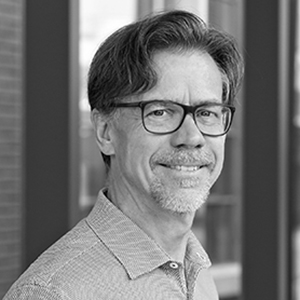
|
Paul Neuhaus, AIA, LEED AP is a senior designer for HGA in their Minneapolis office, and has been practicing for 30 years. Working in their Arts, Community and Education (ACE) practice group, Paul's project work includes studio arts and performing arts facilities, science labs, student centers, and life science classrooms for higher education; as well as libraries, a church, and very recently, a paper archive for the State of Pennsylvania.
Paul strives to engender a sense of community and belonging for those who visit and work in the buildings his team designs. Paul's process centers on discovering how the project site, culture, and program can shape space and take form, to reflect his client's aspirations and give dignity, purpose, and pleasure to people's lives. |
|---|
PA State Archives
HGA
View Project00;00;00;00 - 00;00;05;12
Doug Patt (DP)
Let's go inside the vault. The design vault.
00;00;05;14 - 00;00;34;08
Paul Neuhaus (PN)
They wanted a full archive with plenty of space for growth into the future. The storage has different requirements depending on the kinds of documents. So, we needed to create spaces that allow them to continue to collect. And a lot of the people who come in to do research, which is another big part of what they do, they collect and preserve. But they also provide these documents to the public for access, for research, or just for curiosity and to learn.
00;00;34;11 - 00;02;55;10
DP
This is my guest, Paul Neuhaus. I'll share more about him shortly. In this episode from the Design Vault, we’ll highlight Paul's project, the PA State Archives. The new Pennsylvania State Archives Facility collects and preserves valuable paper documents while making them available to the public for viewing and research. The building is a state-of-the-art archival facility with an enhanced building envelope and HVAC system for the optimal environment to preserve historical paper documents.
The street facade features a linear, steel framed louver structure which surrounds a two-story high glass enclosed pavilion. The pavilion is connected to the main building, which accommodates the two public research rooms and staff spaces. While much of the building requires a windowless approach. A wide assortment of colored Norman size bricks were used to give the facade a varied and playful appearance.
The building used 350,000 brick equivalents in a blend of five different glazed brick colors. The building is three city blocks in size on three acres of land. The total storage area on three floors is 50,000 square feet and includes oversized, cool, cold, secure, and digital archives.
Hi, I'm Doug Pat and this is Design Vault.
Today we're talking to Paul Neuhaus, AIA, LEED AP. Paul has a bachelor's degree in art from California Lutheran University and a master's degree in architecture from UCLA Graduate School of Architecture and Urban Planning. Paul is a Senior designer for HGA. Paul is in their Minneapolis office and has been practicing for 30 years, working in their arts community and education practice group. Paul's project work includes studio arts and performing arts facilities, science labs, student centers and life science classrooms for higher ed, as well as libraries, a church and very recently, the building we will be talking about today, a paper archive for the State of Pennsylvania.
Paul strives to engender a sense of community and belonging for those who visit and work in the buildings his teams design. So welcome, Paul.
00;02;55;14 - 00;02;56;28
PN
Thank you. It's great to be here.
00;02;57;01 - 00;03;08;11
DP
It's great to have you with us today. So, before we get started, tell us a little bit about HGA architects. We know you're in the Minneapolis area. What's the size of the firm, the type of work you guys do?
00;03;08;14 - 00;03;26;05
PN
HGA is a national interdisciplinary design firm committed to making a positive, lasting impact for our clients and communities through research based holistic solutions. We’re a collective of over a thousand professionals in 12 offices nationwide.
00;03;26;08 - 00;03;30;21
DP
Wow. That's incredible. So how long has HGA been around?
00;03;30;23 - 00;03;51;26
PN
Oh, boy. We go back to the fifties. The office here in Minneapolis was the first office and Hamel Green and Abramson, the founders, started the firm. They were a well-known firm in the state for many years and grew over the years and became a dominant force here in the state. And today, they're the largest firm in the state.
00;03;51;29 - 00;03;54;09
DP
Do you have any other locations outside the state?
00;03;54;11 - 00;04;03;13
PN
Yeah, we have 11 other offices, so East Coast and West Coast mostly. We also have two offices in Wisconsin.
00;04;03;20 - 00;04;12;17
DP
That's a really big architecture firm. Tell me a little bit about the role that you play at HGA. How did you end up there and what are you doing now?
00;04;12;20 - 00;05;08;10
PN
I've been in the city practicing since 1992. As a matter of fact, I wanted to work for HGA when I first moved to the city from Los Angeles. Interviewed here a couple of times, and it just worked out that I got an offer from another firm in town and work for them. That was back in 92. And then I didn't end up working for HGA until 2014.
I was really attracted to the firm because of the high quality of the design they do. Even though they're a large firm, they really practice like a small boutique firm. There's a lot of collaboration and independent thinking here. They allow architects to really pursue individually on each project what they think the vision of that project should be. So, when you look at HGA’s work, you don't see a pattern of design that looks a certain way. Buildings and projects can go in a lot of different directions, and there really isn't a style for our firm, which is really the way it should be.
00;05;08;16 - 00;05;26;03
DP
Yeah, I mean, that's pretty unique. Most offices, you look at their work and you can spot the thread that works its way through all of the architecture, and I'm sure that's the same way with your office. And yet many offices, stylistically they're just churning out the same thing, one building after another. So that's interesting.
00;05;26;05 - 00;05;44;00
PN
There definitely is a commitment to modernism and contemporary architecture. We do that well, but we also do historical preservation. And so, we have people who are working on buildings that are hundreds of years old - that occurs too - where we have to tie into historical buildings quite often with the new additions.
00;05;44;02 - 00;05;45;23
DP
So, what is your role in the office?
00;05;45;29 - 00;06;26;00
PN
I'm a senior designer. I lead projects, teams that can be anywhere from just me to four or five architects, depending on the size of the project. And then we have interior design. HGA really is a full-service firm. We have architecture, interior design, mechanical, electrical, plumbing, structural, security, and AV. So, we can do it all, but we often will team up with other architecture firms around the country because we have an expertise that we can bring, which is in this case, museums and archives. So, we'll team up with locals and go after projects together, and that's what we did here in Pennsylvania.
00;06;26;02 - 00;06;30;14
DP
So, are you guys the architects of record or the design architects, or do you switch roles?
00;06;30;20 - 00;06;48;10
PN
Vitetta Architects is the executive architect, and we were the design architect. So, we had the upfront part of the project. We team together. We were always together working together, but we emphasized the front end of the project, and they were construction drawings and CA.
00;06;48;13 - 00;06;53;28
DP
All right, so let's jump into the building here. So, could you tell us a little bit about how your office got the project?
00;06;54;01 - 00;07;52;29
PN
You know, I wasn't there when we went after the project, but it's a typical story, I'm sure, which is there is a proposal out from an owner. They want a building, so they publish a proposal that anybody can submit to. And we looked for someone to team up with locally or they approached us, perhaps the local architect, Vitetta, and we've teamed up as a team and submitted a proposal. And then we were shortlisted, interviewed for it, and we were selected as the team to do it. We had experience doing museums and archives very recently before that, so that made a big impact on our selection.
I think it goes back to 2014 when we were selected for the project there initially was a different site. They went all the way through schematic on a site that was a green site on the edge of town. After schematic, they decided, no, we want to have a site that's closer to our capital complex in town. So, they found a different site and started design over, and that's when I joined the team.
00;07;53;01 - 00;07;59;04
DP
Wow. There's an original archive building, right? And that is done, I think in the brutalist style.
00;07;59;07 - 00;08;40;27
PN
Yeah, you could say that. It doesn't have many windows, so I could see how that would feel Brutalist. It's limestone, however, it's got a concrete structure, but the structure isn't expressed on the outside like you would typically see for brutalist architecture. It's at the Capitol grounds. It's 21 stories tall. And the problem with it is it's a low floor to floor, by today's standards. They considered upgrading it and expanding it, but they determined that the low floor to floor wouldn't allow them to create the updates they need for mechanical systems. Plus, there just wasn't enough space around it to move laterally. So, they decided the thing to do was to find a new site.
00;08;40;29 - 00;08;53;07
DP
So, I'm curious, when they came to you and this was their original building, did they talk at all about style? Clearly the floor heights were an issue. Did they say, “Hey, we don't want to do this again. We want something that's a little more contemporary”?
00;08;53;12 - 00;09;38;12
PN
Good question. Yes, they wanted a contemporary building. They wanted something that reflected today and the way we think about architecture today, which is great. The building that was built originally was a modern building, too. It was of its time. The History Museum is right next to it that will continue to be used. It was great that they wanted to look forward and be progressive about style, and I don't know if we ever talked style per se.
We just had already gone through schematic design. Like I said on this other site with another team. So, I think there was some sort of way of working that had already been established so that when I started on the new site as the lead designer, they had already had some confidence in us and were on board with the way we work.
00;09;38;15 - 00;09;43;13
DP
So, tell us a little bit about the programmatic requirements they came to you guys with.
00;09;43;15 - 00;11;52;13
PN
They wanted a full archive with plenty of space for growth into the future. So, of 146,000 square feet of this building, about 50,000 square feet is the archive storage spaces. The storage has different requirements depending on the kinds of documents it might be worth saying that the Pennsylvania State Archives collects, preserves, and makes available for study the permanently valuable public records of the Commonwealth, with particular attention given to the records of state government.
And as the Archives director, David Carmichael, once said, “they collect everything from parchment to pixels.” As a matter of fact, William Penn, who founded the Commonwealth in 1681, used a charter that gave him the right to establish the Commonwealth. And that charter is at the archives in Pennsylvania and as well as hundreds of millions of other documents that are important to the Commonwealth.
So, we needed to create spaces that allow them to continue to collect. So, it's important the whole process of how documents arrive at the site are brought in, brought into processing rooms, and then eventually put into storage. Quite often they're also photographed so that they can have a digital record of the document and a lot of the people who come in to do research, which is another big part of what they do, they collect and preserve, but they also provide these documents to the public for access, for research or just for curiosity and to learn.
So, there is this whole system of how documents are moving in and how they're being brought to the public to use and then put back into storage. The documents can be anything from large documents in flat files like maps. They can be eight and a half by eleven size. Some of the rooms need to be cool or even cold. So, there are different climates, let's say, in some of these rooms based on the type of media it is. For instance, film that they'll collect needs to be in a very cool environment. So, they have different climates in each space.
00;11;52;16 - 00;12;05;03
DP
Well, that's really interesting. So, let's go back a little bit. Tell us a little bit about the site. Are there any unique topographic features? Is it completely flat? Was it a pretty simple thing to put a building on it?
00;12;05;05 - 00;13;08;18
PN
Yeah, it's a three-acre site and there are two main streets on the west and east side. Sixth Street on the west is about one story above Seventh Street, which is on the East. And Seventh Street is a main feeder artery that comes into town, while sixth is more of a residential neighborhood or semi commercial residential. So, we put the public entry on Sixth Street, which is up a level which means of the four level building, there's a lower level that's a walk out, let's say on the east side.
And then the public enters on what we call first floor, which is one level up from the lower level. The site is also L-shaped, which sounds like it could be a problem, but it really isn't because it's a large enough site that it provides for the building and public space. So, we were able to create a nice plaza out front and lots of landscaping in front of the building to provide a public amenity, let's say, to the people who live in the community and anyone who's visiting.
00;13;08;21 - 00;13;11;23
DP
Did you guys have any challenging restrictions, in terms of zoning?
00;13;11;26 - 00;14;22;26
PN
There were challenges with infrastructure. We had some issues needing to connect the archive with the state capital complex with fiber optics. So, there was a fiber optic line that had to come underground all the way to our site and that was done on a different contract. But we also had a lot of flexibility. For instance, there were streetlights and so on around the site and in some cases, especially on the front where we met the public, we were able to move the streetlights across the street from us because we just didn't think it would be nice having all the lights and lines right out in front of the building.
So, there was some infrastructural work that was done more on a urban scale level to help accommodate this building. Also add that at the same time that we were doing this building, there was a federal courthouse being put in, which is just about completed now too, at the same time. So, these two large buildings that are within a couple of blocks from each other going in at the same time was interesting.
And we actually worked – we had one meeting with the local architect, the design architects of that building, so that we could coordinate a little bit on what some of the public lighting would look like.
00;14;22;28 - 00;14;44;05
DP
The building stylistically, you've got this large glass atrium space and you've got this metal framed armature that wraps that. And then I'm assuming going off in the other direction, you've got a very large block that is made out of masonry. Is that correct?
00;14;44;07 - 00;16;25;19
PN
That's right. We took that stated purpose, the mission statement of the archive, which is the archive collects, preserves, and makes available for study. We took those three ideas, and we turned them into form and gave each form its own material. So, for instance, “collects” is the storage of the archives. That became a form that you just described as masonry.
They preserve, and mechanical systems are an important part of preservation. We have the unique situation of all of the mechanical systems needing to be off to the side of the archive that couldn't be on top of the archive because we couldn't risk any sort of liquids leaking out of mechanical systems into the archives. So, all of the mechanical systems are in their own bay off to the side. That's the preservation part. And we use metal panels to describe that bay.
And then finally, “making available to the public,” there was a public element of it, and in this case, we made it a glass pavilion and we used an aluminum extruded solar shade custom made to protect people from direct sunlight but provide lots of daylight. So, it's very open, very visible. You drive by it on Sixth Street and great views in and out to the street and from the road in. But it's got its own expression from the other elements. And so those three elements look very different from each other. They each really have a different personality, but they're all neutral in color. They're grays from white to medium gray, nothing - it's a very tight range of neutral tones.
00;16;25;23 - 00;16;35;09
DP
Yeah, for a storage facility, it's pretty welcoming. The elevation with the glass and this metal armature is really quite lovely.
00;16;35;15 - 00;16;36;07
PN
Thank you.
00;16;36;10 - 00;16;51;15
DP
So, I saw some really interesting studies in your emails back and forth with Glen-Gery in regard to the colors that you ultimately chose for the facades. There's really a lot there. Could you tell us a little bit about that?
00;16;51;17 - 00;20;13;16
PN
That's a great part of the story. We knew that the archive wing would be enveloped by a long expanse of wall. Archives don't want to have windows, so there were not going to be many windows and this building was going to be up to four stories tall. So, we wanted to make sure that what we put on the building would be something that would be out of the ordinary. And we didn't have the budget for limestone. The Capitol complex is limestone. The original building was that way, but we wanted something durable and where we could allude in some way to what was going on at the Capitol. We thought brick is durable. It's a good candidate for an archive because of that, and we wanted to make some connection to the limestone.
We began looking for a light-colored brick, very neutral, something that could echo that limestone. But clay doesn't come in neutrals like we wanted it. You know, Clay typically is in the Browns, yellow reds. You can get it to be black or very close to black. But everything we found seemed to be a little bit too warm. The closest we could get was a very light-yellow brick, and even then, it just felt a little too warm. So, we started considering clay slip coatings that are available on the market for bricks that could be applied to the brick to get a lighter and more neutral look. And that's when we came across Glen-Gery. We found some buildings on the Internet that traced us back to Glen-Gery. I don't remember how, but we were able to find them. And then Glen-Gery could make custom colors in the matte, but they also could make glossy glazed finishes. So that's when we started to consider that. And from there we began a conversation with them about brick colors and finishes.
Eventually I took a trip to their plant up in northern Pennsylvania. One time I landed in Pittsburgh, rented a car, drove up to their plant, and then from there I went to a client meeting in Harrisburg. It was really a fun visit just to see that plant work and meet with the artist. They had like an artist lab or chem lab where they can mix custom colors. And we had really good conversations and that really convinced me that this had a lot of potential. It wasn't a shoe in, it wasn't sure yet that we could go this route, but I just felt like there was a path to get there.
And eventually we went the route of glazed brick over the matte finish. We found the shine and reflectance of the wall surface potentially very appealing, especially on a large building with so few windows. Second, there was a side benefit with the glazed brick, and we believe that it would help resist graffiti and make it easier to clean because we were in an area where graffiti could be an issue. So that was another selling point for going that direction. It certainly worked in terms of getting the state to back that idea of going with a glazed brick, because I think it just seemed very unusual that a building would be entirely covered with glazed brick, and it helped that we were using very subdued colors like grays. We have five colors. It's a range of grays. And when you stand back, they kind of blend together. It creates what I like to call a heathered look. You know, if this were a knit sweater, it would be using heathered gray yarn and it kind of all blends together.
00;20;13;16 - 00;20;22;16
DP
Well, when the bricks glaze, does it reflect images or light or is there anything special about the facade when you stand back and look at it, other than the color?
00;20;22;23 - 00;20;51;12
PN
In a surprising way, that was very pleasant, once it got put up – especially on that north side where it's a long wall of brick – we were really surprised and pleased to see that on a cloudy day as the clouds are going over, it reflects the sky and the clouds, enough really to - it's not like a mirror, but it gives you a nice feeling that this building is somehow relating to the sky. So we really like that part of it.
00;20;51;14 - 00;21;01;19
DP
It all sounds really cool. Before we wrap this part of the conversation up, tell me about the mockups you guys did for the colors of the brick. They're really cool. It was a great idea.
00;21;01;22 - 00;22;22;18
PN
Yeah. Thanks. We started just by getting Sherwin-Williams paint chips. They make eight by ten paint samples. We pulled out a whole bunch of neutral colors with little bits of warm and cool associated with them and had them sent to us. Then we took the ones that we found most appealing, and we created a brick shape with using chipboard, glued them down, and then we started to assemble different quantities and proportions of different colors and just started mixing things until we saw something that looked appealing.
So, we created this mockup model where we could try different proportions. We kept records of how many of this color, how many of that on each set up that we did. And we created a whole series of these that we could first show ourselves and figure out which ones we liked the best. And then we took them to the client and showed them to them and tried to find where the sweet spot was for this blend.
From there we started to work with Glen-Gery to actually come up with samples, glazed brick samples. They weren't full bricks right away. They were just pieces of clay, small, maybe four by three inches, for starters, until we could come up with something closer to the actual colors we'd want to consider.
00;22;22;21 - 00;22;45;28
DP
You know, what's so surprising to me is you take five colors, put them together on a board. You've got 30 or 40 bricks. Each one of these samples, you stand back, and you look at, I'm just blown away that you can do that on a facade, and it never looks busy. You stand back and it becomes like another color. It becomes the color in-between all the colors. How did you even know that was going to happen?
00;22;46;00 - 00;23;31;00
PN
That's a good question. You're digging into the way we had to think about this. You know, some of our mockups had more contrast. Some of them had less contrast. And I think you need to find that point where the contrast is enough to give some variety and not make it look homogenous. But you don't want it to be so contrasty that it starts to look speckled. We didn't want to speckled looking, building, so it was just a matter of setting things up, looking at them close and then walking away and looking at them from, you know, 100 feet away and just see how well they blend together. It's like pixels, right, on your computer. These were really just physical pixels. And the farther you get back, the more they blend.
00;23;31;03 - 00;23;47;29
DP
So, at the end of the day, when you guys were all done with the job, was there anything that you learned that was really interesting about the design or the construction process? Again, as an aside, being the designer architects, it's got to be interesting handing a job over and then coming back to it as it nears completion, right?
00;23;48;01 - 00;24;39;20
PN
Yeah. And fortunately, we had a great working relationship with Vitetta, Daniel Wasik, the architect who led the team at Vitetta, who did a wonderful job. We had a good relationship and all the way through construction drawings, we were actively reviewing the drawings with them and participating in meetings. They were leading that process at that point from there on out but we were still involved. And even during construction administration, I didn't get to go to the site until late in the game. However, we were getting pictures from them monthly, lots of pictures. They were really good about it. They would tell us if there were any issues, we'd work it through together. So, it really worked well. And I have to say, I've never worked with a local architect that well before. It was a wonderful relationship and I’d love to work with them again sometime.
00;24;39;23 - 00;24;43;03
DP
That's really cool. Did the GC have any trouble finding a good mason?
00;24;43;10 - 00;24;45;05
PN
I know that there were issues.
00;24;45;05 - 00;24;47;11
DP
It's always an issue.
00;24;47;14 - 00;25;23;03
PN
Yeah. I mean, when I look at the building, it was well done overall.
You know, we had some complicated pieces to it too. For instance, we had an overhang at the front entry with brick hanging ten feet out, cantilever out over the entryway, and we designed it so that the brick at the bottom was not supported by an angle. We hid the structure and hung those two courses at the bottom from a structure up inside the wall. So, we were able to glaze even the underside of the brick hanging out over that cantilever, which wasn't an easy thing to accomplish.
00;25;23;03 - 00;25;24;17
DP
Yeah, it sounds expensive.
00;25;24;23 - 00;25;44;28
PN
It was, but it's a state building and you want it to be done right, and further, I don't know if you've had this experience on your work, but I've gone back to visit buildings sometimes that are years old, ten years old maybe, and some of those angles that support brick can start to rust. So, we wanted to avoid having that happen on a building this important.
00;25;45;00 - 00;26;04;20
DP
Yeah. And you know, you're going to make a few statements in the architecture and that's one really big one right at the front of the building. Very cool. So, before you go, you've been at this for 30 years or so. If you could give yourself – your younger self some career advice, what would it be?
00;26;04;22 - 00;26;49;17
PN
Oh, boy. Well, I do meet with mentees – we have a mentorship program here at HGA, which is highly valued by the people who are just starting out in their careers. And sometimes what I'll tell them is try to pay attention to everything you do, even the details. And not just focus on the big picture because the more you can know about the way buildings are specifically put together, the more you can understand about the structure and the other disciplines, the better you can be at making those decisions and choices at the beginning of your project. And so, I always encourage architects, especially people who are interested in being designers, to learn every aspect of the project down to the details.
00;26;49;20 - 00;26;56;24
DP
Yeah, if you're not interested in being a lifelong learner, architecture may not be the right profession for you.
00;26;56;26 - 00;26;57;16
PN
That's true.
00;26;57;16 - 00;26;59;28
DP
Right? You're always learning something.
00;27;00;06 - 00;27;01;08
PN
I'm still learning.
00;27;01;12 - 00;27;08;25
DP
Oh, yeah, I am too. Every day. So, Paul, it's been great to have you here. Thanks for your time. Where can people go to learn more about HGA architects?
00;27;08;25 - 00;27;18;15
PN
They would go to hga.com, and we've got our projects there that you can look at, and our teams, our people. It's a fun place to go.
TRANSCRIPT
00;27;18;18 - 00;27;21;25
DP
That's great. It sounds like a really interesting place to work.
00;27;22;00 - 00;27;34;05
PN
It is. I really enjoy it. There's a lot of smart people here and I'm so glad that I get to play the role I play. But I also admire those people who play all the other roles that we have at this firm.
00;27;34;08 - 00;27;34;28
DP
That's great, Paul. Thank you.
00;27;35;01 - 00;27;39;18
PN
Thank you. It was a pleasure.
You May Also Be Interested In
We Can Help With Your Next Project
Discover the latest + greatest in design trends, industry news & pro tips from pros.
For all of your project needs, you’ll find everything you need at a Supply Center.
Let Us Know How We Can Help!
Design Vault Ep. 8 Gansevoort Row with David Kubik
ABOUT THE ARCHITECT:
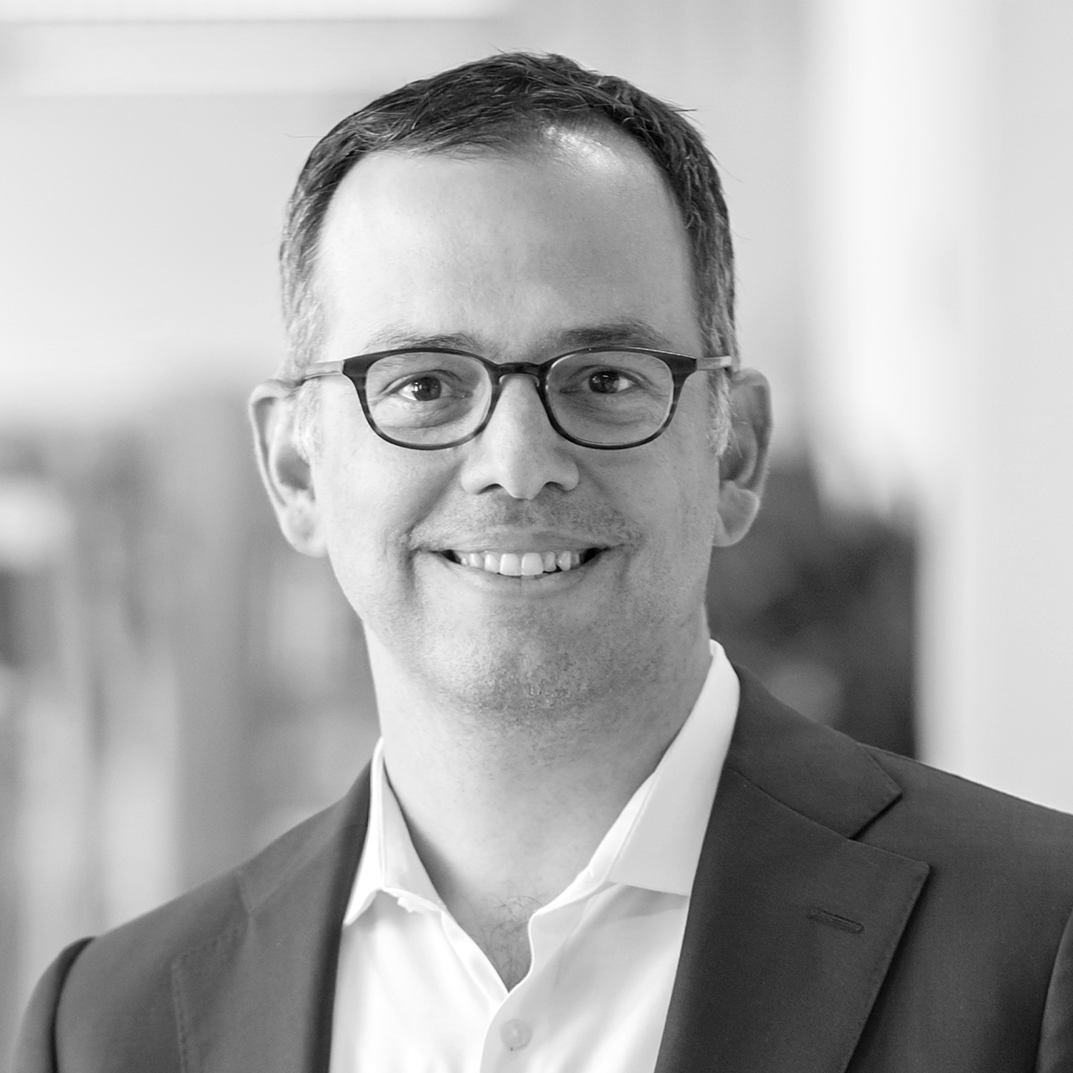
|
David Kubik joined BKSk in 2003 and was named partner in 2018. He plays a strong role in the design of both institutional and development projects and pays careful attention to details in both custom interior work and base building new construction. David is experienced at coordinating large consultant teams on complex projects. He is currently the Partner-In-Charge of two new high-end multifamily residential buildings: The Keller and 111 Charles Street, both in the West Village and the recently completed 601 Washington Street. He also recently led the design of two commercial development projects in the Gansevoort Market Historic District: Gansevoort Row Development and 405 West 13th Street.
David holds both a Master of Architecture and a Bachelor of Science degree in Architecture from the University of Maryland. He has received an Award for Excellence in Design and Fellowships at both the Graduate and Baccalaureate levels, as well as a Thesis Citation. David taught design studio as an adjunct lecturer in the Architectural Technology program at the City University of New York. |
|---|
ABOUT THE PROJECT:
BKSK secured a complex approval from the Landmarks Preservation Commission for the block-long redevelopment of a collection tattered low-rise commercial buildings near the High Line in Gansevoort Market Historic District. Careful historic research and analysis of the existing buildings, particularly the history of uses and former configurations, enabled a strong rationale for taller building heights and the demolition of some existing fabric on portions of the block. An important part of the Landmarks approval process, and something that BKSK takes great pride in doing, is presenting to preservation groups, the local community board, and select government officials. In this case the presentation made a successful argument for the development along the street and the properties are currently in various stages of completion, with an impressive roster of luxury retailers, and tenants including Hermes, Match Group, Inc., and the reopened Pastis.
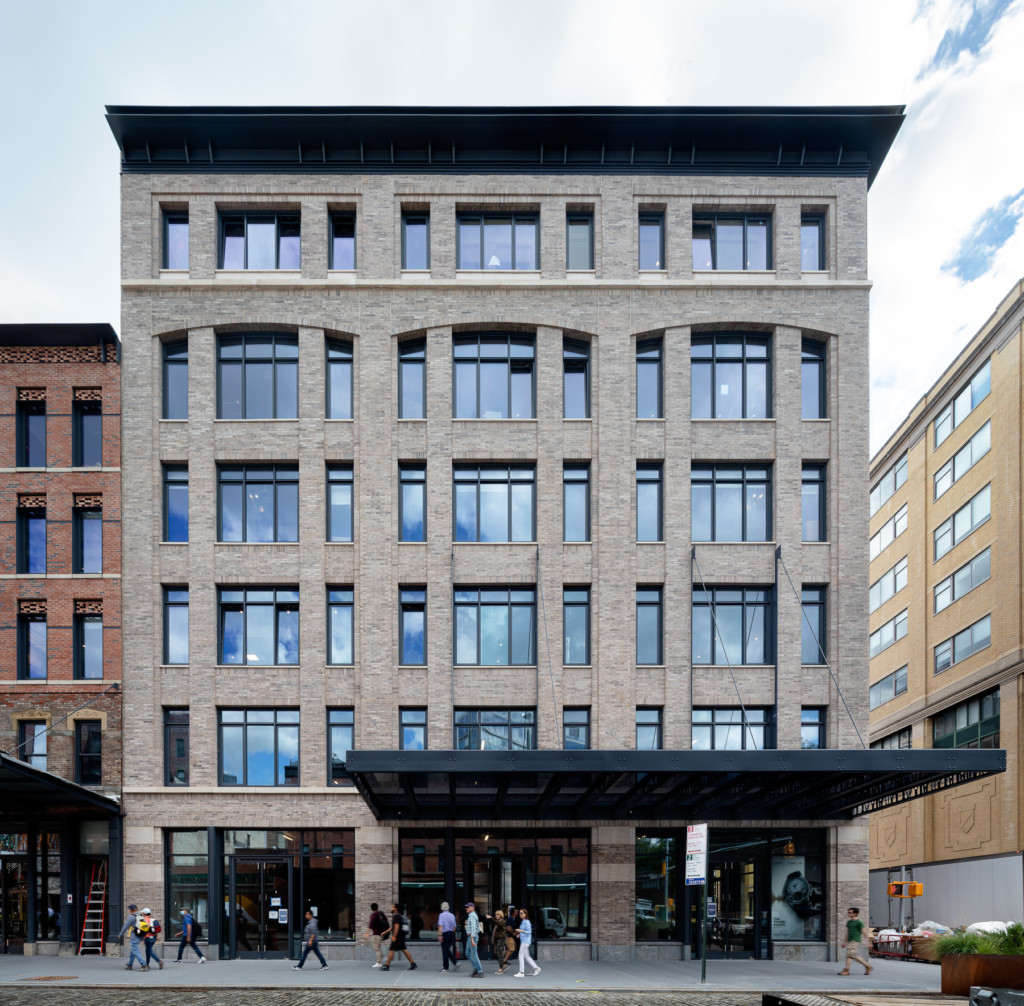
Photo by Amy Barkow Photo
TRANSCRIPT
00;00;00;00 - 00;00;05;09
Doug Patt (DP)
Let's go inside the vault. The design vault.
00;00;05;11 - 00;00;35;04
David Kubik (DK)
From avenue to Avenue across all of these 11 buildings. That was generally programmatically, what was sought after by the client was good commercial space, whether it was retail or office. So then really the next question was, okay, let's look at these buildings, understand which ones were perhaps more intact, more attractive the way they were, which ones could receive some additions, and were there any buildings that just didn't have really kind of great architectural character and warranted demolition and starting over and so we had a little bit of all those.
00;00;35;07 - 00;02;59;25
DP
This is my guest, David Kubik, AIA. I'll share more about him shortly. In this episode from the Design Vault, we’ll highlight David's project called Gansevoort Row. BKSK Architects made its imprint on the Gansevoort Market Historic District in New York City with a collection of landmark approvals. The redevelopment of a full block of tattered, low rise commercial buildings near the High Line.
Through careful analysis, BKSK made a strong rationale for taller building heights and some new construction along portions of the block. The new development project has a roster of luxury retailers, commercial and office space. The row buildings include existing facades, along with a creative variety of contemporary versions. Interestingly, each new building of various sizes features a unique blend of colors and patterns of brick.
The street facades maintain a turn of the century aesthetic with traditional elements and details, while employing modern windows and expansive metal awnings.
Hi, I'm Doug Pat and this is Design Vault.
Today we're talking to David Kubik, AIA. David Kubik holds a Bachelor of Science and Master of Architecture degree from the University of Maryland. He joined BKSK in 2003 and was named partner in 2018.
He works on the design of both institutional and development projects and is experienced at coordinating large consultant teams with expansive layers of complexity. He is currently the partner in charge of two new high end multi residential buildings for BKSK, the Keller and 111 Charles Street, both in the West Village and the recently completed 601 Washington Street. He also led the design of two commercial development projects in the Gansevoort Market Historic District, one of which we will discuss today, the Gansevoort Row redevelopment.
David has received an award for Excellence in Design and fellowships at both the graduate and Baccalaureate levels, as well as a thesis citation. David taught Design Studio as an adjunct lecturer in the Architectural Technology program at the City University of New York. So welcome, David. Nice to have you with us today. So, tell us a little bit about BKSK in New York City.
So where are you guys located? What's the size of the firm and what type of work do you do?
00;03;00;04 - 00;03;30;13
DK
Well, thanks for having me. A little bit more about BKSK Architects. The firm was founded in 1985. We've always, right from the beginning, been a firm focused on ambitious design, really over a broad range of typologies, whether commercial or residential institutional. And as we're going to talk about today, we have many, many projects that have obtained approval from the Landmarks Preservation Commission. That's a particularly special part of our practice. The firm is located here in New York City. We're on West 38th Street. It's currently led by six partners and we're about 50 people.
00;03;30;15 - 00;03;32;12
DP
So how long have you guys been in New York City?
00;03;32;19 - 00;03;43;26
DK
We've been here practicing since 1985, and we were down on 25th Street for a number of years. We recently moved up to West 38th Street in 2020, which was an exciting time to move an office.
00;03;44;02 - 00;03;46;22
DP
How was that? Was that fraught with challenges?
00;03;46;23 - 00;04;12;05
DK
It was fraught with challenges. We literally moved the weekend of the shutdown. So, we moved out of our old office on the Friday and moved into our new office on that Saturday. And if everyone recalls, Sunday was the day that New York City really, effectively, shut down. So, we plugged in our new server, plugged in all of our new computers, and crossed their fingers that everyone could log in remotely on Monday morning. And miraculously, it all worked.
00;04;12;12 - 00;04;15;02
DP
That is unbelievable. So, you guys weren't fully remote.
00;04;15;04 - 00;04;21;01
DK
Fully remote as many did for a number of months. But yes, all of that came down to literally a day.
00;04;21;08 - 00;04;25;19
DP
As an aside, did that last for employees or is everybody back in the office now?
00;04;25;22 - 00;04;37;12
DK
We're all back in the office now. We kind of have some flexibility in terms of working remotely like many do. You know, you can have kind of a hybrid week somewhat, but like many companies, for a number of months, we were fully remote, which is tricky for an architecture firm.
00;04;37;19 - 00;04;42;22
DP
Absolutely. So, tell us a little bit about yourself. So how did you end up at BKSK?
00;04;42;24 - 00;06;07;23
DK
Sure. So, as you noted in the introduction, I was attending University of Maryland. I grew up in New Jersey, so always had kind of a fondness for the New York City area, was really excited by the architecture that was happening there. So, while I was still a student at the University of Maryland, I did have a summer internship with Clement and Holl Span architects, who are really also well-known mid-sized firm here in New York.
After graduating, I worked for about a year and a half at Michael Graves Architect. Most people don't know this, but they did at the time have a New York City branch office. They were not just in Princeton, New Jersey. So, I worked for them for a little bit. And then in 2003, I joined BKSK Architects. And at the time I was really looking for work where I could have a heavy involvement in the creation of the construction documents and during Construction administration.
I loved the work that BKSK had. There was a real high level of design ambition and you could tell there was a real study and appreciation for the craft of what they were making. And I loved the idea that I could be both involved in the design and documentation as well as have the opportunity to be on site while it was being built, which on some of the larger firms, sometimes that's not always in the cards.
So, it was a little bit of a shift for me to go to an office that was a little bit smaller, a little bit more locally focused. But there was something that I recognized I was really interested in and BKSK was able to provide that. So, it was a really rewarding shift and I really enjoyed that practice.
00;06;07;25 - 00;06;13;13
DP
So now you're a partner. Has that changed at all your role in the office? Or tell us a little bit about what you do now.
00;06;13;16 - 00;07;17;01
DK
Sure. So obviously some things change, and I'm happy to say that many things haven't. Sure, my role has changed. I'm involved in more projects; I'm overseeing those projects in the kind of sort of senior leadership role you'd expect when you hear the term partner. But – and our office is a little bit bigger now than it was when I joined in 2003 – but, I would say that the ethos has not changed and we still, as architects, as kind of a tight knit group there in the office, were still very much focused on what I was describing earlier, which is high level of ambition in the design work that we do. And we really like to understand how things get built and the craft in which it takes to build them.
So, we enjoy working with contractors. That's not an adversarial relationship. We like to be on site, you know, and communicate directly with the subcontractors and the general contractors. And that's a process that we see can have a lot of opportunity for collaboration. And again, doesn't have to be this sort of adversarial standoff, which sometimes it can unfortunately sort of devolve into. But we try to make sure it doesn't go there and that everyone's working together in the sandbox to create something beautiful.
00;07;17;08 - 00;07;24;10
DP
Let's dig in here and talk about our building. Tell us a little bit about the Gansevoort Row project. So how did your office get the project?
00;07;24;16 - 00;09;12;02
DK
One of our existing clients, a client that we had already completed a number of projects with us, approached us about this project over our capital. I definitely can go on and on about that. Relationships. We're really happy with that relationship. They're a terrific client. They understand what it means to do a project of quality.
And so, we were honored when they came to us about this opportunity and this site. It's on the south side of Gansevoort Street, stretching from Avenue to Avenue, from Greenwich Street to Washington Street. It's really three pieces of property. But when you look across those parcels, it's really 11 individual historic structures that occupy these three properties. So, it was really quite a collection of buildings and structures that we had to grapple with and understand. They were all a little different. Some were more carefully preserved and intact than others, but the entire site had to be presented into the Landmarks Preservation Commission and whatever we designed, they had to approve.
So, what's interesting about that process, I think right out of the gate is that, if you're working on a site that is not subject to LPC approval, the very first thing you do is understand what the local zoning regulations allow you to build. How tall can I go? How big can I go and plan? What is the bulk that's permitted? How many square feet of floor area can I build? When you're in a landmarks district, you do not have rights to that floor area. You have to present a design that is compelling and as they deem, quote unquote, appropriate. It's often the case that you do not get to realize all of the square feet or all of the bulk that zoning might describe for that particular district. And that happened here, too. We didn't reach the full floor area allowed. We realized a lot of floor area for the developer, which is of course good for them. But we did have to present something that was appropriate for the neighborhood, appropriate for the scale on the street and the specific site context that we were dealing with.
00;09;12;05 - 00;09;16;01
DP
So, tell us a little bit about that. So LPC is Landmark Property.
00;09;16;06 - 00;09;18;19
DK
Landmarks Preservation Commission, so LPC for short.
00;09;18;19 - 00;09;22;20
DP
And you said they had to approve what you guys designed. How does that work?
00;09;22;25 - 00;09;50;24
DK
Because they were in a historic district. It's the Gansevoort market district. Anything that gets proposed has to first go in front of the LPC group and they have to review it and approve it before you can get your building permit, before you can get your approval at the local building department. So, it's not a, quote unquote, as of right district where you just follow the local code, follow the local zoning and you're off and running. We have this extra step of scrutiny. Whatever we present, they ultimately have to approve.
00;09;51;02 - 00;10;02;25
DP
I saw a great photograph; I think it was on the website from 1938. So, tell us a little bit about the history of the site. Is it interesting and why hasn't it been developed to this point? And what has happened along the way?
00;10;02;29 - 00;12;06;24
DK
It is very interesting. It has many chapters which we could spend hours talking about, but I'll summarize it a little bit in the sense that there was different types of buildings that were built here, whether it was a store and loft building or more of a warehouse building or purpose built garage buildings. In this district, you would see many different types of buildings. It wasn't sort of so perfectly monolithic like in some other historic districts. And in, generally speaking, many of these buildings were built to a certain height, often around five stories, six stories. And then when the city kind of really fell into tough economic times, a lot of these buildings were cut down to two stories because it was a strategy for building owners to pay less in taxes.
Unfortunately, a lot of these quite nice historic buildings would get cut down arbitrarily to two stories because that's just what made sense if you had a store and maybe one level of offices or storage above but, they didn't really need more than that. And this area of Manhattan on the far, far west Side, you know, became this sort of meatpacking district. And it just wasn't very desirable real estate in New York City for many, many decades. And then as economic growth has kind of pushed the city in recent years and decades, you know, finally this neighborhood has become a place where it's seen as advantageous to develop. High line, obviously, changed a lot of that. The new Whitney Museum, being literally on the opposite corner from this site, changed a lot of that. And our developer, Aurora Capital, are really responsible for a lot of the development in this neighborhood.
So, they've really boosted the appeal and the economic viability of this neighborhood. So, it was interesting to really understand the history of those buildings and it was sort of time for the next chapter of what could happen with these buildings. And so, your original reference, the 1938 photo, we looked at a lot of that carefully because it was obviously history and context that matters when you're dealing with these buildings. And in some cases there were narratives about bringing some of these buildings back up to their original five story height and in other cases not, which we can get into a little bit more specifically. But yeah, it was a bit of a mixed bag.
00;12;06;27 - 00;12;16;16
DP
So, I understand the scope of the project was to create successful retail, commercial and office space. Tell us a little bit about the scope and then the programmatic requirements.
00;12;16;18 - 00;15;29;27
DK
Sure. So, from avenue to avenue, across all of these 11 buildings, that was generally programmatically what was sought after by the client was good commercial space, whether it was retail or office. So then really the next question was, okay, let's look at these buildings, understand which ones were perhaps more intact, more attractive the way they were, which ones could receive some additions. And were there any buildings that just didn't have really kind of great architectural character and warranted demolition and starting over? And so, we had a little bit of all of those. So, you know, if you start generally looking at the block on the eastern end, there were more buildings that were pretty intact, had good architectural character. And we got from a sense in the community that they were cherished a bit more than some of the others.
So, you'll see on the eastern end the scale kind of stayed down at two stories. On the western end, there were two sort of blocks of buildings, one which comprised of five store and loft buildings, almost tenement style rowhouse looking type buildings, but more commercial oriented. Those buildings were all cut down from five stories to two. So, we proposed to put a three-story addition on that two story structure and raise that to a five story building.
And then lastly, on the western end of the property, and that piece of property being directly across from the Whitney, was just a one-story garage building kind of purpose-built garage building. It was not an original building in the district and really had no kind of architectural merit or character to speak of in the historic designation report for the neighborhood, it was described as non-contributing, which is also a term they use for buildings that might be in a historic district but were really never part of the original fabric and don't have any real value or they're not adding value to the district. So that was a corner property that was deemed acceptable to kind of demolish, remove that one story structure, and build something brand new. So, on that far western end, we proposed a new six story kind of warehouse loft looking building. And this goes back to the strategy of where is it viable to add bulk and square footage for the developer to kind of realize their investment? And where does it make sense to not do that?
And so, it was in a sort of perfect, even monolithic approach. Let's just add two or three stories across the whole block from avenue and avenue. We didn't do that. We said, you know what, on the western end, it makes more architectural sense to grow the properties and go higher. And on the eastern end, it makes more sense to keep them a little lower.
What was also interesting about this project was, you could imagine the owner could have very easily said, okay, we have three pieces of property here. Let's go to three different architects and just treat them like three individual projects and go to landmarks three individual times. But we didn't do that, and I think that was really smart on behalf of the owner, regardless of who they hired, to treat this as one job because you could treat it almost like an urban design exercise, a master planning exercise, you could look at the whole block and sort of horse trade square footage and decide where was it more appropriate and palatable to pump up the square footage and where was it not. And so, I think that we recognized it as a unique opportunity. We wanted to get our heads around, immediately about, where does the architecture support this intervention and where maybe does it not.
00;15;30;04 - 00;15;35;06
DP
So, at the end of the day, were there any project restrictions in terms of the heights of the buildings?
00;15;35;13 - 00;16;57;15
DK
Definitely. There was a lot of scrutiny about height, but it wasn't coming through either a code or zoning regulation. It was coming through an in-depth conversation with the Landmarks Preservation Committee and the Community board. So, when the Landmarks Preservation Commission approves your project, their permit has a title, and at the top it's Certificate of Appropriateness. Their measure of, you know, whether or not something should be approved really centers around that term appropriateness. So, it's very subjective.
So, they're looking at the context. How tall are the buildings around you? What are the styles of those buildings? What are the colors of those buildings? Do they have a lot of glass? Do they have a little bit of glass? You know, is all of the architectural language context bulk history. So, it's about storytelling is one way we like to think about it. What is the narrative that justifies your project? Like, what is the big idea of your project? And it has to be rooted in the history of the site, the context of site, and an appropriateness. So, there was a lot of analyzation of what were these buildings.
You mentioned the 1938 photo. That was one photo that was really important. There were many others. And so, you're really crafting a story. You're telling a story. So, what we proposed, we hope, extends the sort of natural evolution of this block like I was referring to earlier. This block has many chapters, and this is just the next chapter. Buildings go up, they come down, they go up again. And this will kind of be an evolution that the neighborhood will probably continue to see.
00;16;57;17 - 00;17;06;02
DP
Since the process with the planning commission was so subjective, how many people are on the planning commission? Was that really challenging? Because everybody's got to agree, right?
00;17;06;05 - 00;17;34;27
DK
Sure. I can't recall the exact number right now. I think it's around ten commissioners. And so, you know, you have to have a majority of the commissioners to obtain approval. You don't have to have unanimous approval. We went to the Landmarks Commission two times in order to obtain that approval. But we involved ourselves with a lot of kind of community engagement and – and meetings ahead of time because we wanted to make sure that what we were bringing was something that was viable and supportable in any way that we could.
00;17;34;29 - 00;17;44;17
DP
So, tell us about the building plans. I would imagine as you run across the facade, some are rectangular, summer more square, but they all fill the entire block?
00;17;44;20 - 00;18;47;10
DK
Well, it's actually a little bit different. So, the buildings that are on corners have different requirements than buildings that are mid-block. On both the eastern and western end – on the eastern end is an existing building. That building is built full on its lot because a corner building can be built full, it doesn't have a required rear yard. So, the eastern building was a purpose-built garage building, really kind of special, unique yellow brick house has a really bright image to it and we retain that building because it has some really nice character to it. Hermes is in there right now, as a high-end retailer. That's a special condition.
In the mid-block portion of the project, there is a rear yard, and the ground floor is built full. But once you're above the ground floor, starting at the second floor and up, these buildings do have rear yards. And then our new building that we proposed on the western corner that I was talking about earlier, same situation that it's very common.
The zoning allows it. Most buildings in New York City, when you're on the corner, won't necessarily have a rear yard or a side yard or anything like that. And this building doesn't either.
00;18;47;13 - 00;18;54;03
DP
So, tell us a little bit about the style choices, right. I mean, it looked to me like there were at least three buildings that remained.
00;18;54;09 - 00;19;46;22
DK
More than that. I would say on the eastern end there are two. And then in the mid-block portion, it's one building. But historically it's really three structures. Then there's this group of five, and then there's our new warehouse building on the western end. So that's why I was saying it's kind of like 11 structures stretching across three pieces of property when you really get into it, in terms of their history. They are different styles. They're all a little different.
The one on the eastern end was kind of a garage building. The ones mid-block are more kind of a store and loft, so they have kind of commercial storefronts at the ground floor and then kind of punched opening double hung window language above that. And then on the western end, our new building was not so much a store and loft had more of a kind of a warehouse look, so much heavier masonry language with much bigger areas of glass kind of departing from the individual punch window language.
00;19;46;24 - 00;19;58;24
DP
So stylistically, the newer buildings are slightly more contemporary than the existing buildings. Did you have different architects working on different buildings and coming up with themes?
00;19;59;00 - 00;22;06;12
DK
We definitely had a pretty substantial team in this project, and we are very collaborative in the office. So regardless of what level you might be practicing at our office, we're all at the table together. Everyone's contributing ideas, which we think is a great way to work and really fun. Obviously, as you kind of break down the teams, there were certain people dedicated to certain areas of the project. I also worked really closely with my partner Todd on this project. He had a deep involvement in this as well. So, it was really kind of the two of us on this.
What I think is fun, and as a general observation across the whole block, is that once we had a clear understanding of the kind of existing language of the architecture, whether it was garage or store in loft or warehouse, when we had our interventions, we did it in such a way that was quite respectful and kind of playing off the traditional languages of those buildings, but clearly contemporary at the same time.
So, the brick detailing is done in a traditional way, but with modern techniques and modern, you know, sort of expressions that are a little bit different. So, in the mid-block building, the one that has a three-story addition on a two-story base, there we used brick that was very similar in tone to the second floor that existed, but then also came up with a very special window language that involved some terracotta tiles on the transom that allowed for bigger glass windows but a smaller masonry opening. So, it felt appropriate for the scale of that facade. And then on the corner building, we really wanted to bring the sort of large heft and substantialness of the masonry detailing that you would see on a lot of the older warehouse buildings, even some of the buildings directly across the street from us. And so, we used a technique called a concealed lintel system to allow all of our brick returns, whether they were eight inches and in some cases 12-inch brick returns. You had these really beautiful brick returns both in plan and in sections. So, above the window, the window heads, you can really see 12 inches of brick wrapping and returning to the window, which you don't always see in newer buildings now, but we thought was really important for a building like this to be well detailed like that and show that depth of masonry, which is so characteristic for a lot of the historic buildings in that neighborhood.
00;22;06;19 - 00;22;17;28
DP
Now, I saw some patterning running vertically along one of the taller buildings. Tell me a little bit about that because that motif appears as a lintel above the windows. What is that?
00;22;18;02 - 00;23;52;26
DK
Yeah, so that mid-block building that was five store and loft buildings all kind of put together on its eastern facade because the building next to it was cut down like we talked about down to two stories. It's sort of exposed on that brick facade, the sort of scar of where the chimney would have been. So, there was a very sort of roughly demolished zone on the side of that facade where you could tell by looking at it, ‘you know what? I bet you there was a masonry chimney there and it all just sort of got roughly demolished.’ But it was kind of a signature moment on the side of that building that you would really see in the historic photos, and you would see in that 1938 photo.
So, we kind of wanted to bring back that chimney scar, but we did it with these terracotta tiles and behind those tiles behind that pattern is floor to ceiling glass. So, you're getting this masonry expression on the eastern facade that brings back that very particular circumstance that that building had. But you're doing it in a way that also allows some natural light to come in the building, because this is now a commercial office building. It's not a store in loft. Those upper floors are not used for storage anymore. People are occupying those floors. So, we were looking for ways to bring in a lot of natural light into this new work environment. But we wanted to do it in such a way that again, go back to that word that was appropriate for the sort of architectural expression of the building. So yeah, it was a unique moment. And the transoms, the lintel is basically doing the same thing.
Behind that is a really tall window, but from the street it looks like a smaller window, and it looks like a size window that is appropriate for that scale of building. So, it was sort of how you can have your cake and eat it too.
00;23;52;28 - 00;24;00;27
DP
Yeah, it's a really interesting detail. So how long did the design process take, city review, construction, start to finish?
00;24;00;29 - 00;24;29;27
DK
Good question. I don't know. I don’t have all of those dates at my fingertips, but I would say that while typically a project like this in our office would take about a year to document from schematic design to 100% construction documents, I think on this project it was substantially longer. Maybe a year and a half, a year and three quarters because of the extra time it took to first seek and get that LPC approval.
Once the approval is in hand, then we can really march forward and finish those construction documents. And then the construction itself, I believe, took about two years.
00;24;30;04 - 00;24;31;12
DP
How many sheets were in the set?
00;24;31;19 - 00;24;36;22
DK
It's definitely over 200. It's probably approaching 250 sheets or something like that. Yeah, it's a big undertaking.
00;24;36;27 - 00;24;38;17
DP
Did you guys model this in 3D?
00;24;38;25 - 00;25;00;27
DK
This entire city block is in Revit. It's all one Revit file that can be broken apart because we had to issue it as three sets of construction documents. Going back to the fact that this is three properties, it had to get filed at the Department of Buildings in three pieces to match up to those pieces of property, even though it was conceived as one big thing. So, yes, three sets of drawings.
00;25;00;29 - 00;25;04;21
DP
Now, a job this big, do have more than one PM? Project manager.
00;25;04;21 - 00;25;18;07
DK
Yes. Yeah, on this project we had two, Will Russell and Evan Singer, who did a phenomenal job really combing through every detail, understanding every nook and cranny. It was a real labor of love for them. I think they enjoyed it very much and they did a great job.
00;25;18;09 - 00;25;29;28
DP
So, this question comes up a lot. Did sustainability ever come up in choosing the materials for the project? And clearly brick was already out there. Did you guys just say, “okay, this is what we're going to do; we never even thought about another material”?
00;25;30;05 - 00;27;06;14
DK
Yeah. So, this project didn't seek any particular certification, but there were many sustainable elements that we tried to incorporate whenever we could in terms of material selection. I think that was also interesting is this is a conversation about adaptive reuse. One of the most sustainable things you can do when you look at a building project is reuse existing material. If you want to reduce your carbon footprint, reuse what's there, don't bring new material on site.
Many of these facades, you know, we really carefully tried to keep as much as the brick structure, whether it's party walls, you know, load bearing walls, facade walls. We tried to keep as much of that intact as possible. There were cases where, even a little scary times, you go onto the roof and you look at these old brick parapets and, you know, they haven't been maintained or cared for in way too long. And the mortar is at this point dust. And you can literally just take your hand and take the bricks off, which it was time. We are also very grateful that this project happened when it did because, you know, I think it saved these buildings, too. They really needed this intervention. They needed this next chapter in their life.
So, we, in some cases, had to demolish brick walls and keep all the brick and catalog it, put it down on the floor, label it so that the masons could take it and then put it back up and reinstall it. So, we did a lot of that careful work in the restoration and then much of the new either additions or buildings that we designed use brick. And it was a direct sort of reaction to this historic neighborhood. There was just an abundance of it, frankly, used in many different ways, many different colors. And it was really sort of a core ingredient, if you will, to any of the architecture that you might propose here.
00;27;06;16 - 00;27;11;21
DP
So, I haven't seen any of the interior photos. But do we end up seeing brick on the interior of any of these buildings?
00;27;11;27 - 00;27;35;26
DK
On some of them, again, particularly in the places where they are existing. So, in the existing two-story portion of that store in loft building, every 25 feet was a load bearing brick wall. Many of those are still there and the retailers who took those spaces did not cover them up, which is great. We love seeing that. So, you can really see a lot of that character and some of the buildings on the eastern end. You have moments to see some of that brick, too.
00;27;36;03 - 00;27;43;22
DP
It looked to me like there were at least two different brick colors that were really unique to this job. Could you tell us a little bit about that?
00;27;43;27 - 00;28;51;12
DK
So, the two brick colors on the project that we're talking about right now is a kind of a standard red brick that went on our three-story addition over the two-story existing structure. And that was kind of a nice interplay between a nice, textured, more modern looking red brick, but clearly still relating to the historic red brick that was right below it. So, you can distinguish the difference, but it's subtle.
On the corner building, there is a more sort of neutral what you might think is a more modern brick color. It's a Glen-Gery glacier gray brick. It has a lot of kind of nice texture and variation to it, which we were really attracted by. And it is perhaps a little bit more neutral, a little bit more contemporary of a tone.
That said, there are many large six story warehouse buildings directly across the street from us on Washington Street on that block facing the river. And many of those buildings had some pretty neutral tones in their brick selection as well. Maybe perhaps a little bit creamier, a little bit warmer, but not that different from what we were proposing there. So, we thought it was kind of a nice sort of interplay between those tones and still felt quite appropriate in the color.
00;28;51;17 - 00;28;59;24
DP
And how did you guys ultimately find the right colors for the bricks? Did you guys simply have samples in the office, or did you go out and take a look at them?
00;29;00;02 - 00;29;49;10
DK
Yeah, both. So, we really want to gain all those samples in the office and kind of build a library that we can consider. We looked at mockups on site to make sure that we were really happy with it and just walking around the neighborhood looking at these tones and seeing really how they relate. So again, it's nice to feel like the selection is growing right out of the context, but with a little bit of a modern twist, we think is actually quite nice.
And that brick in particular, we really loved the variation in the shading. You get kind of different colors within it. There is a little bit of texture and stippling to the brick finish as well, and we kind of joke around that sometimes if you look at a material sample up close, you think it looks messy, but it's that messiness. When you put it at a building scale or an urban scale that really makes that brick look good and crafted. So having that texture we think is kind of important.
00;29;49;12 - 00;29;57;20
DP
That's a really good point. So, did your team learn anything interesting through the design and construction process? Anything come to light that was like, this is kind of cool?
00;29;57;28 - 00;30;55;01
DK
I think what's just fun about designing in brick is it's a particular knowledge set. It's kind of its own craft or game if you want to call it that. You really have to think about the module of brick and how it wants to be used. We know a typical module for brick is either eight inches or twelve inches, quite commonly, and when you start designing your building, you have to be thinking about that brick module from day one, how it courses out vertically, how it courses out horizontally.
There were moments we learned a little bit of the hard way where we thought we had it exactly right and we didn't have it exactly right. And we had to make changes on the fly. Work carefully with the subcontractor, but you can't ignore the module of brick. You have to kind of work with it, don't work against it, and your details should sort of celebrate the natural dimensions of that brick. And I think we learned a lot about that. We had done already a number of brick buildings in our history of the firm, but this one really had a little bit of everything in it, which was really quite fun.
00;30;55;03 - 00;31;08;02
DP
Isn’t it interesting that we deal with buildings, but we're really dealing with math, right? Everything has to kind of fit into those modules.
So, did you guys have any trouble finding a great mason to work with on the process?
00;31;08;09 - 00;31;56;12
DK
So, we rely very much on our contractors to find those subcontractors. So, we worked with a great general contractor here who did find their way to a mason who you could tell right from the beginning was enjoying their craft. They would constantly ask us questions because they just wanted to make sure that they were getting it right per the design intent. And we thought that was really great.
Again, going back to something I said earlier, it was a good collaborative, positive relationship between everyone because we just wanted to make these buildings, you know, as best we could. And so, I think that mason did an excellent job in this project, and it really shows if you walk the block. And whether you're looking at very careful noodling and restoration on the buildings to the east, or the obviously more expansive, impressive new construction on the west, all the detailing, all the construction is very tight. It looks great.
00;31;56;18 - 00;32;03;21
DP
It's good to hear. So, this is the last tough question I've got for you. You've been an architect for some time, I would imagine. 20, 25 years.
00;32;03;26 - 00;32;07;14
DK
23. Yeah, depending on when you want to start the clock. But yeah, somewhere in there.
00;32;07;14 - 00;32;14;24
DP
Right. Exactly. So, if you could give your younger self some career advice, based on who you are now, what would it be?
00;32;14;26 - 00;33;36;07
DK
I guess I would say, and it's something that's been important to me, and I guess it was a bit of a leap of faith, I kind of found my way to BKSK architects for a reason. I feel lucky that I ended up there, frankly. It reinforced an interest I had, which is really to understand what you're making.
I enjoy design very much. You know, we want to blue sky and think very ambitiously about what a project could be. You want to push the envelope. But I always like to couple that with the reality of how something gets built. And I think that constant tension, if you will, about being ambitious, trying something new, being innovative, I always want to couple that with understanding how you build because a lot of times the innovation will grow out of something quite conventional, or an observation about how things get built. ‘Well, this is how we normally do it.’ Well, what if you just did it the normal way, but turned it 90 degrees and now you have a new detail and you can express things differently. So, those two things don't have to fight each other, and they could actually reinforce each other. And I think that's something that I've tried to instill in people who have worked for me or when I've taught at City Tech. I think that is something that I've found to be a kind of rewarding aspect of the practice. I also think that goes back to where I went to school at University of Maryland. That was something that was kind of a core part of their ethos and their pedagogy about what they taught. And I think it's important and I recognize the sort of value of it as a practicing architect.
00;33;36;09 - 00;33;55;16
DP
Back when I was in Maryland, working in Baltimore, I was out on set with a contractor and he said, “Doug, do us a favor. Do yourself a favor. Always draw something that can be built.” So, learn construction, right? You may be an architect and you may want to be a designer, but you've got to learn how everything goes together first. That’s great advice.
00;33;55;18 - 00;34;20;00
DK
Yeah. And we try to practice this in our office now. Myself and my partners, we all kind of grew up together here at the firm. Once you get through one really big project of consequence, it makes you a better designer for the next project. It's like learning a language. It's like learning a grammar. Once you understand it and can speak the language and know how to form sentences and the structure of it all, it just makes you a better designer for the next one.
00;34;20;04 - 00;34;26;16
DP
Absolutely. David, it's been great to have you here. Thanks for your time. Where can people go to learn more about BKSK architects?
00;34;26;23 - 00;34;35;25
DK
bksk.com Please go ahead and visit. We're also on all of the major social media platforms. Welcome anyone's input, or anyone wants to reach out.
00;34;36;01 - 00;34;38;19
DP
Awesome. Thank you very much. It’s been great to have you as a guest.
00;34;38;21 - 00;34;42;15
DK
Thanks for having me. This was really fun.
You May Also Be Interested In
We Can Help With Your Next Project
Discover the latest + greatest in design trends, industry news & pro tips from pros.
For all of your project needs, you’ll find everything you need at a Supply Center.
Let Us Know How We Can Help!