SKE+CHED with Leong Leong
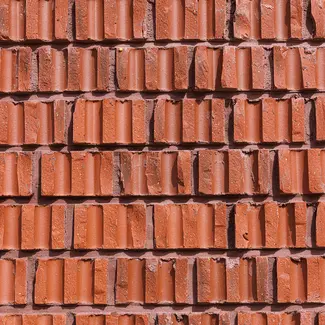
In this episode, Chris Leong and Dominic Leong, partners at Leong Leong Architects, will discuss their work on The Ray, located at 1525 North American Street in Philadelphia, Pennsylvania. This project features an incredibly unique facade featuring Glen-Gery's red velour brick that is split at the core holes to create texture and depth across the city-block-long architectural marvel.
WHEN UNDER ONE SKY is a public artwork that is in search for unity and commonality. The project attempts to create a series of reparations to the erasures that have happened historically in terms of class, ethnicity, and race, and also to acknowledge these same divisions of difference that are happening nationally and locally with the recent uprisings. The sentiment of protecting neighborhood still pervades despite differences. Learn more
The Ray
designed Leong Leong, brick distributed by Cava, located at 1525 North American Street in Philadelphia
View ProjectRead Transcript:
I'm Dominic Leong, partner at Leong Leong, an architecture firm in New York City. As partner I oversee design direction and general operations of the practice. My name is Chris Leong, I'm a partner at Leong Leong and I co-lead design with Dominic. I think what's important when we think about how architecture is for people and community is really understanding needs. We were really excited to partner with Ray because there was a shared interest in how architecture and design can support creative ecosystems within the context of cities.
When we began the project there was a lot of exploration and conversation around what are the needs of Philadelphia's creative community. There's a lot of amazing history of brick buildings, industrial buildings, in the neighborhood, and we looked at a lot of those projects as inspiration for this project and that's how we arrived at this idea of using brick - but we also wanted to do it in a slightly unusual way. So, in our work materiality is really important, we think a lot about texture, we think a lot about surface, we think a lot about using ordinary elements in unexpected ways. The building is a really long building - it's almost a city block long on North American Street, and it was really important for us to use brick because we felt it would really connect and feel contextual within the neighborhood.
What we hope happens is that it feels like it meets the needs of now - it is both contemporary and contextual, but ultimately it feels timeless and becomes an enduring place within this neighborhood and this city. Given that it was a long façade, we wanted something that also had depth and texture to it, so rather than using brick in a typical way with a smooth surface, we really like the idea of splitting the brick to create this texture that would give it a tactility and a kind of depth up close. After we decided to work with brick on this project and do the split brick we really looked at a lot of different types of bricks and different sizes, different shapes. We ended up on the Red Velour modular - which we really liked because of its color, the depth of its color, and how thatrelated to the other buildings in the neighborhood. We tested the brick in our studio - did different kind of physical tests and did some mockups on the site in Philadelphia.
One of the challenges that we faced was doing this at scale, so we reached out to Glen-Gery and they were really instrumental in helping us think through how to take this idea and execute it. There's about 18,000 square feet of surface area of brick which equals about 250,000 individual pieces. They helped come up with a process to both optimize the brick and the core holes, but also a saw cutting method to allow us to produce all these individual brick pieces with that split brick texture.
One aspect of the design that was really important was to make the project very monolithic, and so this idea of using red on red is really essential within the design. It's red brick with red pre-cast elements and then up close it's red brick with a red mortar joint. And so, when we think about how architecture connects to people we're thinking about giving presence to a community, giving presence to its inhabitants, and we think about how important it is for our cities to have a plurality of voices that can be expressed through architecture - because ultimately that just creates more richness that we all benefit from.
There's such a diversity of human experiences and human needs, and our hope is that this project supports that diversity of people and individuals that live in this community. Part of it about creating a project that is both a resource but also it is beautiful and feels connected to that place.